Report

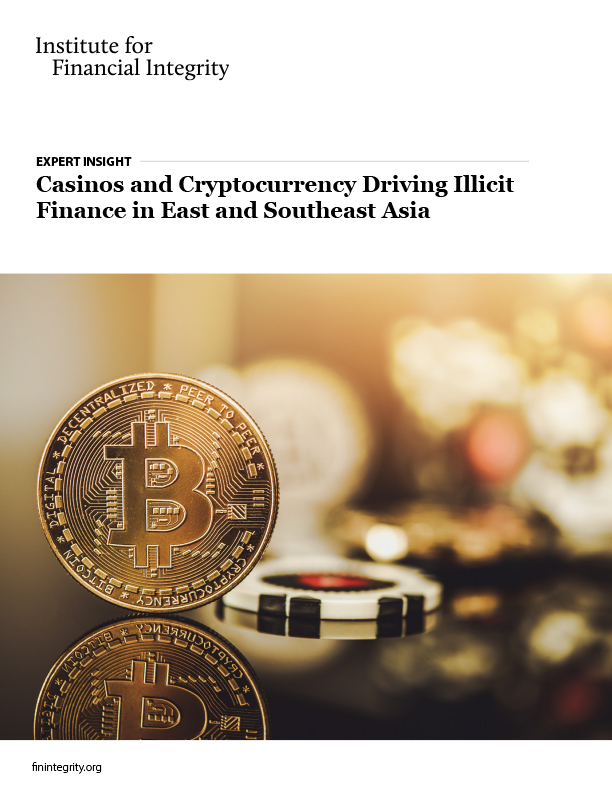
Casinos and Cryptocurrency Driving Illicit Finance in East and Southeast Asia

A recent UN Office on Drugs and Crime (UNODC) report has found that casinos, junkets, and cryptocurrencies are exacerbating transnational organized criminal activity in East and Southeast Asia as part of the region’s underground banking and money laundering infrastructure. Although the use of casinos to launder money is not new, the proliferation of online gambling since the COVID-19 pandemic has aggravated the existing problem and has given rise to underregulated online gambling venues as more gamblers began playing from home.

In this Expert Insight Report, we explore the following topics:

  • Casinos
  • Special Economic Zones
  • Underground Banking
  • Money Laundering through Junkets
  • Online Casino Vulnerabilities and Challenges
  • Key Takeaways

Please complete the form below to view the report.

By submitting this form the Institute for Financial Integrity will use the information you have provided here in accordance with our Privacy Policy. By providing your personal information, you agree that Institute for Financial Integrity may use it to contact you by email. If you do not agree to Institute for Financial Integrity using your personal information for this purpose, do not complete this form.

Recommended Articles

Real Estate, Real Risks

The FATF has identified the global real estate sector as an area requiring heightened attention due to its vulnerabilities to money laundering, terrorism financing, sanctions evasion and other illicit activity. This article explores why property transactions attract financial crime.

Iran and the Sanctions Landscape

Iran has spent nearly five decades under some form of U.S. economic sanctions, and the network built to evade those sanctions is correspondingly mature. Since February 2025, that architecture has come under the most intensive and sustained pressure it has faced since the 2015 nuclear deal.

August Monthly Sanctions and Export Controls Report

Explore this month’s Sanctions and Export Controls Update, highlighting IFI’s take on key developments from August 2026.

The Illicit Oil Pipeline: How Criminal Networks Turn Crude into Clean Cash

Money laundering in the oil sector is a highly lucrative global pipeline where illicit networks exploit the massive volume, complex supply chains, and liquid nature of the market. Explore the lifecycle of oil laundering schemes as well as key red flags.

July Monthly Sanctions and Export Controls Report

Explore this month’s Sanctions and Export Controls Update, highlighting IFI’s take on key developments from July 2026.

Social Engineering Is Rewriting the Fraud Playbook

Fraudsters have shifted from breaching systems to manipulating people. This article examines how social engineering, from deepfake video calls to business email compromise, is outpacing traditional defenses, and what it takes to train employees to recognize and resist it.

June 2026 Sanctions and Export Controls Report

Explore this month’s Sanctions and Export Controls Update, highlighting IFI’s take on key developments from June 2026.

Crypto Layering

Public blockchains make transactions visible, but that doesn't mean illicit activity is easy to trace. In our latest article, we examine how criminals use crypto layering techniques to obscure fund flows and the practical controls financial institutions can deploy to strengthen their AML programs.

May 2026 Sanctions and Export Controls Update

Explore this month’s Sanctions and Export Controls Update, highlighting IFI’s take on key developments from May 2026.

April 2026 Monthly Sanctions and Export Controls Report

Explore this month’s Sanctions and Export Controls Update, highlighting IFI’s take on key developments from April 2026.

From Alerts to Accountability

This article explores the gap between activity and outcomes, where screening programs tend to fall short, and what regulators actually expect.

Data as a Critical Business and Compliance Asset

Data is an increasingly critical asset. It plays a key role in due diligence, identifying and responding against illicit finance, and identifying fraud, as well as for commercial decisions and business success. Explore global data protection and retention requirements in this article.

March 2026 Monthly Sanctions and Export Controls Report

Explore this month’s Sanctions and Export Controls Update, highlighting IFI’s take on key developments from March 2026.

The Travel Rule Playbook

The Travel Rule was established by the FATF to help prevent bad actors from moving illicit funds undetected. The scope has expanded to include VASPs and digital assets transactions. Explore best practices for compliance and implementation strategies in this article.

Professional Crypto Laundering

The indictment of Venezuelan national Jorge Figueira in 2026 reveals a highly advanced professional laundering network using cash, crypto, OTC brokerages registered in the UK and U.S., and shell companies with accounts at regulated financial institutions. This article assesses the methodology used, red flags, and actions for financial institutions.

February 2026 Monthly Sanctions and Export Controls Report

Explore this month’s Sanctions and Export Controls Update, highlighting IFI’s take on key developments from February 2026.

Electronic Fund Transfer Consumer Protection

The Electronic Fund Transfer Act (EFTA) was established to protect consumers using electronic fund transfers. Explore what is considered in scope and the changes proposed to include crypto.

January 2026 Monthly Sanctions and Export Controls Report

There were several major sanctions-related developments in January, most notably the U.S.’s easing of sanctions to facilitate Venezuelan oil sales and the ratcheting up of western sanctions in response to Tehran’s violent crackdown on protestors, among others.

Following the Illicit Funds

As crypto grows, so does regulatory oversight. From SARs and CTRs to MSB registration and potential FBAR requirements, crypto businesses are now firmly within the scope of financial regulations.

Synthetic Identities

Fraud generates billions in proceeds every year, and the use of AI significantly increases the speed, scale, and likelihood of success. Synthetic identities are already leveraged to open accounts used to commit fraud and launder money. Explore red flags and actions financial institutions must take to detect and respond to AI-enabled synthetic identities.

December 2025 Monthly Sanctions and Export Controls Report

Explore this month’s Sanctions and Export Controls Update, highlighting IFI’s take on key developments from December 2025.

The Use of Secondary Sanctions

Secondary sanctions extend the reach of a country’s regulatory authority to foreign individuals and entities with no direct connection to the sanctioning country.

AML/CFT and Sanctions Enforcement Actions in 2025

2025 will go down as a historic year for AML/CFT and sanctions-related enforcement actions in two ways. It’s the first time in over 20 years that no banks have faced major penalties, and state regulators began jointly penalizing institutions.

November 2025 Sanctions and Export Controls Update

Explore this month’s Sanctions and Export Controls Update, highlighting IFI’s take on key developments from November 2025.

When Holiday Cheer Meets Fraud Pressure

This article breaks down the key scam patterns emerging this season, why December has become a true test of institutional readiness, and the steps teams can take to reduce losses and respond with confidence.

OFAC’s 50 Percent Rule

This article delves into OFAC’s 50 Percent Rule, common pitfalls, and best practices for avoiding costly mistakes.

October 2025 Sanctions and Export Controls Update

Explore this month’s Sanctions and Export Controls Update, highlighting IFI’s take on key developments from Ocotober 2025.

Navigating the Convergence of Sanctions Evasion, Export Control Evasion, and Money Laundering

Explore the convergence of illicit finance domains through real-life examples including Russia’s procurement of drone components, Iran’s evasion networks, and China’s acquisition of restricted chips.

Operation Mouse

Synthetic identities are increasingly used to perpetrate fraud. Delve into real-life examples of synthetic identity fraud in Canada, along with the actions financial institutions can take in response, in this article.

September 2025 Sanctions and Export Controls Update

Explore this month’s Sanctions and Export Controls Update, highlighting IFI’s take on key developments from September 2025.

August 2025 Sanctions and Export Controls Update

Explore this month’s Sanctions and Export Controls Update, highlighting IFI’s take on key developments from August 2025.

Deepfake Deep Dive

Artificial intelligence (AI) can increase the volume, value, and effectiveness of fraud attacks such as CEO fraud. Financial institutions should take action to protect themselves – and their customers.

July 2025 Sanctions and Export Controls Update

Explore this month’s Sanctions and Export Controls Update, highlighting IFI’s take on key developments from July 2025.

Blockchain & Ballistics

The Houthis are pioneering a new model of terrorist financing by using digital assets to purchase advanced weapons systems. This article explores the new dimensions of this convergence, and red flags associated with these evolving risks.

Out of the Shadows

Iran’s shadow banking system has laundered billions of dollars for the regime. In this article, we detail how the system works and how financial institutions can identify red flags associated with Iran’s oil smuggling and concealed payment networks.

Cartels & Crypto

Cartels and the professional money launderers that service them have integrated digital assets throughout the narcotics trade, from precursors to sales and laundering proceeds.

June 2025 Sanctions & Export Controls Update

Explore this month’s Sanctions and Export Controls Update, highlighting IFI’s take on key developments from June 2025.

From Fraud to Flow

Fraud is often the entry point into a complex web of financial crime from money laundering to terrorism financing. Understanding this gateway role is essential for those defending the integrity of the global financial system.

May 2025 Sanctions & Export Controls Update

Explore this month’s Sanctions and Export Controls Update, highlighting IFI’s take on key developments from the U.S., EU and UK in May 2025.

Lessons From Russia & Iran – What EU Sanctions Teach Us About Policy in Action

The EU’s Russia and Iran sanctions programs demonstrate using sanctions as strategic tools of influence, while also exposing the challenges in enforcement and importance of global coordination.

April 2025 Sanctions & Export Controls Update

Explore this month’s Sanctions and Export Controls Update, highlighting IFI’s take on key developments from the U.S., EU and UK in April 2025.

Syndicates of Terror

Eight Latin American drug cartels were recently designated by the United States as Foreign Terrorist Organizations and Specially Designated Global Terrorists. The U.S. designation enhances compliance risks for financial institutions and other companies transacting in Latin America.

Lifting Sanctions on Syria

Human rights activists have been advocating for the lifting of sanctions to help Syria rebuild after nearly 14 years of destruction. What would U.S. sanctions relief for Syria entail? What changes will likely be required?

Advancement in Digital Asset Markets

Review policies and regulation on crypto in the U.S., UK, EU, and globally, how this influences adoption, and measures to capitalize on rewards while managing illicit finance risks.

False Flags, Fake Docs, and Fraudulent Routes

Russia continues to evade the $60 per-barrel price cap on its seaborne oil shipments. What can financial institutions engaged in documentary trade in the energy sector and other industry stakeholders do to mitigate their risks?

Untangling the Threads of Global Economic Tools

Ever wonder how export controls, sanctions, and proliferation finance differ—and why it matters? This article breaks down these essential tools, explains their unique purposes, and highlights how they often overlap in the real world.

Navigating the Convergence of Sanctions & AML Regimes

In our recent webinar, the director of compliance and enforcement at OFAC and three financial integrity industry leaders discussed the importance of breaking down silos and shared other advice for AML/CFT and sanctions professionals.

Russia: Slew of Sanctions

Explore the highlights from our most recent webinar about Russia sanctions. What happened in 2024, how has the regulatory atmosphere changed, and how will the sanctions environment evolve in 2025?

Interlocking Action

Transnational crime requires a coordinated response. Examine the characteristics of transnational crime, breakdowns in internal cooperation within financial institutions that resulted in enforcement action, and the actions Chief Compliance Officers must take to ensure an effective and coordinated response within their institution.

The Heat is On

Explore the key insights and implications from Transparency International’s 2024 Corruption Perceptions Index.

Lighting Up the Darknet

The validity of blockchain analytics technology was assessed in the Bitcoin Fog money laundering trial. What lessons does the Court’s reasoning have for Chief Compliance Officer using blockchain analytics and other decision support technologies?

Walking the Sanctions Tightrope

In today’s fast-evolving regulatory landscape, sanctions compliance can feel like an uphill battle. This guide explores the key challenges compliance officers face—ranging from multi-jurisdictional rules to cryptocurrency complexities—and offers practical tips to stay ahead.

The New Counter-Illicit Finance Regime

The convergence of AML/CFT and sanctions regimes has led to a paradigm shift. These disciplines may now be viewed as overlapping parts of a broader global counter-illicit finance regime.

Examining Evasion

Explore three recent examples with Russia, Iran, and North Korea, which represent some of the most common methods illicit actors have embraced to evade sanctions. Understanding them is an important starting point for private sector firms in assessing and responding to their exposure.

Biden Takes Final Shot at Russia’s Energy

The Biden administration on January 10, 2025, imposed the most severe sanctions on Russia’s energy sector since the start of Russia’s full-scale invasion of Ukraine. What should financial institutions and other firms know about these new designations, and how can they mitigate their risks?

2024’s Top 10 Major Developments

Explore the highlights from our recent webinar including an overview of the current illicit finance landscape, major events in 2024 as well as noted possible future developments as the global illicit finance regime grows and evolves.

Syria Sanctions Relief

The U.S. Treasury has issued a Syria General License to provide gradual sanctions relief for the Syrian people after the regime of Bashar al-Assad was toppled in December 2024. What does this sanctions relief mean to financial institutions and other firms hoping to transact in the country?

Sanctions in 2024: Global Pressure Points in the UN, U.S., EU, and UK

In 2024, the UN, U.S., EU, and UK ramped up sanctions targeting Russia, Iran, and conflict zones, focusing on critical sectors like energy, defense, and technology. In this article, we explore these coordinated efforts aimed at weakening adversarial regimes while navigating complex compliance and humanitarian challenges.

Toward a Financial Integrity Risk Management Program

This article explores the commonalities between AML, sanctions compliance, ABC, fraud risk management, and export control compliance programs and recommends that organizations consider using a holistic financial integrity risk management and compliance framework.

Cold Turkey

Consumer spending over the holiday season is expected to top $1.66 trillion this year in the U.S. alone. This article describes five holiday season frauds to be aware of along with associated red flags to avoid being scammed.

The Sanctions Evasion Threat

It’s more important than ever for compliance officers to understand and recognize sanctions evasion typologies. In this article, we explore six of the most common techniques illicit actors use to evade sanctions.

How to be a Digital Asset Detective

Step into the role of a digital asset investigator. From tracing complex ownership structures to leveraging blockchain transparency, discover the tools and techniques that bring clarity to a sector often seen as cryptic. Follow along with our investigation into a digital asset business and come away with a step-by-step guide for uncovering hidden risks.

Risky Convergences

New digital solutions in money laundering and underground banking have facilitated the expansion of the criminal business environment in Southeast Asia, integrate billions of criminal proceeds into the formal financial system and enabling the growth of new criminal organizations.

Elevating Defenses

Dive into the cutting-edge strategies that financial institutions are implementing to combat the evolving threat of AI-driven fraud. From deploying advanced detection technologies to fostering robust networks of allies, learn how the financial sector is bolstering its defenses against sophisticated scams like deepfakes and biometric fraud.

Deepfakes and Dollars

While AI has the potential for transformative impact in the financial sector, it also introduces new challenges. From biometric mimicry to the alarming rise of deepfakes, this blog highlights emerging threats and challenges in countering AI-driven fraud.

Adapting to Digital Assets Risks

In our recent webinar, "Mastering Compliance in Digital Assets through Multi-Tiered Defense Strategies," industry leaders examined the intricacies of digital asset compliance. Featuring a panel of industry experts including Andrew Rosenberg, Elizabeth Severinovskaya, and Catherine Woods, this blog post summarizes the key insights shared during the event.

The Convergence of Sanctions & AML

The convergence of sanctions and anti-money laundering efforts has significantly accelerated since Russia’s full-scale invasion of Ukraine in February 2022. FINTRAC in June 2024 released a special bulletin focusing on financial activity associated with suspected sanctions evasion. The report highlighted shared methodologies and insights to help compliance teams collaborate on best practices.

Targeting Russia’s IT Dependencies

Delve into the recent determination issued by OFAC, which imposes significant additional restrictions on the provision to Russia of IT consultancy and design services as well as IT support and cloud-based services of enterprise management and design and manufacturing software. Multinational tech corporations, financial institutions, and other companies still operating in Russia will likely require licenses to continue operating there.

Crypto Under the Microscope

In the fast-evolving digital assets market, compliance is not just a regulatory requirement—it's a strategic imperative. From Binance's multi-billion-dollar settlement to the dramatic collapse of FTX, recent enforcement actions have sent shockwaves through the industry, underscoring the critical need for a robust compliance system.

Understanding and Addressing Fraud and Corruption Risks

In our recent webinar, industry experts delved into the crucial topic of fraud and corruption risks. From seasoned professionals to anti-corruption activists, the webinar featured a panel of distinguished speakers: Steve Burgess, Nikki Kenyon, Chris Williams, and James Wasserstrom. This blog post aims to summarize the key points discussed during the session, equipping readers with the knowledge necessary to navigate these risks effectively.

Embracing Emerging Technologies through Capability Development

Risk is perceived to be higher when a subject area is unfamiliar, which is particularly likely for emerging technologies and products. One solution is to develop the capability of staff through training and experience, where Chief Compliance Officers can utilize partners to support upskilling and augment internal capability where required. Digital assets provide a good case study: detailed knowledge within financial institution compliance and business teams to manage risks while enabling business growth.

Corruption in Construction

Corruption in the construction sector can include everything from fraud, to extortion, embezzlement, and other abuses. Corruption doesn’t just undermine good governance; it endangers lives and threatens the reputation of any financial institution involved in construction projects that are rife with fraud and abuse. How can government organizations and financial institutions mitigate corruption risks when funding or supporting infrastructure projects? How can they detect suspicious transactions?

OFAC’s Compliance Guidance in Action

The Treasury Department’s Office of Foreign Assets Control (OFAC) five years ago published its Framework for OFAC Compliance Commitments. This guidance remains the most comprehensive articulation of OFAC’s compliance expectations to date. Although it notably stopped short of mandating a sanctions compliance program (SCP), recent enforcement actions demonstrate the implications of not having an SCP in place.

Corruption Kills

Construction projects are especially vulnerable to corruption because of their complexity, high price tags, and the number of intermediaries and other parties involved. Corruption in the construction sector does not merely result in financial losses, environmental destruction, and inequality, but it can also result in loss of life.

Types of Sanctions – A Vast and Varying Landscape

In the United States, most sanctions programs combine multiple types of designations that vary across multiple dimensions. U.S. designations are constantly changing, and more individuals, entities, vessels, and aircraft are being added to OFAC’s sanctions list. Explore the five primary types of sanctions in our latest article.

Russian Use of Crypto for Sanctions Evasion on the Rise

Experts agree there isn't enough liquidity in the virtual assets space to enable largescale sanctions evasion by Moscow, but sanctioned individuals and entities have used virtual currencies—most notably Tether—to access the global financial system and pay for restricted goods and technologies. Explore recent designations, how cryptocurrencies and other virtual assets are being leveraged to facilitate evasion as well as risk mitigation strategies for financial institutions in our latest article.

AI in Crypto Security: Navigating the Dual Edges of Innovation and Vulnerability

As cryptocurrencies gain mainstream acceptance, they also become a new frontier for financial crimes, including money laundering, fraud, and the financing of terrorism. Amidst this burgeoning digital economy, AI emerges as both a beacon of hope to help prevent crimes and a potential threat, giving illicit actors additional resources to move proceeds of crime. The dual nature of AI in combating or facilitating crypto-related financial crimes presents a complex puzzle: Is AI a harbinger of risk or the ultimate solution to mitigate it in this digital age of ambiguity? 

Fake News vs. Real News – The Importance of Media in Due Diligence

We exist in an age when mass media outlets are criticized for bias and manipulation, and when foreign disinformation efforts further erode trust in traditional journalism. Confidence in media reports not just as a compliance tool, but also as reliable news sources is likely at near record lows as well. However, adverse media reports are a critical compliance tool that can serve as a springboard for more extensive due diligence research and can help identify potential indicators of sanctions evasion and other financial crimes.

Digital Assets in the Crosshairs

As the digital economy burgeons, cryptocurrencies, tokens, and NFTs have shifted from niche investments to central elements in global finance. Yet, this rapid growth brings complex challenges, especially in the realm of financial security and regulatory compliance. Explore how these assets are increasingly being used to fund activities that threaten global security.

Counterproliferation Finance Detection and Deterrence – What Can Financial Institutions Do?

The U.S. Treasury recently identified proliferation networks operating on behalf of Russia, North Korea, China, Iran, Syria, and Pakistan as threats to U.S. national security. These networks exploited the U.S. financial system to finance the proliferation of weapons of mass destruction (WMD), including financing to procure WMD components and raising revenues to support efforts by these state actors to advance their WMD activities.

2024 National Proliferation Financing Risk Assessment

The U.S. Department of the Treasury published the 2024 National Proliferation Financing Risk Assessment in February 2024 providing an in-depth analysis of the threats and vulnerabilities related to proliferation financing (PF) and highlighting key countries and non-state actors working to gain access to weapons of mass destruction (WMDs) and their components and to conventional restricted weapons and technologies.

Liberating Limits: OFAC Licenses

The U.S. Department of the Treasury’s Office of Foreign Assets Control (OFAC) safeguards national security and helps advance U.S. foreign policy objectives by administering the U.S. sanctions regime. OFAC’s general and specific licenses serve as key mechanisms for authorizing and regulating certain transactions that would otherwise be prohibited under sanctions programs. The exceptions provided by licenses help businesses and individuals navigate international transactions without violating U.S. sanctions policies.

Golden Visas & Global Graft – How Criminal Actors Exploit Citizenship by Investment Programs

While special naturalization programs offered in certain jurisdictions to foreign investors intend to attract foreign direct investment and economic and infrastructure development, these programs can be abused by criminals who seek to launder and conceal proceeds of crime or commit new offences, including financial crimes.

Crypto Jargon Defined: Bridging the Gap Between Complexity and Comprehension

From mixers and tumblers to hot and cold wallets, the crypto space is laden with complex jargon. Explore our post in which we simplify the language of the digital economy. Ideal for enthusiasts at any level—from curious beginners to those seeking deeper insights—this guide illuminates the path to mastering the nuances of digital, virtual, and crypto assets.

Stuck and Seized – Consequences of Forced Labor

Global economies are more interconnected than ever, and human rights abuses can have a profound impact on supply chains and disrupt the flow of goods. Recent deliveries of certain luxury vehicles, such as Porsches, Audis, and Bentleys have been delayed because a small component that links those vehicles with computer networks was produced by a Chinese company linked to forced labor and surveillance of Uyghur populations in China.

Russia Sanctions Evasion Case Study: Viktor Labin

When conducting customer due diligence and enhanced due diligence, simple screening for names that may be on sanctions lists is no longer sufficient given the increasing complexity of Russia’s sanctions evasion efforts and the volatile regulatory environment because of Moscow’s aggression against Ukraine. Extra research is necessary to ensure compliance with sanctions laws and adherence with your company’s own risk policies. This research, however, can be complex, and structured analytic techniques and tools are necessary for effective due diligence. 

Binging Griselda? Let’s Talk Drug Trafficking Sanctions

Netflix’s new series Griselda tells the story of Griselda Blanco. Known as the “Godmother of Cocaine,” Blanco trafficked cocaine from Colombia to Miami from the 1970s to the early 2000s. Despite her criminal activities, Blanco managed to evade law enforcement for many years. There were no sanctions against Blanco at the time, since the Kingpin Act, a U.S. law aimed at combating international drug trafficking and organized crime, was enacted in 1999 after Blanco’s sentencing.  

Risky Russia – Government Agencies Warn Businesses of Possible Trouble

The US Departments of State, Treasury, Commerce, and Labor in late February issued a business advisory warning firms and financial institutions about the serious legal, financial, and reputational risks of doing business in Russia. According to the State Department’s assessment, Russia’s kleptocratic environment undermines fair competition and the rule of law, exposing businesses to the risk of extortion, appropriation of assets, and US law enforcement action.

Thanks to Russia, Cross-Border Sanctions Collaboration at All-Time High

Russia's unprovoked invasion and continued aggression in Ukraine has led to an unprecedented level of collaboration by sanctions stakeholders across jurisdictions, agencies, and sectors. IFI is publishing a series of blogs to highlight this increased collaboration. In this first blog, we take a look at cooperation across borders and most notably by the REPO Task Force and Price Cap Coalition.


Beyond The Hype: The True Role of Virtual Assets in Russia Sanctions Evasion

With the onset of stringent sanctions against Russia in 2022, US officials and financial analysts began to speculate about the potential for cryptocurrencies to serve as a means for evasion. But can virtual assets enables a nation's efforts to evade sanctions?

Pig Butchering on the Rise: When Romance Goes Wrong

What is pig butchering and how does it work? Read on to explore the global regulatory response to this rising scam, identify scam tactics and key mitigation strategies.

Exhausting Russian Resources by Sanctioning Western Software

Despite the Kremlin's attempts to reduce reliance on Western software for crucial systems, this transition is advancing slowly, presenting significant opportunities to hinder Russia's military effectiveness and economic activities. Read on for more information on the current role of Western technology and guidance for governments and companies formulating sanctions proposals.

Evading Export Controls – Russia’s Key to Success

Russia has used third-party intermediaries to evade sanctions and export controls for years and has disguised the involvement of SDNs or sanctioned entities in transactions to obscure the true identities of end users. This activity has increased since Russia’s invasion of Ukraine in 2022 due to Russia’s need for military equipment.

Bitcoin Breakthrough – Navigating the New Era of SEC-Approved Spot Bitcoin ETPs

The US Securities and Exchange Commission's (SEC) landmark approval of 11 Spot Bitcoin Exchange-Traded Products (ETPs) from several leading financial firms, including BlackRock, Fidelity, and Grayscale Investments, this month marks a significant shift in the regulatory landscape for virtual assets.

Real Estate in 2024 – Anticipating a Crackdown on Corruption & Fraud

Real estate in the United States has long been a popular channel for corrupt actors seeking to launder illicitly obtained funds. As part of the Biden administration’s 2021 Strategy on Countering Corruption, a long-awaited proposed rule from the Treasury Department that is slated to take effect in early 2024 will seek to address that glaring loophole in US anti-money laundering (AML) regulations.

How to Avoid Becoming an Unwitting Facilitator of Russian Sanctions Evasion

What steps can organizations take to avoid becoming unwitting suppliers of critical components and tools for the Russian military?

The Importance of a Sanctions Compliance Program – Top 5 Mitigating Measures Highlighted by OFAC in 2023

OFAC in 2023 reached settlements with 17 companies, collecting more than $1.5 billion in penalties. Mitigating factors can help reduce the severity of penalties imposed by OFAC for sanctions violations and often involve significant remedial measures and enhancements to a company’s sanctions compliance program.

A Pivotal Year for Virtual Assets – 2023 Highlights

2023 was a year of significant upheavals in the world of virtual assets, highlighting glaring vulnerabilities and the dire need for regulatory interventions. From major financial losses caused by security breaches to high-profile legal battles and settlements, 2023 was chock full of developments that almost certainly demonstrate the resilience and endurance of virtual currencies.

A Timeline of US, EU, and UK Sanctions on Russia in 2023

The United States, United Kingdom, and European Union, among others, have increased their focus on enforcement, updated sanctions lists and export controls to limit Russia’s access to sensitive technologies, and taken steps to punish illicit actors assisting Russia. Explore a list of the various sanctions imposed by the United states, EU, and UK in 2023.

Biden Signs Executive Order Targeting Foreign Banks Supporting Russia

US President Joe Biden on December 22, 2023, signed an executive order to authorize the US Treasury Department’s Office of Foreign Assets Control (OFAC) to designate foreign financial institutions that help Russia’s defense industry, as Moscow’s war against Ukraine approaches its two-year anniversary.

What Financial Institutions Can Learn from the Binance Settlement

Explore lessons learned from the recent Binance settlement including risk mitigation strategies for banks and other financial institutions.

Binance Settles with Regulators

Binance, the world’s largest cryptocurrency exchange, on November 21st pleaded guilty and agreed to pay more than $4.3 billion to resolve the US Justice Department’s investigation into its violations of the Bank..

Cyber-Enabled Fraud

Cyber-enabled fraud (CEF) is growing, especially with increasing digitalization across the globe. Technological advances have enabled cyber criminals to develop and increase the scale, scope, and speed of their illicit activities.

Partial Sanctions Relief for Venezuela

On October 18, 2023, the U.S. Department of the Treasury’s Office of Foreign Assets Control (“OFAC”) issued six general licenses authorizing categories of transactions that were previously prohibited under the U.S. sanctions program against Venezuela.

MiCAR Defined – The EU’s Blueprint for Crypto Regulation

The Markets in Crypto-Assets Regulation (MiCAR) went into effect on June 29, 2023, and will be fully applied by December 30, 2024.
123456789101112131415161718192021222324252627