Sanctions and Export Controls Update
Monthly Roundup – April 2026
📅 May 5, 2026

Welcome to this month’s Sanctions and Export Controls Update, highlighting IFI’s take on key developments from April 2026.
April saw two major geopolitical stories dominate the sanctions and export controls landscape: the Iran ceasefire and nuclear negotiations—with sanctions relief a central and contested element of potential deal frameworks—running in parallel with the U.S.’s continued “Economic Fury” maximum pressure campaign, and the EU’s long-delayed adoption of its 20th Russia sanctions package.
On Iran, OFAC issued multiple tranches of designations targeting oil networks, shadow banking, missile procurement, and a Chinese teapot refinery. On Russia, the EU finally broke through a Hungarian and Slovak veto to adopt its 20th sanctions package, the most expansive in two years, featuring new energy, maritime, and crypto restrictions and the first-ever activation of the anti-circumvention tool against a third country, Kyrgyzstan.
Meanwhile, the U.S. House Foreign Affairs Committee advanced more than 20 export control bills targeting China’s semiconductor and AI ambitions—described by lawmakers as the largest export controls markup in congressional history. OFAC also continued its campaign against Southeast Asian cyber-fraud scam centers, sanctioning a Cambodian senator and a network of 28 associated individuals and entities tied to “pig butchering” fraud schemes targeting Americans.
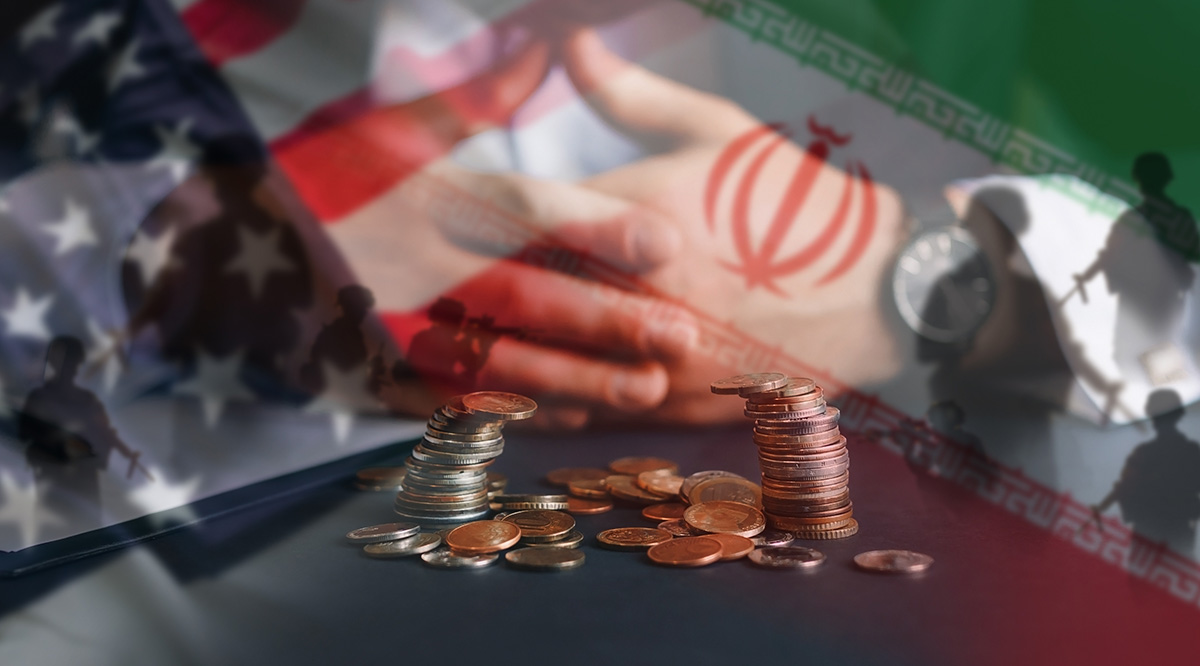
The administration’s maximum pressure campaign against Iran continued at pace in April, with OFAC issuing multiple tranches of “Economic Fury” designations targeting Iranian oil networks, shadow banking, and missile procurement. At the same time, a Pakistan-mediated ceasefire opened a window for nuclear negotiations in which the terms of potential sanctions relief became a central point of contention. Iran demanded comprehensive lifting of all primary and secondary sanctions—including banking and trade guarantees—before making any concessions, while the U.S. conditioned any relief on verifiable nuclear commitments, particularly a halt to uranium enrichment. The two sides remained far apart at month’s end.
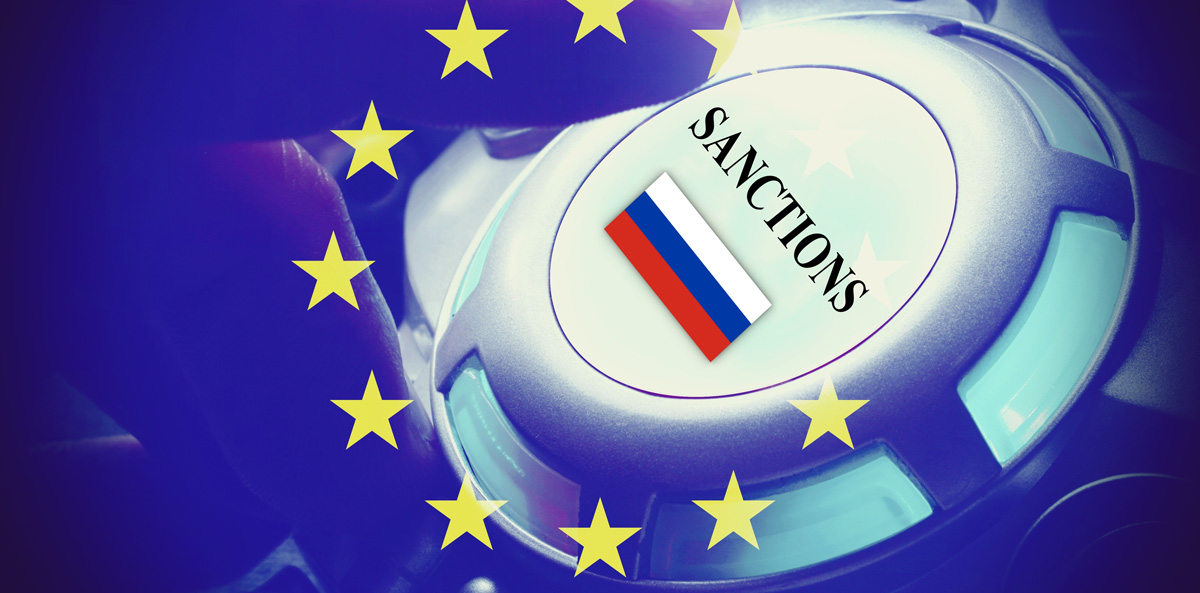
After months of delay caused by vetoes from Hungary and Slovakia, the EU adopted its 20th sanctions package against Russia on April 23—its most comprehensive package in two years. The package introduces sweeping new energy, maritime, crypto, and anti-circumvention measures, including the first use of the EU’s country-level anti-circumvention tool against Kyrgyzstan. Meanwhile, OFAC issued updated general licenses for Lukoil-related transactions and an amended Russia-related general license.
April also brought significant congressional action on export controls, with the House Foreign Affairs Committee advancing more than 20 bills in what was described as the most significant export controls markup in congressional history. OFAC continued its aggressive campaign against Southeast Asian cyber-fraud networks, sanctioning a Cambodian senator and 28 associated individuals and entities, and targeted the Murillo-Ortega regime in Nicaragua, and cartel-linked transnational fentanyl supply networks and money laundering operations. The Trump administration also continued to ease Venezuela-related sanctions, and FinCEN and OFAC jointly proposed rules to implement the GENIUS Act’s stablecoin regulatory framework. Outside the U.S., the UK introduced new Sanctions End-Use Controls applicable across 12 sanctions regimes, and OFSI published its strategy for 2026–2029 as it marked its tenth anniversary.
House Foreign Affairs Committee Advances Historic Package of Export Control Bills
On April 22, the House Foreign Affairs Committee advanced more than 20 export control bills in what lawmakers called the largest significant export controls markup in congressional history. The package strengthens BIS enforcement, closes loopholes exploited by China and other adversaries, and protects U.S. AI and biotechnology from theft. Key bills include the MATCH Act (Multilateral Alignment of Technology Controls on Hardware), which would require the Netherlands and Japan to align DUV lithography export restrictions with U.S. rules within 150 days or face unilateral U.S. enforcement, and which names SMIC, Huawei, Hua Hong, CXMT, and YMTC as covered facilities; the Stop Stealing Our Chips Act, which creates a BIS whistleblower incentive program offering 10–30% of fines collected; the Deterring American AI Model Theft Act, establishing an AI Model Extraction Attackers List; a bill extending the statute of limitations for export control violations to ten years; and various measures to increase BIS resources, enforcement capacity, and industry outreach. China’s Ministry of Commerce warned the package would “severely disrupt” global semiconductor supply chains. A Senate companion to the MATCH Act was introduced with bipartisan support in early April.
China Targets EU Entities Over Arms Sales to Taiwan Amid 20th Russia Sanctions Package
China’s Commerce Ministry added seven EU entities to its export controls list the day after the EU adopted its 20th Russia sanctions package—a move widely seen as retaliation for EU designations of Chinese entities for facilitating Russian sanctions evasion. China also adopted a new supply chain security regulation in April that codifies the use of export controls as countermeasures against foreign entities. Beijing’s export control listings carry extraterritorial reach, prohibiting foreign entities from transferring China-origin items to listed companies.
OTSI Publishes Sanctions End-Use Controls Guidance for Businesses
The UK introduced a significant new trade sanctions tool in April with the publication of the Sanctions (EU Exit) (Miscellaneous Amendments) Regulations 2026 and accompanying OTSI guidance for businesses. Coming into force on May 13, 2026, the Sanctions End-Use Controls (SEUC) apply across 12 UK sanctions regimes—including those targeting Russia, Belarus, Iran, Myanmar, Syria, and Venezuela—wherever trade restrictions extend beyond arms embargoes. Key features and compliance implications:
OFSI Publishes 2026–2029 Strategy as It Marks Its Tenth Anniversary
In April, OFSI published its strategy for 2026–2029 as it entered its tenth year of operation. The strategy sets out OFSI’s priorities across three pillars: making compliance easier for industry through clearer guidance and improved tools; deterring non-compliance through more robust and transparent enforcement; and ensuring the right powers and capabilities are in place. The strategy follows a major overhaul of OFSI’s civil enforcement framework in February 2026, which introduced a new case assessment matrix, a settlement scheme, fixed penalties for information and licensing offences, and a planned doubling of the statutory maximum penalty to the greater of £2 million or 100% of the breach value (pending legislation). OFSI reports that it had 240 active investigations as of April 2025 and has significantly expanded its enforcement activity in recent years across financial services, legal, real estate, and technology platform sectors.
OFAC Sanctions Cambodian Senator and 28 Associates for Scam Center Network Targeting Americans
On April 23, OFAC designated Cambodian Senator Kok An and 28 individuals and entities for operating scam centers across Cambodia that have stolen millions of dollars from Americans through “pig butchering” digital asset investment fraud and romance scams. Kok An’s network operates out of casinos and office parks retrofitted as scam compounds, using human trafficking victims forced to commit fraud under threat of violence. The actions were coordinated with the DOJ’s Scam Center Strike Force, which simultaneously announced criminal charges against two Chinese nationals managing a cryptocurrency fraud compound in Burma, the seizure of a Telegram channel used to recruit trafficking victims, and the seizure of 503 fraudulent web domains used to lure victims. The Strike Force has restrained over $701.9 million in cryptocurrency tied to victim fund laundering since its launch in November 2025.
OFAC Removes Sanctions on Acting Venezuelan President; Issues New General Licenses
On April 1, OFAC removed sanctions on Delcy Eloína Rodríguez Gómez, the former Venezuelan vice president and current acting president, in a move the White House described as reflecting “progress in the joint efforts between [the U.S. and Venezuela] to promote stability, support economic recovery, and advance political reconciliation.” On April 14, OFAC issued two new General Licenses authorizing certain transactions with the Government of Venezuela and named Venezuelan financial institutions, continuing the administration’s incremental easing of sanctions to facilitate oil sector activity. OFAC also issued FAQ 1247 clarifying that non-U.S. persons generally do not face sanctions risk for transactions authorized by Venezuela-related GLs 46B, 51A, and 52, subject to certain conditions.
OFAC Sanctions Nicaraguan Gold Sector Officials and Companies
On April 16, OFAC sanctioned five individuals and seven companies operating in Nicaragua’s gold sector, including Nicaragua’s Vice Minister of Energy and Mines and two sons of co-presidents Rosario Murillo and Daniel Ortega, for allegedly helping the Murillo-Ortega regime generate revenue and maintain control. The designations included entities that had assumed gold concessions previously held by sanctioned parties and individuals alleged to have forcibly seized a gold processing site owned by a Nicaraguan company with U.S. investment. OFAC concurrently issued Nicaragua-related General License 5, authorizing wind-down transactions involving one of the sanctioned entities through May 16, 2026.
OFAC Targets Sinaloa Cartel’s Global Fentanyl Supply Chain
On April 23, OFAC designated 23 individuals and entities comprising a transnational synthetic opioid procurement network with ties to the Sinaloa Cartel, a designated Foreign Terrorist Organization. The action, taken in coordination with the State Department, targeted the full length of the supply chain: India-based pharmaceutical chemical companies that sourced and shipped fentanyl precursors—often mislabeled as “safe chemicals”—to recipients in Mexico and Guatemala; Guatemala City-based logistics brokers who coordinated shipment of those precursors onward to cartel-controlled clandestine labs; and Mexico-based brokers, chemists, and cartel-affiliated distributors who manufactured and trafficked finished fentanyl and methamphetamine for the U.S. market.
Treasury Sanctions Cartel-Linked Casinos and Key Associates on U.S. Mexico Border
On April 14, OFAC sanctioned three individuals and three entities for their roles in a money laundering and cash smuggling enterprise operated by Cartel del Noreste (CDN), a Mexican drug trafficking organization designated as a Foreign Terrorist Organization and Specially Designated Global Terrorist. The designated entities allegedly supported the cartel’s operations along the U.S.-Mexico border, including drug trafficking, human smuggling, and extortion. One casino was allegedly used to launder proceeds and store narcotics, while also serving as a site for cartel activities. The sanctions also targeted individuals accused of facilitating cartel operations, including a lawyer acting as an intermediary for imprisoned leadership and an associate accused of running disinformation campaigns.
UN Security Council Sanctions RSF Procurement Chief and Colombian Mercenaries Over Sudan Atrocities
On April 28, the UN Security Council, acting on a proposal co-sponsored by the United States, United Kingdom, and France, designated four individuals under the Sudan 1591 sanctions regime, subjecting them to asset freezes, travel bans, and the existing arms embargo. Algoney Hamdan Dagalo—the brother of RSF leader Mohammed “Hemedti” Dagalo and reportedly based in Dubai—was designated as the RSF’s procurement director, cited for his central role in acquiring weapons and military equipment that enabled RSF operations linked to reported atrocities in Darfur, including the siege of El-Fasher. Also designated were three Colombian nationals—Alvaro Andres Quijano Becerra, Claudia Viviana Oliveros Forero, and Mateo Andres Duque Botero—for their roles in recruiting and deploying former Colombian military personnel to fight for the RSF. According to evidence cited by the Council, the Colombian recruits provided tactical and technical expertise to RSF forces as infantry, artillery, drone operators, and military trainers, with some alleged to have trained children for combat. The action followed a related U.S. unilateral designation earlier in April of five companies and individuals involved in the Colombian mercenary recruitment network, and a February UN designation of four RSF commanders linked to the El-Fasher siege. The three-year civil war between Sudan’s armed forces and the RSF has created what aid organizations describe as the world’s worst humanitarian crisis.
FinCEN and OFAC Propose AML and Sanctions Rules for Stablecoin Issuers Under GENIUS Act
On April 8, FinCEN and OFAC jointly issued a notice of proposed rulemaking (NPR) to implement AML/CFT and sanctions-compliance requirements for permitted payment stablecoin issuers (PPSIs) under the GENIUS Act, enacted in July 2025. The NPR marks the first time any U.S. person will be required by regulation to establish and maintain a sanctions compliance program. OFAC would mandate five elements as part of an effective compliance program for PPSIs, and would impose civil monetary penalties of up to $100,000 per day for PPSIs that knowingly fail to maintain an effective sanctions compliance program. Comments are due by June 9, 2026.
April was a notably active month for sanctions and export controls enforcement across U.S. and European jurisdictions, with significant civil settlements, criminal prosecutions, and foreign court verdicts spanning Iran, Russia, North Korea, and China-related violations.
State Department Settles ITAR Violations with GE Aerospace for $36 Million
On April 17, the State Department’s Directorate of Defense Trade Controls (DDTC) announced a $36 million civil settlement with GE Aerospace resolving 116 violations of the Arms Export Control Act (AECA) and the International Traffic in Arms Regulations (ITAR) spanning 2018 to 2024. The violations fall into four categories: unauthorized exports of military aircraft engine technical data to the People’s Republic of China; mismanagement of DDTC authorization terms and provisos across multiple countries; unauthorized exports of defense articles to two countries; and failure to report material changes to GE’s ITAR registration. GE voluntarily disclosed all of the violations—a factor DDTC cited in resolving the case administratively rather than pursuing debarment. Under a 36-month Consent Agreement, GE will pay the full $36 million penalty, with $18 million suspended on the condition that the funds are reinvested in DDTC-approved compliance improvements. The company must also appoint an external Special Compliance Officer for at least 24 months and undergo an independent compliance audit.
BIS Settles with Coastal PVA Technology for Unlicensed Exports to SMIC
On April 14, BIS reached an administrative enforcement settlement with Rocklin, California-based Coastal PVA Technology Inc. over 18 violations of the Export Administration Regulations (EAR) for exporting polyvinyl alcohol brushes—used in semiconductor manufacturing—to Semiconductor Manufacturing International (Beijing) Corporation (SMIC Beijing) and Semiconductor Manufacturing North China (Beijing) Corporation (SMIC North) without the required licenses. Between May 2021 and May 2024, Coastal sold approximately $400,000 worth of the EAR99-classified brushes, at times routing shipments directly to the SMIC entities despite doing so through third-party Chinese distributors. BIS found that Coastal had no formal export compliance policies or procedures in place and was unaware that exports of EAR99 items to Entity List parties require a license regardless of the items’ classification. BIS imposed a $1.7 million civil penalty, suspended for one year and waivable in full upon compliance—citing Coastal’s demonstrated limited ability to pay.
The UK’s National Crime Agency (NCA) has charged John Michael Ormerod, 75, a British chartered accountant, with money laundering and sanctions violations in connection with his role in acquiring at least 25 oil tankers for Lukoil between December 2022 and August 2023. According to the Financial Times, Ormerod purchased the vessels for over $700 million through separate Marshall Islands-registered special purpose companies, funded through Dubai-based Eiger Shipping DMCC, a company linked to Lukoil’s trading arm Litasco. The tankers subsequently transported more than 120 million barrels of Russian crude oil, with 97 percent of shipments serving Lukoil directly. The NCA alleges that after Ormerod was designated under UK Russia sanctions, he transferred £200,000 in breach of financial prohibitions and moved a further £100,000 he “knew or suspected” were proceeds of crime, forming the basis of the money laundering charges. Ormerod was delisted by the UK in March 2026 before being charged.
In a landmark ruling on April 13, the Paris Criminal Court convicted French cement company Lafarge and eight former executives of financing terrorism and breaching European sanctions in connection with its Syrian subsidiary’s operations during the civil war. The court found that Lafarge paid approximately €5.59 million to ISIS and the Al-Qaeda-affiliated Nusra Front between 2013 and 2014 to secure safe passage for employees and materials at its Jalabiya cement plant. The court ordered the maximum corporate fine of €1.125 million for the terrorism charge, plus a separate joint €4.57 million customs fine against the company and four executives for the sanctions violations. This is the first time a company has been convicted in France for financing terrorism. The court rejected Lafarge’s defense that the parent company could not be held liable for acts of its Syrian subsidiary, finding instead that Lafarge exercised effective control over the subsidiary and that the payments reflected group-level policy.
Armenian National Pleads Guilty to Smuggling Semiconductor-Related Goods to Russia via Armenia
Kamo Kirakosyan, an Armenian national, pleaded guilty in federal court in Austin, Texas to one count of conspiracy to violate the Export Administration Regulations and the International Emergency Economic Powers Act. From February 2022 to at least August 2024, Kirakosyan served as a straw purchaser for co-conspirators, acquiring U.S.-origin goods—including items with semiconductor manufacturing applications—on behalf of a Russian company, while misrepresenting himself as the Armenian end buyer and providing false end-user information to U.S. suppliers. He also instructed a co-conspirator to open an Armenian bank account specifically to evade sanctions.
Two U.S. Nationals Sentenced to Prison for Facilitating North Korean IT Worker Scheme
On April 15, the Justice Department announced prison sentences for two New Jersey residents, Kejia Wang (108 months) and Zhenxing Wang (92 months), for their roles in a multi-year scheme that used stolen American identities to place North Korean IT workers inside more than 100 U.S. companies—including Fortune 500 firms and a defense contractor. Running from approximately 2021 through October 2024, the scheme generated more than $5 million for the North Korean government, with proceeds laundered through shell companies and Chinese financial accounts linked to North Korean co-conspirators. Kejia Wang managed the U.S.-based operation, overseeing at least five facilitators who hosted hundreds of company-issued laptops at their residences; Zhenxing Wang was among those facilitators, using KVM switches to enable overseas North Korean workers to access employer systems remotely. The scheme led to unauthorized access to sensitive employer data, including ITAR-controlled information.
Iranian National Extradited from Panama to Face Decade-Old Charges Over Military Sonar Export Scheme
On April 20, the Justice Department announced the extradition of Reza Dindar, 44, an Iranian citizen, from Panama to Seattle to face a nine-count indictment originally unsealed in 2014. Prosecutors allege that between 2010 and 2014, Dindar operated New Port Sourcing Solutions in Xi’an, China, and conspired with others to procure U.S.-origin goods—including parts for three military sonar systems valued at approximately $97,600—from a Washington State supplier by falsely claiming the items were destined for Chinese end users. The goods were in fact shipped to Iran in violation of sanctions imposed under executive orders dating to 1995. Dindar faces charges of conspiracy, illegal export to an embargoed country, smuggling, money laundering, and filing false export records, carrying a potential sentence of up to 20 years.
Poland Fines Company for Intentional Sanctions Evasion via Russian Luxury Car Sales
Polish tax authorities fined a Polish company for intentionally violating EU sanctions by selling luxury cars to Russia. The case adds to a growing body of EU member state enforcement actions targeting the circumvention of Russia-related sanctions through export of luxury goods—a category prohibited under EU Russia sanctions since March 2022. Polish authorities have now issued 42 financial penalties linked to violations of sanctions on Russia and Belarus since the start of the war, reflecting a broader trend of increased enforcement across Central and Eastern Europe as member states implement the 2024 EU Sanctions Directive.
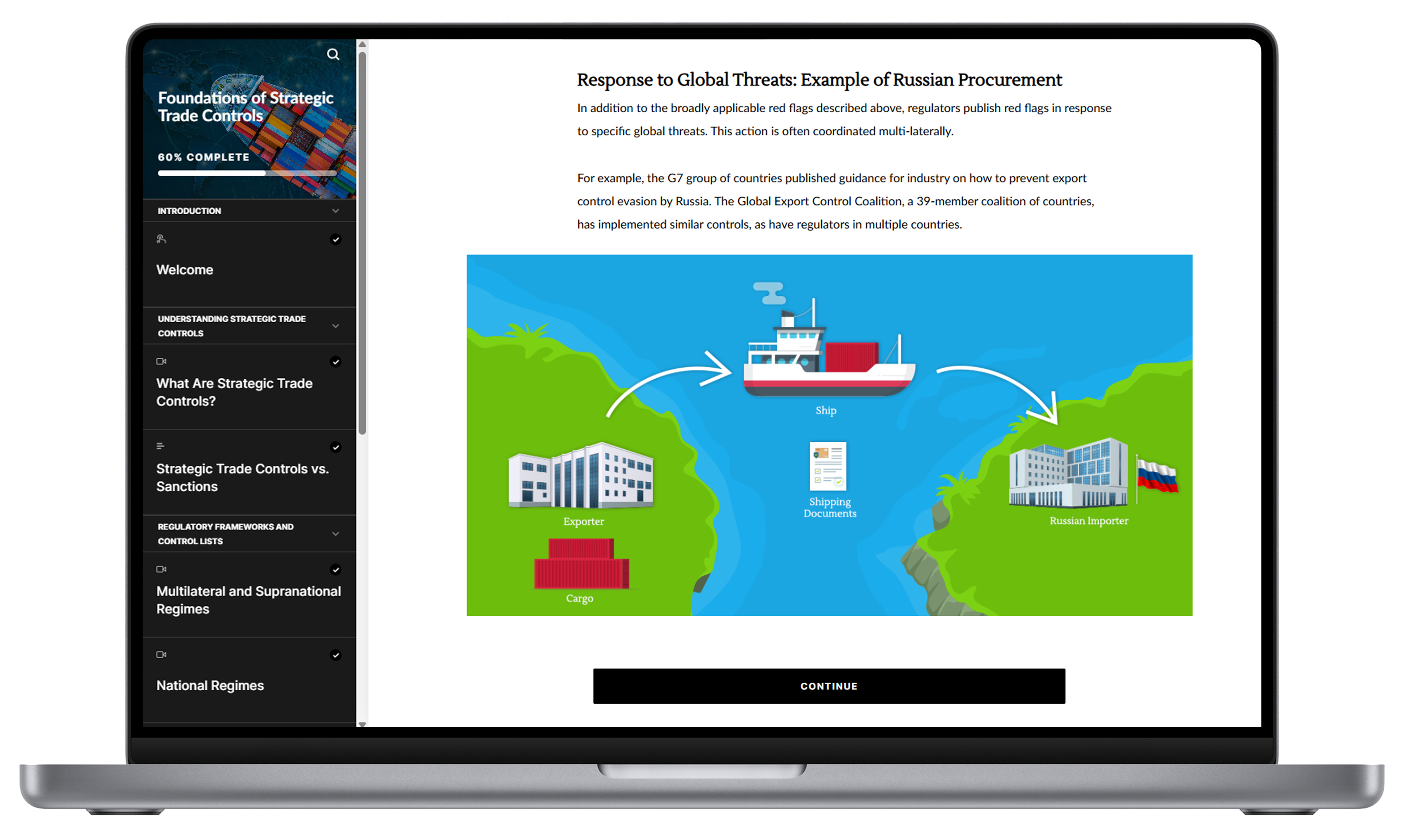
Our course Foundations of Strategic Trade Controls offers a comprehensive overview of how to understand and apply strategic trade control requirements, with a particular focus on those applicable to financial institutions.
Learn more and strengthen your compliance skills today.
 https://finintegrity.org/wp-content/uploads/2026/10/bg-september-2026-se-report.jpg
1199
1600
IFI
https://live-black-pebble.pantheonsite.io/wp-content/uploads/2023/12/GIFI-Placeholder2.png
IFI2026-10-06 07:00:462026-10-05 13:03:02September 2026 Monthly Sanctions and Export Controls Report
https://finintegrity.org/wp-content/uploads/2026/10/bg-september-2026-se-report.jpg
1199
1600
IFI
https://live-black-pebble.pantheonsite.io/wp-content/uploads/2023/12/GIFI-Placeholder2.png
IFI2026-10-06 07:00:462026-10-05 13:03:02September 2026 Monthly Sanctions and Export Controls Report https://finintegrity.org/wp-content/uploads/2026/09/real-estate-risk.jpg
614
1000
IFI
https://live-black-pebble.pantheonsite.io/wp-content/uploads/2023/12/GIFI-Placeholder2.png
IFI2026-09-17 12:40:222026-09-17 20:35:41Real Estate, Real Risks
https://finintegrity.org/wp-content/uploads/2026/09/real-estate-risk.jpg
614
1000
IFI
https://live-black-pebble.pantheonsite.io/wp-content/uploads/2023/12/GIFI-Placeholder2.png
IFI2026-09-17 12:40:222026-09-17 20:35:41Real Estate, Real Risks https://finintegrity.org/wp-content/uploads/2026/09/iran-and-sanctions-landscape-bg.jpg
1013
1800
IFI
https://live-black-pebble.pantheonsite.io/wp-content/uploads/2023/12/GIFI-Placeholder2.png
IFI2026-09-10 07:00:352026-09-17 20:21:30Iran and the Sanctions Landscape
https://finintegrity.org/wp-content/uploads/2026/09/iran-and-sanctions-landscape-bg.jpg
1013
1800
IFI
https://live-black-pebble.pantheonsite.io/wp-content/uploads/2023/12/GIFI-Placeholder2.png
IFI2026-09-10 07:00:352026-09-17 20:21:30Iran and the Sanctions Landscape https://finintegrity.org/wp-content/uploads/2026/09/august-2026-se-report-bg.jpg
888
1184
IFI
https://live-black-pebble.pantheonsite.io/wp-content/uploads/2023/12/GIFI-Placeholder2.png
IFI2026-09-02 07:00:562026-09-01 13:19:24August Monthly Sanctions and Export Controls Report
https://finintegrity.org/wp-content/uploads/2026/09/august-2026-se-report-bg.jpg
888
1184
IFI
https://live-black-pebble.pantheonsite.io/wp-content/uploads/2023/12/GIFI-Placeholder2.png
IFI2026-09-02 07:00:562026-09-01 13:19:24August Monthly Sanctions and Export Controls Report https://finintegrity.org/wp-content/uploads/2026/08/judgement-gap-in-market-abuse-compliance-bg.jpg
841
1500
IFI
https://live-black-pebble.pantheonsite.io/wp-content/uploads/2023/12/GIFI-Placeholder2.png
IFI2026-08-25 07:00:462026-08-24 11:34:59The Judgment Gap in Market Abuse Compliance
https://finintegrity.org/wp-content/uploads/2026/08/judgement-gap-in-market-abuse-compliance-bg.jpg
841
1500
IFI
https://live-black-pebble.pantheonsite.io/wp-content/uploads/2023/12/GIFI-Placeholder2.png
IFI2026-08-25 07:00:462026-08-24 11:34:59The Judgment Gap in Market Abuse Compliance https://finintegrity.org/wp-content/uploads/2026/08/oil-pipeline-bg.jpg
1000
1500
IFI
https://live-black-pebble.pantheonsite.io/wp-content/uploads/2023/12/GIFI-Placeholder2.png
IFI2026-08-19 07:00:062026-08-19 00:07:14The Illicit Oil Pipeline: How Criminal Networks Turn Crude into Clean Cash
https://finintegrity.org/wp-content/uploads/2026/08/oil-pipeline-bg.jpg
1000
1500
IFI
https://live-black-pebble.pantheonsite.io/wp-content/uploads/2023/12/GIFI-Placeholder2.png
IFI2026-08-19 07:00:062026-08-19 00:07:14The Illicit Oil Pipeline: How Criminal Networks Turn Crude into Clean Cash https://finintegrity.org/wp-content/uploads/2026/08/july2026-se-bg.jpg
1177
1800
IFI
https://live-black-pebble.pantheonsite.io/wp-content/uploads/2023/12/GIFI-Placeholder2.png
IFI2026-08-04 07:00:452026-08-04 09:42:02July Monthly Sanctions and Export Controls Report
https://finintegrity.org/wp-content/uploads/2026/08/july2026-se-bg.jpg
1177
1800
IFI
https://live-black-pebble.pantheonsite.io/wp-content/uploads/2023/12/GIFI-Placeholder2.png
IFI2026-08-04 07:00:452026-08-04 09:42:02July Monthly Sanctions and Export Controls Report https://finintegrity.org/wp-content/uploads/2026/07/guide-to-market-abuse-bg.jpg
1067
1600
IFI
https://live-black-pebble.pantheonsite.io/wp-content/uploads/2023/12/GIFI-Placeholder2.png
IFI2026-07-29 07:00:472026-07-28 12:45:11A Financial Institution’s Guide to Updated EU Market Abuse Regulation
https://finintegrity.org/wp-content/uploads/2026/07/guide-to-market-abuse-bg.jpg
1067
1600
IFI
https://live-black-pebble.pantheonsite.io/wp-content/uploads/2023/12/GIFI-Placeholder2.png
IFI2026-07-29 07:00:472026-07-28 12:45:11A Financial Institution’s Guide to Updated EU Market Abuse Regulation https://finintegrity.org/wp-content/uploads/2026/06/june2026-se-report-bg.jpg
798
1200
IFI
https://live-black-pebble.pantheonsite.io/wp-content/uploads/2023/12/GIFI-Placeholder2.png
IFI2026-07-01 07:00:392026-07-02 10:28:58June 2026 Sanctions and Export Controls Report
https://finintegrity.org/wp-content/uploads/2026/06/june2026-se-report-bg.jpg
798
1200
IFI
https://live-black-pebble.pantheonsite.io/wp-content/uploads/2023/12/GIFI-Placeholder2.png
IFI2026-07-01 07:00:392026-07-02 10:28:58June 2026 Sanctions and Export Controls Report
 IFI Expands Arabic Training Offering to Meet Growing Demand