Sanctions and Export Controls Update
Monthly Roundup – May 2026
📅 June 3, 2026

Welcome to this month’s Sanctions and Export Controls Update, highlighting IFI’s take on key developments from May 2026.
May was shaped by a dramatic and unresolved tension at the heart of Iran policy: the U.S. continued its intensive “Economic Fury” sanctions campaign while simultaneously inching toward a tentative memorandum of understanding that would extend the ceasefire, reopen the Strait of Hormuz, and commit both sides to 60 days of nuclear talks in exchange for limited sanctions waivers and a U.S. port blockade lift. By month’s end, negotiators had reached a tentative deal, but President Trump had not signed it, leaving the path forward deeply uncertain.
The UK delivered the month’s most significant structural sanctions development, bringing into force its most expansive Russia sanctions update since the start of the war: the May 20 regulations ban maritime transportation of Russian LNG, restrict imports of Russian-origin oil products processed in third countries, prohibit Russian uranium imports, expand export controls to cover AI, quantum, and semiconductor technology, and add construction services to the professional services ban.
Meanwhile, the Trump administration sharply escalated pressure on Cuba, signing a new IEEPA-based executive order establishing secondary sanctions authority and designating GAESA—the Cuban military’s economic conglomerate—and other regime elites. In enforcement, the month’s headline was a $275 million OFAC settlement with India-based Adani Enterprises for 32 apparent violations of Iran sanctions tied to LPG imports disguised as Omani and Iraqi product—one of the largest Iran-related sanctions penalties in OFAC history, and a significant assertion of extraterritorial jurisdiction over a non-U.S. entity.
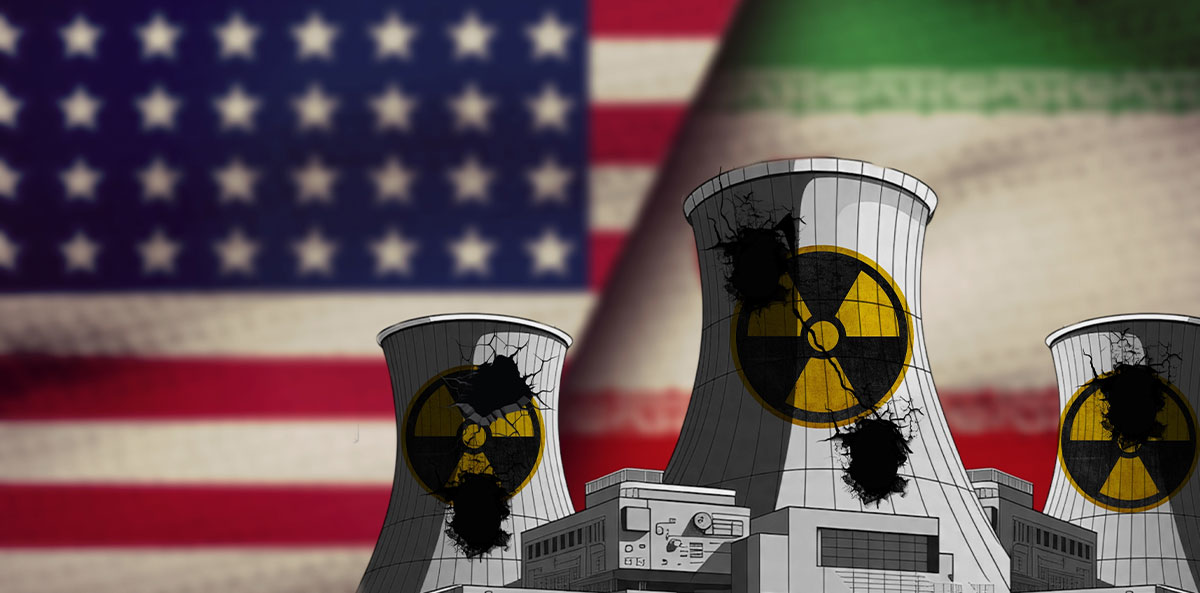
The Iran situation grew simultaneously more pressured and more diplomatically advanced in May. OFAC issued the highest sustained tempo of Economic Fury designations since the campaign’s launch, targeting Iranian oil networks, IRGC front companies, shadow banking exchange houses, Hizballah-supporting Lebanese officials, and Iran’s newly established mechanism for extorting Hormuz transit tolls. At the same time, negotiations mediated by Pakistan and Qatar moved toward a tentative framework that would extend the ceasefire by 60 days, reopen the Strait of Hormuz, and open the door to both nuclear talks and a degree of sanctions relief—though neither President Trump nor Iran’s supreme leader had approved the proposed memorandum by month’s end.
The U.S. issued nine tranches of Economic Fury designations during May, targeting:
OFAC designated Iran’s Persian Gulf Strait Authority (PGSA) under counterterrorism authority, citing its role as an IRGC-linked scheme to extort commercial vessels seeking to transit the Strait of Hormuz. Iran formally established the PGSA on May 5 to operationalize a toll system requiring vessels to submit applications and to follow IRGC-designated routes in exchange for transit permits (reports indicate fees of up to $2 million per vessel have been charged). OFAC had pre-warned on April 28 (FAQ 1249) and again in a standalone alert on May 1 that paying such tolls constitutes a prohibited transaction for U.S. persons and creates significant secondary sanctions exposure for non-U.S. firms.
Negotiations toward a more lasting settlement advanced significantly in the final weeks of May. Mediated by Pakistan and Qatar, the two sides moved toward a memorandum of understanding that would provide for a 60-day ceasefire extension, a gradual reopening of the Strait of Hormuz (in parallel with the U.S. lifting its naval blockade of Iranian ports), and a period of nuclear negotiations. Crucially for sanctions practitioners, the proposed MOU would issue sanctions waivers to allow Iran to sell oil freely and commit the U.S. to negotiate over lifting sanctions and unfreezing Iranian assets during the 60-day window—though U.S. officials emphasized those steps would only be implemented as part of a final, verifiable agreement. For a full overview of the proposed deal’s structure, see Al Jazeera’s explainer on the 60-day proposal.

The United Kingdom delivered the month’s most consequential Russia sanctions development, bringing into force its most expansive set of Russia sanctions regulations since the war began. The package introduces a maritime LNG transportation ban mirroring the EU’s position, new import restrictions on Russian-origin oil products processed in third countries and on Russian uranium, expanded export prohibitions covering AI, quantum, and semiconductor-related technologies, and new professional services bans covering construction. The UK also issued multiple designation packages throughout May, and new Russia-related GL 134C was issued by OFAC.
The UK’s Russia (Sanctions) (EU Exit) (Amendment) Regulations 2026 introduce six major new measures:
The UK designated 35 individuals and entities in a package targeting Russia’s drone supply chains and its trafficking of migrants to support the war. In a landmark first use, the package applied the UK’s Global Irregular Migration and Trafficking in Persons Sanctions (GIMTiPS) regime—the world’s first dedicated human trafficking sanctions framework—designating nine individuals and five companies for recruiting foreign nationals into Russia under false pretenses. The UK also sanctioned 85 individuals and entities involved in Russia’s information warfare campaigns or the forced deportation, indoctrination, and militarization of Ukrainian children, and 18 crypto-related entities and individuals involved in helping Russia evade sanctions.
On May 20, OFAC issued Russia-related General License 134C, updating the authorization for Russian-origin oil products already loaded on vessels, reflecting the administration’s attempt to manage global energy supply concerns alongside its pressure campaign.
May brought a new front in the U.S. administration’s sanctions pressure campaigns with a sweeping Cuba executive order establishing secondary sanctions authority, a suite of new Hizballah and Hamas-related designations, continued Sinaloa Cartel fentanyl network targeting, escalating Cuba pressure, and the month’s landmark $275 million OFAC settlement with Adani Enterprises for Iranian LPG sanctions violations. OFSI also issued its second settlement under its new enforcement framework, penalizing Deutsche Bank for Russia sanctions breaches linked to the same streaming platform at issue in the March Apple settlement.
Trump Signs New IEEPA Executive Order Establishing Secondary Sanctions Authority Against Cuba
On May 1, President Trump signed Executive Order 14404, establishing a new IEEPA-based sanctions program targeting Cuba that significantly expands the reach of U.S. pressure beyond the existing Cuban Assets Control Regulations (CACR). Most significantly, the EO authorizes secondary sanctions against foreign financial institutions (FFIs) that process significant transactions with persons designated under the order. Designable targets include persons operating in specified Cuban economic sectors, those providing material support to the Government of Cuba, those engaged in human rights abuses or corruption, and persons facilitating significant transactions involving designated parties. On May 7, the State Department made the first designations under EO 14404: Grupo de Administración Empresarial S.A. (GAESA), the Cuban military-controlled economic conglomerate estimated to control 40% or more of the Cuban economy; its executive president Ania Guillermina Lastres Morera; and Moa Nickel S.A., a Canadian-Cuban nickel mining joint venture. OFAC simultaneously issued GL 1 and FAQs 1251–1256 clarifying the new program’s scope and providing a wind-down period through June 5, 2026, for transactions involving GAESA. A second round of designations targeting 11 Cuban regime elites and three government organizations was announced by the State Department on May 18. Non-U.S. companies and financial institutions with Cuba-linked operations should urgently assess their exposure to the new secondary sanctions framework.
Treasury Designates Lebanese Security Officials for Supporting Hizballah
OFAC designated nine individuals in Lebanon under E.O. 13224 for obstructing the Lebanon peace process and impeding the disarmament of Hizballah. The most significant designees were Brigadier General Khattar Nasser Eldin, Chief of the National Security Department of Lebanon’s General Directorate for General Security, and Colonel Samir Hamadi, Dahiyah Branch Chief of the Lebanese Armed Forces Intelligence Directorate—both accused of passing military intelligence to Hizballah during its conflict with Israel. These are the first sitting Lebanese state security officials ever sanctioned by the United States, marking a significant escalation in pressure on Lebanese institutions assessed to be facilitating Hizballah’s military posture. The designations came ahead of U.S.-hosted Israeli-Lebanese military talks at the Pentagon on May 29.
UAE Targets Hezbollah Network with New Terror List Designations
The United Arab Emirates added 16 individuals and five entities to its Local Terrorist List for alleged links to Lebanon’s Hezbollah. The measure, under Cabinet Resolution No. 63 of 2026, requires authorities to identify related financial and commercial ties and freeze assets within 24 hours, in line with UAE law. Officials said the action is part of broader efforts to disrupt terrorism financing networks domestically and internationally, whether direct or indirect. All individuals listed are Lebanese nationals, alongside organizations accused of supporting extremist financing activities.
U.S. Sanctions Hamas Supporters of Gaza Flotilla, Muslim Brotherhood
The Treasury Department designated four individuals behind a pro-Hamas flotilla bound for Gaza and operatives linked to Hamas-aligned Muslim Brotherhood networks, accusing them of supporting terrorism and expanding Hamas’ influence. Treasury said the flotilla was organized by the Popular Conference for Palestinians Abroad (PCPA) and included figures tied to Samidoun, a front for the Popular Front for the Liberation of Palestine. OFAC also sanctioned the Palestinian Scholars Association, senior Hamas-linked operatives, and members of the Egypt-based HASM militant group under Executive Order 13224.
OFAC Targets Additional Sinaloa Cartel Fentanyl Networks
On May 20, OFAC sanctioned more than a dozen individuals and entities linked to two distinct Sinaloa Cartel fentanyl trafficking and money laundering networks. The action follows the April 23 designation of 23 individuals and entities across India, Guatemala, and Mexico targeting the Sinaloa Cartel’s precursor chemical supply chain, reflecting OFAC’s continued application of its counterterrorism and counter-narcotics authorities against the full length of the cartel’s operations. The State Department concurrently restricted visas for 75 individuals identified as family members and associates of cartel leadership.
EU Approves Tougher Foreign Investment Screening Rules
The European Parliament announced the approval of new European Union (EU) rules requiring all member states to screen foreign investments in sensitive sectors, including defense, semiconductors, artificial intelligence, critical raw materials, financial services, and other strategic industries, to guard against security and public order risks. The regulation streamlines national screening procedures, strengthens coordination among member states and the European Commission, and extends scrutiny to EU transactions involving investors ultimately controlled from outside the bloc.
May produced a landmark OFAC enforcement action and an important OFSI precedent, alongside additional criminal actions and a notable extraterritorial reach assertion against a major non-U.S. conglomerate.
OFAC Settles with Adani Enterprises for $275 Million Over Iranian LPG Sanctions Violations
On May 18, OFAC announced a $275 million settlement with Adani Enterprises Limited (AEL), the India-based flagship of the Adani Group, resolving 32 apparent violations of the Iran Transactions and Sanctions Regulations (ITSR). From November 2023 to June 2025, AEL purchased shipments of liquefied petroleum gas (LPG) from a Dubai-based trader that falsely represented the cargo as originating from Oman and Iraq. OFAC determined the LPG actually originated from Iran. The transactions caused U.S. financial institutions to process 32 U.S. dollar-denominated payments totaling approximately $192 million. OFAC found that multiple red flags should have alerted AEL to the true origin: vessel tracking anomalies, implausible shipping logistics, unusually discounted pricing, and questionable cargo documentation. The action is notable on multiple dimensions: it is one of the largest Iran-related OFAC enforcement actions in recent memory; it was brought against a non-U.S. company whose only U.S. nexus was dollar-denominated payments routed through U.S. correspondent banks; and it reinforces OFAC’s increasingly expansive view that standard certificate-of-origin reliance and SDN screening are insufficient for high-risk commodity trades. Separately, U.S. prosecutors moved to dismiss the criminal bribery case against Gautam Adani during the same period.
On April 30, 2026 (published May 19), OFSI imposed a £165,000 monetary penalty on Deutsche Bank AG London Branch for two payments totaling £635,618.75 made in June and July 2022 to Okko LLC, a Russian streaming platform wholly owned by JSC New Opportunities, a UK-designated person. This case arose from the same Okko-JSC New Opportunities ownership chain at issue in the March 2026 OFSI settlement with Apple’s Irish subsidiary. The Deutsche Bank case turns on an ownership screening gap rather than deliberate evasion: the bank’s third-party screening vendor had incorporated JSC New Opportunities on its lists but lacked ownership data linking it to Okko at the time of the transactions, and Deutsche Bank’s own review did not catch the nexus—even though open-source reporting of the ownership transfer had appeared in May 2022. OFSI assessed the breach as “serious,” set a baseline penalty of £300,000, and applied a 45% discount for voluntary disclosure and settlement—the second case resolved under the settlement scheme introduced in February 2026. OFSI’s published compliance lessons highlight three points for the financial sector: screening vendors’ ownership data limitations must be understood and supplemented with independent controls; ownership and control screening must be applied, not just SDN name-matching; and prompt, complete voluntary disclosure maximizes penalty discount. Both the Apple and Deutsche Bank cases involved Okko, signaling that OFSI may be actively reviewing institutions that processed Okko-related payments across 2022.
Belarusian Admits Role in Illegal Aviation Exports to Russia
A Belarusian citizen pleaded guilty in a U.S. federal court to illegally exporting U.S.-sourced aircraft components to Russia in violation of the Export Control Reform Act. Yana Leonova admitted that she and her co-conspirators procured avionics and aircraft equipment from U.S. distributors after Russia’s 2022 invasion of Ukraine, then routed the items through Armenia and other countries using false documents and shell companies to conceal their destination. Authorities said the components were intended for aircraft operated or maintained by a Russian company on the U.S. Department of Commerce’s restricted Entity List. Extradited from France in November, Leonova is scheduled for sentencing in August.
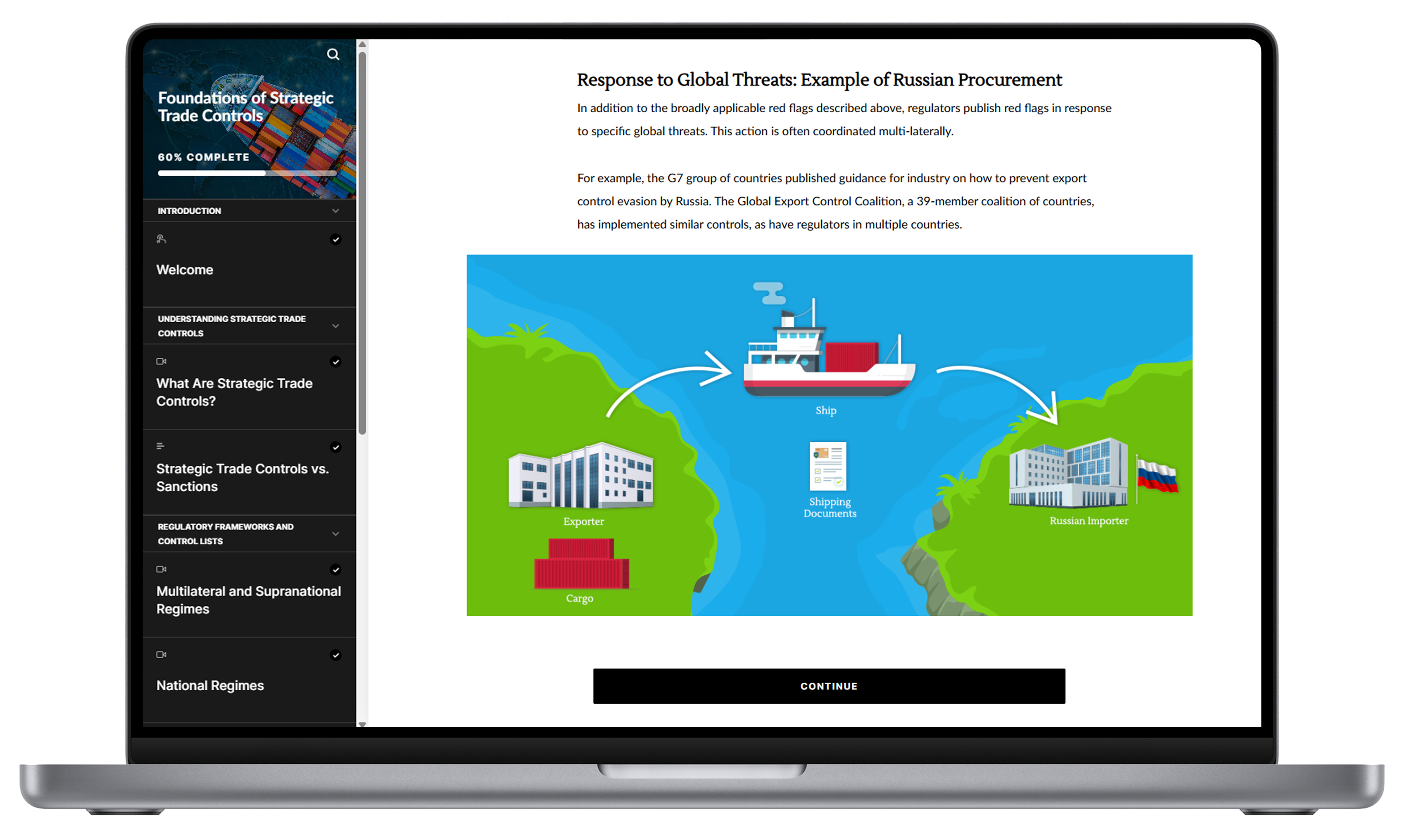
Our course Foundations of Strategic Trade Controls offers a comprehensive overview of how to understand and apply strategic trade control requirements, with a particular focus on those applicable to financial institutions.
Learn more and strengthen your compliance skills today.
 https://finintegrity.org/wp-content/uploads/2026/10/Screenshot-2026-10-20-115053.png
1301
2320
IFI
https://live-black-pebble.pantheonsite.io/wp-content/uploads/2023/12/GIFI-Placeholder2.png
IFI2026-10-21 07:00:052026-10-21 11:26:02Across Borders, Beyond Sight
https://finintegrity.org/wp-content/uploads/2026/10/Screenshot-2026-10-20-115053.png
1301
2320
IFI
https://live-black-pebble.pantheonsite.io/wp-content/uploads/2023/12/GIFI-Placeholder2.png
IFI2026-10-21 07:00:052026-10-21 11:26:02Across Borders, Beyond Sight https://finintegrity.org/wp-content/uploads/2026/10/bg-september-2026-se-report.jpg
1199
1600
IFI
https://live-black-pebble.pantheonsite.io/wp-content/uploads/2023/12/GIFI-Placeholder2.png
IFI2026-10-06 07:00:462026-10-05 13:03:02September 2026 Monthly Sanctions and Export Controls Report
https://finintegrity.org/wp-content/uploads/2026/10/bg-september-2026-se-report.jpg
1199
1600
IFI
https://live-black-pebble.pantheonsite.io/wp-content/uploads/2023/12/GIFI-Placeholder2.png
IFI2026-10-06 07:00:462026-10-05 13:03:02September 2026 Monthly Sanctions and Export Controls Report https://finintegrity.org/wp-content/uploads/2026/09/real-estate-risk.jpg
614
1000
IFI
https://live-black-pebble.pantheonsite.io/wp-content/uploads/2023/12/GIFI-Placeholder2.png
IFI2026-09-17 12:40:222026-09-17 20:35:41Real Estate, Real Risks
https://finintegrity.org/wp-content/uploads/2026/09/real-estate-risk.jpg
614
1000
IFI
https://live-black-pebble.pantheonsite.io/wp-content/uploads/2023/12/GIFI-Placeholder2.png
IFI2026-09-17 12:40:222026-09-17 20:35:41Real Estate, Real Risks https://finintegrity.org/wp-content/uploads/2026/09/iran-and-sanctions-landscape-bg.jpg
1013
1800
IFI
https://live-black-pebble.pantheonsite.io/wp-content/uploads/2023/12/GIFI-Placeholder2.png
IFI2026-09-10 07:00:352026-09-17 20:21:30Iran and the Sanctions Landscape
https://finintegrity.org/wp-content/uploads/2026/09/iran-and-sanctions-landscape-bg.jpg
1013
1800
IFI
https://live-black-pebble.pantheonsite.io/wp-content/uploads/2023/12/GIFI-Placeholder2.png
IFI2026-09-10 07:00:352026-09-17 20:21:30Iran and the Sanctions Landscape https://finintegrity.org/wp-content/uploads/2026/09/august-2026-se-report-bg.jpg
888
1184
IFI
https://live-black-pebble.pantheonsite.io/wp-content/uploads/2023/12/GIFI-Placeholder2.png
IFI2026-09-02 07:00:562026-09-01 13:19:24August Monthly Sanctions and Export Controls Report
https://finintegrity.org/wp-content/uploads/2026/09/august-2026-se-report-bg.jpg
888
1184
IFI
https://live-black-pebble.pantheonsite.io/wp-content/uploads/2023/12/GIFI-Placeholder2.png
IFI2026-09-02 07:00:562026-09-01 13:19:24August Monthly Sanctions and Export Controls Report https://finintegrity.org/wp-content/uploads/2026/08/judgement-gap-in-market-abuse-compliance-bg.jpg
841
1500
IFI
https://live-black-pebble.pantheonsite.io/wp-content/uploads/2023/12/GIFI-Placeholder2.png
IFI2026-08-25 07:00:462026-08-24 11:34:59The Judgment Gap in Market Abuse Compliance
https://finintegrity.org/wp-content/uploads/2026/08/judgement-gap-in-market-abuse-compliance-bg.jpg
841
1500
IFI
https://live-black-pebble.pantheonsite.io/wp-content/uploads/2023/12/GIFI-Placeholder2.png
IFI2026-08-25 07:00:462026-08-24 11:34:59The Judgment Gap in Market Abuse Compliance https://finintegrity.org/wp-content/uploads/2026/08/oil-pipeline-bg.jpg
1000
1500
IFI
https://live-black-pebble.pantheonsite.io/wp-content/uploads/2023/12/GIFI-Placeholder2.png
IFI2026-08-19 07:00:062026-08-19 00:07:14The Illicit Oil Pipeline: How Criminal Networks Turn Crude into Clean Cash
https://finintegrity.org/wp-content/uploads/2026/08/oil-pipeline-bg.jpg
1000
1500
IFI
https://live-black-pebble.pantheonsite.io/wp-content/uploads/2023/12/GIFI-Placeholder2.png
IFI2026-08-19 07:00:062026-08-19 00:07:14The Illicit Oil Pipeline: How Criminal Networks Turn Crude into Clean Cash https://finintegrity.org/wp-content/uploads/2026/08/july2026-se-bg.jpg
1177
1800
IFI
https://live-black-pebble.pantheonsite.io/wp-content/uploads/2023/12/GIFI-Placeholder2.png
IFI2026-08-04 07:00:452026-08-04 09:42:02July Monthly Sanctions and Export Controls Report
https://finintegrity.org/wp-content/uploads/2026/08/july2026-se-bg.jpg
1177
1800
IFI
https://live-black-pebble.pantheonsite.io/wp-content/uploads/2023/12/GIFI-Placeholder2.png
IFI2026-08-04 07:00:452026-08-04 09:42:02July Monthly Sanctions and Export Controls Report https://finintegrity.org/wp-content/uploads/2026/07/guide-to-market-abuse-bg.jpg
1067
1600
IFI
https://live-black-pebble.pantheonsite.io/wp-content/uploads/2023/12/GIFI-Placeholder2.png
IFI2026-07-29 07:00:472026-07-28 12:45:11A Financial Institution’s Guide to Updated EU Market Abuse Regulation
https://finintegrity.org/wp-content/uploads/2026/07/guide-to-market-abuse-bg.jpg
1067
1600
IFI
https://live-black-pebble.pantheonsite.io/wp-content/uploads/2023/12/GIFI-Placeholder2.png
IFI2026-07-29 07:00:472026-07-28 12:45:11A Financial Institution’s Guide to Updated EU Market Abuse Regulation
 Who Owns the Risk?