• Link to LinkedIn
  • Link to Youtube
  • Sign In
  • Register
  • Subscribe
  • Contact
Institute for Financial Integrity
  • Training
    • eLearning Courses

      • Suite of interactive e-learning courses to educate and engage staff on core compliance topics

      • Learn More
    • Video Library

      • An online learning journey through the various domains of financial crime, explore our library of expert-led videos

      • Learn More
    • Training Services

      • Trusted compliance training design, development, and delivery tailored to your unique requirements

      • Learn More
    • Certifications
      • Certified Risk Management Specialist – Global Sanctions
      • Certified Financial Integrity Professional Program
  • Technology
    • DOLFIN

      • A platform that equips financial integrity professionals with the continuing education, expert insights, resources and tools needed to protect the integrity of the global financial system.

      • Learn More
    • AskFIN

      • A revolutionary, AI-powered tool seamlessly integrated with DOLFIN® — the world’s largest and most trusted library of curated resources on financial integrity topics.

      • Learn More
  • Insights
    • Insights
      • Articles
      • Reports & White Papers
      • Webinars
      • Subscribe
  • About Us
    • Who We Are
      • Our Story
      • Leadership
      • Press Releases
    • Who We Serve
      • Financial Institutions
      • Jurisdictions
      • Executives
      • Industry Professionals
  • Get a Demo
  • Menu Menu

Untangling the Threads of Global Economic Tools

Export Controls, Sanctions, and Beyond

📅 March 13, 2025

Ever feel like compliance terms blur into one another—export controls, sanctions and proliferation finance? It’s like trying to untangle a set of earphones that have been stuffed in your pocket for too long—everything feels connected, but where does one strand end and another begin?

In today’s interconnected world, understanding these terms isn’t just for policy experts or compliance officers. Whether you’re a business navigating international trade, a financial institution avoiding penalties, or a policymaker designing frameworks, knowing the distinctions is critical.

This article simplifies the jargon, breaking down what each of these terms really means, where they overlap, and how they differ.

Understanding the Tools of Global Compliance

  • Sanctions Influence Behavior: Sanctions are political and economic measures imposed by governments to influence the behavior of countries, organizations, or individuals. They can include comprehensive bans on financial transactions, asset freezes, and travel bans. These tools aim to achieve policy objectives such as halting nuclear development, combating terrorism, or addressing human rights abuses.
  • Export Controls Safeguard Sensitive Items: Export controls, also called strategic trade controls, are regulations that restrict the trade of goods, software, or technology to protect national and collective security. These controls prevent sensitive materials and dual-use technologies—items that can serve both civilian and military purposes—from falling into the wrong hands.
  • Counter-Proliferation Finance Cuts Off Dangerous Funding: Proliferation finance targets the financial networks that fund the development, acquisition, or spread of weapons of mass destruction (WMDs) by cutting off the monetary resources needed for illicit programs.

Think of sanctions, export controls, and proliferation finance measures as tools in a compliance toolbox. Sanctions act like a hammer, delivering decisive blows to enforce compliance and influence behavior. Export controls function as locks, securing sensitive materials and technologies from misuse. Proliferation finance measures serve as barriers, cutting off the resources needed to fuel weapons of mass destruction. Together, these tools create a robust framework for protecting national security, promoting international stability, and navigating today’s complex regulatory environment.

  • Sanctions have broad and often global applicability. They can target individuals and entities, specific sectors, or even entire nations. For instance, sanctions might involve freezing an individual’s assets, prohibiting trade with a particular industry, or imposing a comprehensive embargo on a country. These sweeping measures make sanctions one of the most powerful foreign policy tools, capable of exerting substantial economic and political pressure.
  • Export Controls, by contrast, are narrower in scope and focus on regulating specific items, such as advanced technology, military equipment, or dual-use goods, and do not block all transactions with a restricted party. They are designed to ensure that sensitive materials do not enhance adversarial capabilities, safeguarding national security and maintaining technological advantages.
  • Proliferation Finance operates with a highly targeted focus, concentrating on financial transactions tied to weapons of mass destruction (WMD) programs. This includes tracking and blocking illicit funds, uncovering shell companies, and dismantling networks that facilitate financial flows supporting WMD development. The precision of proliferation finance measures aims to ensure that critical resources for illicit weapons programs are intercepted effectively.

Who Feels the Impact?

The effects of sanctions, export controls, and proliferation finance measures ripple across various groups, depending on their roles in the global economy:

  • Sanctions impact individuals, governments, financial institutions, and businesses engaged in international trade. For example, sanctions on a nation can limit its access to global markets, disrupt supply chains, and hinder industries reliant on cross-border commerce. Financial institutions play a key role in enforcing sanctions by monitoring transactions, blocking prohibited activities, and ensuring compliance with evolving regulations.
  • Export Controls affect exporters, manufacturers, technology companies, and financial institutions that facilitate trade, among others. While exporters and manufacturers help ensure that controlled goods, software, and technology are not misused, financial institutions have an increasingly critical role. They must conduct due diligence on financing trade deals, ensure transactions comply with export control laws, and identify red flags that could signal violations.
  • Proliferation Finance has a concentrated impact on financial institutions, regulators, and entities that may unknowingly facilitate illicit finance. Financial institutions must implement robust compliance frameworks to detect and block transactions tied to the funding of WMDs.

Where They Overlap: Real-Life Examples in Action

Export Controls + Sanctions, A Unified Blockade

Export controls and sanctions often work in tandem to cut off adversaries from accessing critical technologies and resources. For instance, in response to Russia’s invasion of Ukraine, the United States, EU, and other countries imposed strict export controls on high-priority components including semiconductors, aerospace components, and advanced computing technologies. These controls were paired with sweeping sanctions targeting Russian industries, financial institutions, and influential individuals.

The integration of these tools achieved significant outcomes:

  • Export controls restricted Russia’s ability to acquire essential components for advanced weapons systems, directly impacting its defense supply chain.
  • Sanctions amplified these effects by freezing assets and isolating Russian industries from global markets, ensuring economic and strategic pressure.
  • Together, they created both immediate and long-term challenges to Russia’s military-industrial complex.

Export Controls + Proliferation Finance, Securing Sensitive Resources

Export controls also intersect with proliferation finance measures to block the flow of financial and physical resources necessary for weapons of mass destruction (WMD) programs.

North Korea’s nuclear ambitions highlight this interplay. The international community has combined export controls and proliferation finance measures, including UN Security Council Resolutions targeting WMD proliferation, U.S. Executive Order 13810, and enforcement through OFAC’s North Korea Sanctions Program. Together, these efforts include:

  • Preventing the export of sensitive materials and equipment through comprehensive monitoring and restrictions.
  • Freezing assets and targeting financial networks that facilitate the procurement of restricted goods.
  • Identifying and dismantling shell companies used to bypass export controls and finance illicit activities.

In conclusion, think of these three tools as interconnected guards protecting collective security:

  • Export Controls act as gatekeepers, blocking sensitive materials.
  • Sanctions are the enforcers, applying pressure to influence behavior.
  • Proliferation Finance disrupts the financial pathways for dangerous programs.

Each plays a unique role, but understanding their differences ensures you can navigate compliance risks with precision.

Global Counter-Illicit Finance Training Program

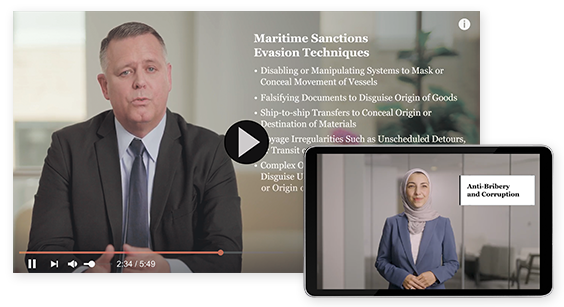
Curated by industry experts from government and leading global financial institutions, this comprehensive training program equips today’s professionals with the essential knowledge and actionable insights necessary to mitigate the ever-evolving threats to the integrity of the global financial system.

Whether new to the field or looking to deepen expertise, this program offers valuable insights to help today’s professionals navigate the complexities of financial integrity and contribute to a more secure global financial landscape.

Learn More

Recommended Blogs

Real Estate, Real Risks

September 17, 2026
The FATF has identified the global real estate sector as an area requiring heightened attention due to its vulnerabilities to money laundering, terrorism financing, sanctions evasion and other illicit activity. This article explores why property transactions attract financial crime.
Read more
https://finintegrity.org/wp-content/uploads/2026/09/real-estate-risk.jpg 614 1000 IFI https://live-black-pebble.pantheonsite.io/wp-content/uploads/2023/12/GIFI-Placeholder2.png IFI2026-09-17 12:40:222026-09-17 20:35:41Real Estate, Real Risks

Iran and the Sanctions Landscape

September 10, 2026
Iran has spent nearly five decades under some form of U.S. economic sanctions, and the network built to evade those sanctions is correspondingly mature. Since February 2025, that architecture has come under the most intensive and sustained pressure it has faced since the 2015 nuclear deal.
Read more
https://finintegrity.org/wp-content/uploads/2026/09/iran-and-sanctions-landscape-bg.jpg 1013 1800 IFI https://live-black-pebble.pantheonsite.io/wp-content/uploads/2023/12/GIFI-Placeholder2.png IFI2026-09-10 07:00:352026-09-17 20:21:30Iran and the Sanctions Landscape

August Monthly Sanctions and Export Controls Report

September 2, 2026
Explore this month’s Sanctions and Export Controls Update, highlighting IFI’s take on key developments from August 2026.
Read more
https://finintegrity.org/wp-content/uploads/2026/09/august-2026-se-report-bg.jpg 888 1184 IFI https://live-black-pebble.pantheonsite.io/wp-content/uploads/2023/12/GIFI-Placeholder2.png IFI2026-09-02 07:00:562026-09-01 13:19:24August Monthly Sanctions and Export Controls Report
The Illicit Oil Pipeline: How Criminal Networks Turn Crude into Clean Cash

August 19, 2026
Money laundering in the oil sector is a highly lucrative global pipeline where illicit networks exploit the massive volume, complex supply chains, and liquid nature of the market. Explore the lifecycle of oil laundering schemes as well as key red flags.
Read more
https://finintegrity.org/wp-content/uploads/2026/08/oil-pipeline-bg.jpg 1000 1500 IFI https://live-black-pebble.pantheonsite.io/wp-content/uploads/2023/12/GIFI-Placeholder2.png IFI2026-08-19 07:00:062026-08-19 00:07:14The Illicit Oil Pipeline: How Criminal Networks Turn Crude into Clean Cash

July Monthly Sanctions and Export Controls Report

August 4, 2026
Explore this month’s Sanctions and Export Controls Update, highlighting IFI’s take on key developments from July 2026.
Read more
https://finintegrity.org/wp-content/uploads/2026/08/july2026-se-bg.jpg 1177 1800 IFI https://live-black-pebble.pantheonsite.io/wp-content/uploads/2023/12/GIFI-Placeholder2.png IFI2026-08-04 07:00:452026-08-04 09:42:02July Monthly Sanctions and Export Controls Report

June 2026 Sanctions and Export Controls Report

July 1, 2026
Explore this month’s Sanctions and Export Controls Update, highlighting IFI’s take on key developments from June 2026.
Read more
https://finintegrity.org/wp-content/uploads/2026/06/june2026-se-report-bg.jpg 798 1200 IFI https://live-black-pebble.pantheonsite.io/wp-content/uploads/2023/12/GIFI-Placeholder2.png IFI2026-07-01 07:00:392026-07-02 10:28:58June 2026 Sanctions and Export Controls Report

Crypto Layering

June 17, 2026
Public blockchains make transactions visible, but that doesn't mean illicit activity is easy to trace. In our latest article, we examine how criminals use crypto layering techniques to obscure fund flows and the practical controls financial institutions can deploy to strengthen their AML programs.
Read more
https://finintegrity.org/wp-content/uploads/2026/06/crypto-layering-bg.jpg 675 1200 IFI https://live-black-pebble.pantheonsite.io/wp-content/uploads/2023/12/GIFI-Placeholder2.png IFI2026-06-17 07:00:012026-06-15 11:44:11Crypto Layering

May 2026 Sanctions and Export Controls Update

June 3, 2026
Explore this month’s Sanctions and Export Controls Update, highlighting IFI’s take on key developments from May 2026.
Read more
https://finintegrity.org/wp-content/uploads/2026/06/may-bg-2026-se.jpg 1200 1800 IFI https://live-black-pebble.pantheonsite.io/wp-content/uploads/2023/12/GIFI-Placeholder2.png IFI2026-06-03 07:00:142026-06-02 14:36:12May 2026 Sanctions and Export Controls Update

April 2026 Monthly Sanctions and Export Controls Report

May 5, 2026
Explore this month’s Sanctions and Export Controls Update, highlighting IFI’s take on key developments from April 2026.
Read more
https://finintegrity.org/wp-content/uploads/2026/05/april-bg-2026-se.jpg 1348 1800 IFI https://live-black-pebble.pantheonsite.io/wp-content/uploads/2023/12/GIFI-Placeholder2.png IFI2026-05-05 07:00:332026-05-06 13:57:33April 2026 Monthly Sanctions and Export Controls Report
Previous Previous Previous Next Next Next
Download IFI Compliance Checklist Report

Follow Us on LinkedIn

Share this article

  • Share on LinkedIn
  • Share by Mail

Recent Articles

  • Dirty Barrels
  • Real Estate, Real Risks
  • Iran and the Sanctions Landscape
  • August Monthly Sanctions and Export Controls Report
  • National Bank of Yemen Launches Enterprise-Wide Compliance Training with IFI

Explore Other Topics

  • Artificial Intelligence
  • Compliance Best Practices
  • Corruption
  • Digital Assets
  • Drug Trafficking
  • European Union
  • Fraud
  • Human Trafficking
  • Investigations
  • Money Laundering
  • Oil and Gas
  • Press Releases
  • Proliferation Finance
  • Regulation
  • Russia
  • Sanctions
  • Strategic Trade Controls / Export Controls
  • Terrorism

View Our Expert Insights

  • Compliance Training Readiness Checklist
  • Inside the Cartels and Chinese Money Laundering Networks Driving Criminal Economies
  • High Stakes – Casinos, Crime, and Cartels
  • From Cost Center to Risk Control
  • Leveraging Artificial Intelligence for Enhanced Financial Compliance
  • The Convergence of Sanctions and AML/CFT Regimes
  • Casinos and Cryptocurrency Driving Illicit Finance in East and Southeast Asia
  • Russia 2024: The Two-Year Anniversary of the Invasion
  • Human Trafficking Crisis after Russia’s Invasion of Ukraine
  • 2024 Trends Report
© DOLFIN Academy LLC 2026
  • Link to LinkedIn
  • Link to Youtube
  • Privacy Policy
Link to: Navigating the Convergence of Sanctions & AML Regimes Link to: Navigating the Convergence of Sanctions & AML Regimes Navigating the Convergence of Sanctions & AML Regimes Link to: False Flags, Fake Docs, and Fraudulent Routes Link to: False Flags, Fake Docs, and Fraudulent Routes False Flags, Fake Docs, and Fraudulent Routes
Scroll to top Scroll to top Scroll to top

This site uses cookies. By continuing to browse the site, you are agreeing to our use of cookies.

Accept settingsHide notification onlySettings

Cookie and Privacy Settings


How we use cookies

We may request cookies to be set on your device. We use cookies to let us know when you visit our websites, how you interact with us, to enrich your user experience, and to customize your relationship with our website.

Click on the different category headings to find out more. You can also change some of your preferences. Note that blocking some types of cookies may impact your experience on our websites and the services we are able to offer.

Essential Website Cookies

These cookies are strictly necessary to provide you with services available through our website and to use some of its features.

Because these cookies are strictly necessary to deliver the website, refusing them will have impact how our site functions. You always can block or delete cookies by changing your browser settings and force blocking all cookies on this website. But this will always prompt you to accept/refuse cookies when revisiting our site.

We fully respect if you want to refuse cookies but to avoid asking you again and again kindly allow us to store a cookie for that. You are free to opt out any time or opt in for other cookies to get a better experience. If you refuse cookies we will remove all set cookies in our domain.

We provide you with a list of stored cookies on your computer in our domain so you can check what we stored. Due to security reasons we are not able to show or modify cookies from other domains. You can check these in your browser security settings.

Google Analytics Cookies

These cookies collect information that is used either in aggregate form to help us understand how our website is being used or how effective our marketing campaigns are, or to help us customize our website and application for you in order to enhance your experience.

If you do not want that we track your visit to our site you can disable tracking in your browser here:

Other external services

We also use different external services like Google Webfonts, Google Maps, and external Video providers. Since these providers may collect personal data like your IP address we allow you to block them here. Please be aware that this might heavily reduce the functionality and appearance of our site. Changes will take effect once you reload the page.

Google Webfont Settings:

Google Map Settings:

Google reCaptcha Settings:

Vimeo and Youtube video embeds:

Privacy Policy

You can read about our cookies and privacy settings in detail on our Privacy Policy Page.

Privacy Policy
Accept settingsHide notification only