Cartels, Cash, and Capital Flows
Five steps financial institutions can take to deliver an effective response to cartel risk
📅 April 22, 2025

Several drug cartels were recently designated as “foreign terrorist organizations” (FTOs) by the United States, representing an amplification in focus on the threat they present to national and collective security, and on the harm fentanyl and narcotics trafficking cause American citizens.
What are the implications for financial institutions of cartels being designated as terrorist organizations?
While designation of cartels is not new and financial institutions should already have effective controls in place, the FTO designations raise the stakes if non-compliance occurs and signal a likely focus for future enforcement action. Now would be a good time for financial institutions to verify the effectiveness of their counter-cartel programs.
Overview of Cartels & Chinese Money Laundering Networks
Cartels continue to adapt their methodologies to acquire, launder, move, and spend funds. Chinese Money Laundering Organizations (CMLOs) are now a key element of cartel operations, as described in this article. One common typology is outlined below.
Cycle 1: Cartel Laundering
Cycle 2: Chinese Capital Transfer
Importantly for financial institutions, the methodology above does not use cross-border payments. USD cash is deposited into U.S. banks, transferred within the U.S. financial system, and subsequently spent in the United States. Chinese RMB are transferred within China. Mexican pesos are moved within Mexico (or an equivalent other countries). The traditional assessment of cross-border payments as being consistent with illicit financial flows, such as “layering” laundered proceeds, is weakened.
The first step for a financial institution is to undertake or update its institutional risk assessment. This will enable it to understand the threat presented by cartels and their money laundering networks, and then to assess and then manage the risks. The risks are different depending on the type of financial institution: banks, crypto firms, and money services businesses (MSBs) and payment processors, will have visibility of different risk indicators and typologies and are exposed to different aspects of cartel operations.
Some examples of these differences and their implications for the institutional risk assessment include:
In addition, as with all illicit finance risk assessments, considerations include how the financial institution is exposed to cartel and related money laundering risks through:
The risk assessment must then inform the processes and systems that comprise the internal controls program of the financial institution.
Since cartels were already designated, even prior to the categorization as FTOs, an institution’s existing controls should already be operating effectively to identify and respond to risk indicators. These controls include due diligence on clients, screening against lists of designated entities and individuals, transaction monitoring to identify risk indicators, and investigations of unusual activity. Investigations may be proactively generated by internal alerts or intelligence-led based on information provided by law enforcement and government Financial Intelligence Units.
Many of the methods used by cartels are shared with other types of illicit activity and should already be built into preventative and detective controls. For example, cartels use front and shell companies to launder the proceeds as well as obscure the source and destination of shipments of precursor chemicals. Front and shell companies are also used in sanctions evasion, export control evasion, and many types of money laundering.
Processes and systems must be regularly updated to ensure they remain up to date on evolving threats and risks. This can be achieved by regularly testing automated systems to ensure they are operating effectively and providing training to staff to ensure their knowledge and skills are current.
For example, traditionally cross-border payments were considered a key indicator of money laundering as illicit networks attempted to move and launder proceeds. As cartels and CMLOs increasingly use “mirror transfers”, cross-border payments are no longer required, and financial institutions can no longer rely on cross-border payments to identify cartel activity. This adaptation in criminal methodologies should feed into automated controls and investigative methodologies.
Training for staff should be customized to how cartel and money laundering activity could present to their role and should link back to risk indicators and typologies. Training should use up-to-date, relevant examples to enhance engagement and knowledge retention, and should be delivered through regular refreshers as well as annual baseline training.
Some examples of customized training relevant to cartel risks are:
Advisories and alerts are regularly issued by government Financial Intelligence Units and other sources, such as FinCEN’s recent financial trend analysis on fentanyl-related illicit finance. Additional sources include analysis and summaries by educational institutions, policy advisors and thinktanks, among others.
Financial institutions should establish processes to identify updates, review them, and apply them within their organization. For example, when an alert with red flags is published, the institution should evaluate which ones are relevant to its business, and how they will be applied within its controls. Some red flags may be suitable to be implemented as automated controls, whereas others may not be sufficiently distinctive and are instead of value as context during an investigation. Institutions should follow a structured approach to assessing and applying red flags, like this one on export controls which can be applied equally to other illicit finance domains.
Institutions would be well advised to consider using advanced data analytics to look beyond red flags to identify new and as-yet-unidentified risk indicators. Data analytics tools can compare groups of clients by entity type, sector, and geography, to identify outliers which can then be investigated to identify whether the unusual patterns are the result of illicit activity.
In addition to regulatory filing requirements such as Suspicious Activity Reports (SARs), financial institutions and public sector organizations should engage in additional initiatives to share intelligence on cartel risks, typologies, and indicators.
Depending on the regulatory provisions and restrictions on intelligence sharing, this may be at the “strategic” or “typology” level, which involves sharing patterns and trends, or at the “tactical” or “operational” level, in which information about specific clients, transactions, and investigations is shared.
The public sector – including law enforcement and government Financial Intelligence Units – has a critical responsibility. While financial institutions can identify unusual activity, leads from law enforcement are critical to provide context for whether this is actually cartel activity. Law enforcement can also provide additional detail that can be used to adapt and fine-tune automated controls, resulting in greater accuracy and more efficient use of resources for both financial institutions and public sector partners.
This article outlines some of the key actions financial institutions should take as part of their counter-cartel programs, which should be expanded and adapted as required depending on the institution’s risk assessment
Cartels and their illicit finances represent significant threats to societies globally and require joint and effective action to respond. This goes beyond compliance: it is about national and collective security, and protecting lives.
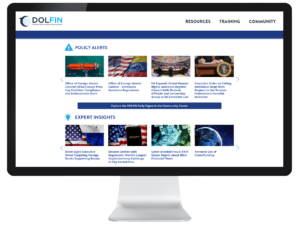
Sign up for the Dedicated Online Financial Integrity Network (DOLFIN). A powerful resource for industry professionals, membership grants unlimited access to our extensive library spanning the core financial integrity topics.
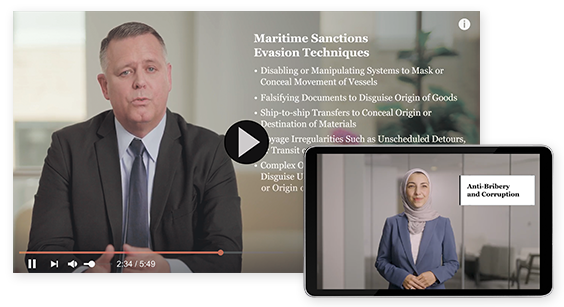
An on-demand video library designed for today’s risk environment, this expert-led training program make complex topics clear, practical, and engaging—ideal for onboarding, upskilling, or refreshing core compliance knowledge across your teams.
 https://finintegrity.org/wp-content/uploads/2026/09/shutterstock_2645005987-scaled.jpg
1706
2560
IFI
https://live-black-pebble.pantheonsite.io/wp-content/uploads/2023/12/GIFI-Placeholder2.png
IFI2026-09-24 07:00:302026-09-24 11:44:27Dirty Barrels
https://finintegrity.org/wp-content/uploads/2026/09/shutterstock_2645005987-scaled.jpg
1706
2560
IFI
https://live-black-pebble.pantheonsite.io/wp-content/uploads/2023/12/GIFI-Placeholder2.png
IFI2026-09-24 07:00:302026-09-24 11:44:27Dirty Barrels https://finintegrity.org/wp-content/uploads/2026/01/bg-synethic-identities.jpg
500
1200
IFI
https://live-black-pebble.pantheonsite.io/wp-content/uploads/2023/12/GIFI-Placeholder2.png
IFI2026-01-08 07:00:252026-03-27 12:40:46Synthetic Identities
https://finintegrity.org/wp-content/uploads/2026/01/bg-synethic-identities.jpg
500
1200
IFI
https://live-black-pebble.pantheonsite.io/wp-content/uploads/2023/12/GIFI-Placeholder2.png
IFI2026-01-08 07:00:252026-03-27 12:40:46Synthetic Identities https://finintegrity.org/wp-content/uploads/2025/08/shutterstock_2599430089-scaled.jpg
1202
2560
IFI
https://live-black-pebble.pantheonsite.io/wp-content/uploads/2023/12/GIFI-Placeholder2.png
IFI2025-08-27 07:00:452026-05-14 14:14:01Deepfake Deep Dive
https://finintegrity.org/wp-content/uploads/2025/08/shutterstock_2599430089-scaled.jpg
1202
2560
IFI
https://live-black-pebble.pantheonsite.io/wp-content/uploads/2023/12/GIFI-Placeholder2.png
IFI2025-08-27 07:00:452026-05-14 14:14:01Deepfake Deep Dive https://finintegrity.org/wp-content/uploads/2025/06/Screenshot-2025-06-03-194254.png
416
767
IFI
https://live-black-pebble.pantheonsite.io/wp-content/uploads/2023/12/GIFI-Placeholder2.png
IFI2025-06-05 07:00:132026-03-04 18:12:30The Network, Not the Node
https://finintegrity.org/wp-content/uploads/2025/06/Screenshot-2025-06-03-194254.png
416
767
IFI
https://live-black-pebble.pantheonsite.io/wp-content/uploads/2023/12/GIFI-Placeholder2.png
IFI2025-06-05 07:00:132026-03-04 18:12:30The Network, Not the Node https://finintegrity.org/wp-content/uploads/2024/11/bg-ai-vs-human-judgement.jpg
1162
1800
IFI
https://live-black-pebble.pantheonsite.io/wp-content/uploads/2023/12/GIFI-Placeholder2.png
IFI2025-04-09 07:00:202025-09-25 15:17:41AI vs. Human Judgment
https://finintegrity.org/wp-content/uploads/2024/11/bg-ai-vs-human-judgement.jpg
1162
1800
IFI
https://live-black-pebble.pantheonsite.io/wp-content/uploads/2023/12/GIFI-Placeholder2.png
IFI2025-04-09 07:00:202025-09-25 15:17:41AI vs. Human Judgment https://finintegrity.org/wp-content/uploads/2025/02/the-heat-is-on-bg.jpg
1157
1800
IFI
https://live-black-pebble.pantheonsite.io/wp-content/uploads/2023/12/GIFI-Placeholder2.png
IFI2025-02-24 07:00:152025-03-26 19:38:52The Heat is On
https://finintegrity.org/wp-content/uploads/2025/02/the-heat-is-on-bg.jpg
1157
1800
IFI
https://live-black-pebble.pantheonsite.io/wp-content/uploads/2023/12/GIFI-Placeholder2.png
IFI2025-02-24 07:00:152025-03-26 19:38:52The Heat is On https://finintegrity.org/wp-content/uploads/2025/01/article-green-gold-rush.jpg
1261
1800
IFI
https://live-black-pebble.pantheonsite.io/wp-content/uploads/2023/12/GIFI-Placeholder2.png
IFI2025-01-13 07:00:472025-09-25 15:00:34The Green Gold Rush
https://finintegrity.org/wp-content/uploads/2025/01/article-green-gold-rush.jpg
1261
1800
IFI
https://live-black-pebble.pantheonsite.io/wp-content/uploads/2023/12/GIFI-Placeholder2.png
IFI2025-01-13 07:00:472025-09-25 15:00:34The Green Gold Rush https://finintegrity.org/wp-content/uploads/2024/12/bg-toward-financial-integrity-risk-management-program.png
835
1800
IFI
https://live-black-pebble.pantheonsite.io/wp-content/uploads/2023/12/GIFI-Placeholder2.png
IFI2024-12-19 07:00:412025-09-25 14:57:22Toward a Financial Integrity Risk Management Program
https://finintegrity.org/wp-content/uploads/2024/12/bg-toward-financial-integrity-risk-management-program.png
835
1800
IFI
https://live-black-pebble.pantheonsite.io/wp-content/uploads/2023/12/GIFI-Placeholder2.png
IFI2024-12-19 07:00:412025-09-25 14:57:22Toward a Financial Integrity Risk Management Program https://finintegrity.org/wp-content/uploads/2024/12/shutterstock_2472894163-scaled.jpg
1403
2560
Lauren Jack
https://live-black-pebble.pantheonsite.io/wp-content/uploads/2023/12/GIFI-Placeholder2.png
Lauren Jack2024-12-12 07:00:342025-09-25 14:57:44Safeguarding Trust – How to Balance Innovation and Security in Gen AI-Powered Compliance
https://finintegrity.org/wp-content/uploads/2024/12/shutterstock_2472894163-scaled.jpg
1403
2560
Lauren Jack
https://live-black-pebble.pantheonsite.io/wp-content/uploads/2023/12/GIFI-Placeholder2.png
Lauren Jack2024-12-12 07:00:342025-09-25 14:57:44Safeguarding Trust – How to Balance Innovation and Security in Gen AI-Powered Compliance
 When Less is More