Sanctions and Export Controls Update
Monthly Roundup – February 2026
📅 March 3, 2026

Welcome to this month’s Sanctions and Export Controls Update, highlighting IFI’s take on key developments from February 2026.
The United States and other nations expanded sanctions on Iran in the lead up to the U.S.-Israeli attacks at the end of February, and the UK announced its largest sanctions package against Russia since early 2022 on the fourth anniversary of Russia’s war in Ukraine. Meanwhile, UK regulators published multiple significant guidance documents associated with sanctions compliance and enforcement, OFAC fined a leading sports academy boarding school, and BIS issued its second-largest penalty in history.
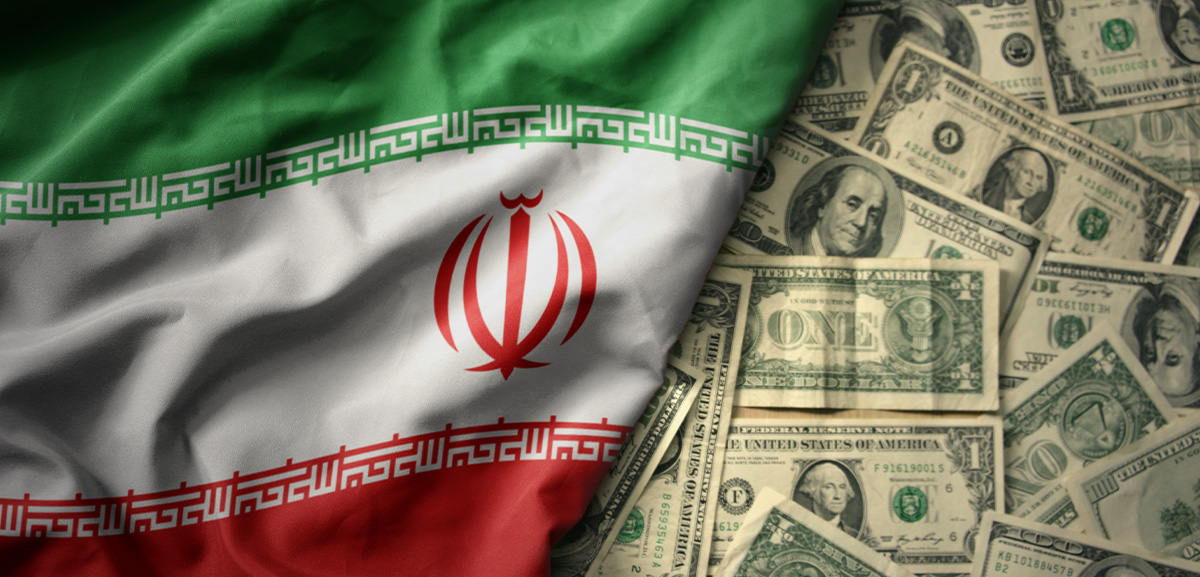
The U.S. imposed two tranches of sanctions targeting Iran’s weapons procurement networks and shadow fleet in the lead up to Operation Epic Fury, and the EU imposed sanctions against Iran’s Islamic Revolutionary Guard Corps (IRGC) after designating it a terrorist organization. The UK, Canada, and Australia also expanded their sanctions on Iran, and India seized three Iranian oil tankers.

In recognition of the fourth anniversary of Russia’s war in Ukraine, the UK announced its largest sanctions package against Russia since early 2022, and Canada, Australia, and New Zealand each lowered the oil price cap and sanctioned over 100 new targets. Meanwhile, the EU failed to reach consensus to adopt its 20th sanctions package on Russia because of a veto by Hungary over a dispute regarding interrupted Russian oil deliveries.

The UK’s Office of Financial Sanctions Implementation (OFSI) issued updated guidance on its enforcement framework, published lessons learned from a recent bank penalty, and is seeking industry input that could lead to revisions to its ownership and control rules. Meanwhile, OFAC issued multiple new general licenses and FAQs associated with Venezuela’s oil industry that were summarized in a State Department press release, BIS imposed its second largest fine—$252M for semiconductor-related exports to China—and six individuals were sentenced to prison for export control violations in four different courts in the U.S. and UK.
UK Publishes Updated Guidance on Financial Sanctions Enforcement and Monetary Penalties
The Office of Financial Sanctions Implementation (OFSI) published updated guidance on sanctions enforcement and monetary penalties. The changes include a revised case assessment framework and settlement scheme, fixed penalties for information and licensing offenses, and a new “Early Account Scheme” through which businesses can report a sanctions breach in exchange for a reduction in the final penalty.
OFSI Highlights Lessons Learned from Recent Bank Penalty
OFSI published a blog post “Sanctions compliance in practice: lessons from OFSI’s £160,000 Bank of Scotland penalty.” The post highlights four main lessons: (1) screening data and configuration really matter, (2) automation is not a safety net, (3) training must match today’s sanctions landscape, and (4) voluntary disclosure can shape the outcome.
OFSI Seeking Industry Input on Ownership & Control Rules
OFSI launched a “call for evidence” to seek industry’s views on how UK financial sanctions regulations on ownership and control are applied in practice, including how firms implement the regulations and where they face challenges.
UK Updates Sanctions Compliance Guidance for Law Firms
The UK’s Solicitors Regulation Authority (SRA) updated its sanctions compliance guidance. The updates include additional red flag indicators to include staff screening and self-reporting duties, clarify when firms must report issues to both the SRA and the OFSI, modify guidance on sanctions licensing, and provide a case study on how firms may inadvertently breach sanctions rules.
OFAC issued five general licenses (GLs) and released 12 Frequently Asked Questions (FAQs) in February associated with the easing of sanctions to reopen and develop Venezuela’s oil industry, and the State Department published a press release summarizing these actions.
EU Adds Iran’s Revolutionary Guard to Terrorist List, Freezes Assets
The European Council imposed sanctions against Iran’s Islamic Revolutionary Guard Corps (IRGC) after it formally designated the group as a terrorist organization. With the addition, 13 individuals and 23 entities are now subject to measures under the EU terrorist list. The EU terrorist sanctions regime is separate from the framework implementing UN sanctions targeting al-Qaida and the Islamic group.
UN Security Council Extends Taliban Sanctions Monitoring Team
The United Nations (UN) Security Council unanimously adopted a resolution extending for 12 months the mandate of the team monitoring sanctions against the Taliban and its affiliated groups. The monitoring team was established to report violations, inform the UN sanctions committee, and recommend responses.
U.S. Sanctions Gold Trading, Shipping Network Tied to Hizballah
OFAC designated Lebanon-based gold exchange Jood SARL, accusing it of exploiting Lebanon’s cash economy and converting Hizballah’s gold reserves into cash. OFAC also targeted a procurement and commodities scheme involving Iran, Russia, and Türkiye that allegedly moved millions of dollars’ worth of fertilizer and supported weapons procurement.
Kuwait Adds Eight Lebanese Hospitals to Terrorism Sanctions List
Kuwait included eight Lebanese hospitals on its national sanctions list, citing its counterterrorism measures tied to United Nations Security Council resolutions issued under Chapter VII. The additions include the Sheikh Ragheb Harb University Hospital, Salah Ghandour Hospital, Al Amal Hospital, Saint George Hospital, Dar Al Hikma Hospital, and Al Batoul Hospital.
Kenya Lists 13 Under UN Sanctions on Terrorism Financing
Kenya designated 13 individuals under targeted financial sanctions linked to terrorism financing, ordering an immediate freeze of their assets, the Kenyan Financial Reporting Centre (FRC) announced. The FRC said the designations were made under United Nations Security Council Resolution 1373 and Kenya’s Prevention of Terrorism laws, following a decision by the Counter Financing of Terrorism Inter-Ministerial Committee.
EU Strengthens Scope of EU Terrorist List
The Council of the EU strengthened the scope of EU restrictive measures to combat terrorism by expanding the listing criteria to (1) allow the EU to target leading members EU-designated groups, and (2) allow for restrictive measures against persons, groups, and entities associated with those involved in terrorist acts.
U.S. Imposes First Sanctions Under Intellectual Property Authority
Treasury designated Russian national Sergey Sergeyevich Zelenyuk, his company Matrix, operating as Operation Zero, and five associates for acquiring and selling stolen U.S. government cyber tools. The State Department concurrently imposed sanctions on a Russia-based cyber exploits broker network in connection with the theft of trade secrets from U.S. persons. These were the first-ever actions under the Protecting American Intellectual Property Act (PAIPA).
UN, U.S., and UK Impose Sanctions on Additional Sudanese Commanders
The UN Security Council’s 1591 Sanctions Committee added four senior commanders of Sudan’s Rapid Support Forces (RSF) to its sanctions list over alleged atrocities in Darfur, and the U.S. sanctioned three RSF commanders for atrocities committed in El-Fasher, Sudan. The UK imposed sanctions on senior commanders from the RSF and Sudanese Armed Forces, as well as individuals suspected of recruiting foreign mercenaries and facilitating the financing and procurement of weapons.
The sanctions aim to hold perpetrators accountable amid what the United Nations has described as one of the world’s worst humanitarian crises, marked by mass displacement, food insecurity, and widespread reports of killings and sexual violence. The actions are part of broader diplomatic and humanitarian efforts to push for a ceasefire, expand aid access, and increase international pressure on Sudan’s warring parties.
U.S. Sanctions Mexican Resort, Cartel Network Involved in Timeshare Fraud
OFAC sanctioned a Mexican timeshare resort and a network tied to the Cartel de Jalisco Nueva Generación (CJNG), accusing the group of defrauding thousands of Americans. The action targeted Kovay Gardens near Puerto Vallarta, five individuals, and 17 companies linked to CJNG’s timeshare fraud operations. The cartel reportedly used call centers and deceptive sales tactics to steal millions, often from older Americans. According to the FBI, about 6,000 U.S. victims lost nearly $300 million between 2019 and 2023, and in 2024, nearly 900 complaints cited losses exceeding $50 million.
BIS Imposes Second-Largest Fine for Semiconductor-Related Exports to China
The U.S. Commerce Department’s Bureau of Industry and Security (BIS) said Applied Materials Inc. will pay about $252 million to settle allegations that it illegally exported U.S. semiconductor manufacturing equipment to China. BIS said the Santa Clara, California-based company shipped ion implanters, valued at about $126 million, to a Chinese firm on the Entity List without the required license. The penalty, the second largest imposed by BIS and the statutory maximum, is twice the value of the transactions. Applied Materials agreed to conduct audits of its export compliance program and submit annual certifications.
U.S. Firm, Executives Sentenced Over Illegal Tech Exports to Russia
A Virginia freight company and two of its executives were sentenced for illegally exporting millions of dollars in U.S. technology to Russia in violation of federal export laws. Court records showed that the company engaged in a conspiracy to ship controlled goods to Russia through Türkiye, Finland, and Kazakhstan. Some shipments included telecommunications equipment with military applications and electronic components identified as critical to Russian weaponry, including drones used in Ukraine.
Bulgarian National Gets 38 Months’ Imprisonment for Illegal U.S. Chips Exports to Russia
A federal court in Austin, Texas, sentenced a Bulgarian national to 38 months’ imprisonment for conspiring to illegally export sensitive U.S.-origin microelectronics to Russia. Prosecutors said he worked for Multi Technology Integration Group (MTIG), a Bulgarian company that helped Russian firms obtain radiation-hardened and high-temperature electronic circuits from an Austin supplier after U.S. export controls were imposed following Russia’s 2014 invasion of Crimea.
U.S. Court Hands Prison Terms to Two Accused of Conspiracy to Export U.S. Weapons to South Sudan
The U.S. Federal Court in the District of Arizona has handed prison terms to two men for conspiring to illegally export U.S. military-grade weapons to South Sudan to support a planned coup. Prosecutors said the two sought to acquire and ship nearly $4 million in weapons and ammunition, including missile systems, grenade launchers, firearms, and millions of rounds of ammunition, without the required licenses.
Former U.S. Air Force Major Charged in Alleged China Training Scheme
A former U.S. Air Force officer and pilot was arrested in Indiana and charged in a criminal complaint with providing unauthorized defense services to Chinese military pilots. The complaint alleges that starting in August 2023, he conspired to provide combat aircraft training to the Chinese air force without a required Department of State license under the Arms Export Control Act and International Traffic in Arms Regulations.
Official at UK Firm Sentenced for Illicit Export of Military Night Vision Sights
A company director was sentenced to more than two years in prison for attempting to export military-grade rifle sights to Hong Kong without a license, British authorities said. The individual tried to ship eight thermal imaging sights classified under the UK Military List, falsely labeling them as low-value cameras. Border Force officers seized the equipment at Manchester Airport in 2022 and 2023, and a later home search uncovered evidence of 10 additional unlicensed shipments.
Taiwan Expands Export Controls on Sensitive Semiconductor Equipment
Taiwan’s Ministry of Economic Affairs has added 18 high-tech products, including semiconductor equipment, to its export control list to curb weapons proliferation risks. The newly listed items include tools for CMOS integrated circuits, cryogenic cooling systems, electron microscopes, and low-temperature wafer testing systems, which officials see as having potential military applications.
Beijing Targets Japanese Firms Over Security Concerns
China’s Commerce Ministry imposed export controls on 20 Japanese entities, including Mitsubishi and Japan’s space agency, citing national security concerns and alleged military ties. Another 20 entities, including Subaru, were placed on a “watch list,” subjecting exports of dual-use items to stricter review. Beijing said the measures aim to curb Japan’s “remilitarization” and nuclear ambitions and would not affect normal trade.
Polish Prosecutors Block Alleged Tech Supply Route to Russia
Poland has charged six individuals with attempting to smuggle sanctioned high-tech equipment to Russia in violation of international sanctions. The suspects—four Belarusian nationals and two Polish citizens—sought to transfer devices used to automate the production of integrated circuits through Belarus. Authorities said the equipment could have supported the production of military technology, including components for combat drones.
U.S. Forges Pact with UAE to Boost Critical Minerals Supply Chains
The U.S. and the UAE signed a framework to strengthen cooperation on securing rare earths and critical minerals vital to defense, advanced technology, and industrial resilience. The agreement was signed on the sidelines of the U.S. Critical Minerals Ministerial in Washington, which brought together government and industry leaders focused on supply chain security. The framework outlines a coordinated, investment-led approach covering mining, processing, recycling, and downstream manufacturing.
U.S. Treasury Launches New Voluntary Self-Disclosure Portal
OFAC launched a new online voluntary self-disclosure portal, which provides a streamlined, secure method for submitting voluntary self-disclosures of potential violations of OFAC-administered sanctions programs.
OFAC Settles Sanctions Case Involving IMG Academy
OFAC reached a $1.72 million settlement with IMG Academy LLC over 89 apparent violations of U.S. counternarcotics sanctions. OFAC said that between 2019 and 2025, the Florida-based sports training institution entered into annual tuition agreements and processed payments involving two individuals designated as Specially Designated Nationals for ties to a Mexico-based drug cartel.
German Lawmaker Held for Investigation Over EU Sanctions Violations
German police detained a far-right Alternative for Germany (AfD) lawmaker for questioning over suspected violations of EU export sanctions on Belarus. Jörg Dornau, a Saxony state parliament member, was taken from the chamber after legislators voted to lift his parliamentary immunity. Leipzig prosecutors alleged that Dornau exported a vehicle crane to Belarus in 2022 and falsely declared Kazakhstan as its destination.
EU Lifts Asset Freezes, Travel Bans, Extends Arms Restrictions on Zimbabwe
The EU lifted asset freezes and travel bans on Zimbabwe following its annual review of restrictive measures imposed in 2002. The European Council, meanwhile, renewed an arms embargo for another year in light of the situation in the country.
Canada Updates Syria Sanctions Framework with Targeted Additions
Canada amended its sanctions regime related to Syria, removing 24 entities and one individual from its Syria Regulations to ease restrictions on economic activity and facilitate transactions with certain state-affiliated entities in sectors considered vital to Syria’s recovery. The changes include the delisting of several Syrian financial institutions, energy companies, and media organizations, while maintaining the ability to impose targeted measures against those deemed responsible for abuses or destabilizing activities.
U.S. Sanctions Nicaraguan Prison Director Over Human Rights Abuses
The State Department designated Roberto Clemente Guevara Gómez, the maximum security director of Nicaragua’s La Modelo prison, for gross violation of human rights against a political prisoner. The action supports accountability for abuses committed under the Murillo-Ortega regime. As a result of the designation, Guevara Gómez and his immediate family members are ineligible for entry into the United States.
U.S. Sanctions Leaders of Nicaragua’s Financial Intelligence Unit
OFAC sanctioned five Nicaraguan officials for enabling the Murillo-Ortega dictatorship’s repression, including leaders of financial, communications, and military agencies that were used to stifle dissent. The sanctioned individuals include the director and deputy director of Nicaragua’s Financial Intelligence Unit (FIU), along with the minister of labor, the deputy director of the telecommunications regulator TELCOR, and the head of military intelligence. According to Treasury, the agencies weaponized anti-money laundering laws and surveillance technology to monitor protesters and journalists.
U.S. Treasury Declares Swiss Bank to be a Primary Money Laundering Concern
FinCEN proposed a rule that would bar Swiss-based MBaer Merchant Bank AG from accessing the U.S. financial system, citing support for illicit actors linked to Russia, Iran, and Venezuelan corruption. If finalized, the measure would prohibit U.S. financial institutions from opening or maintaining correspondent accounts for or on behalf of MBaer under Section 311 of the USA PATRIOT Act.
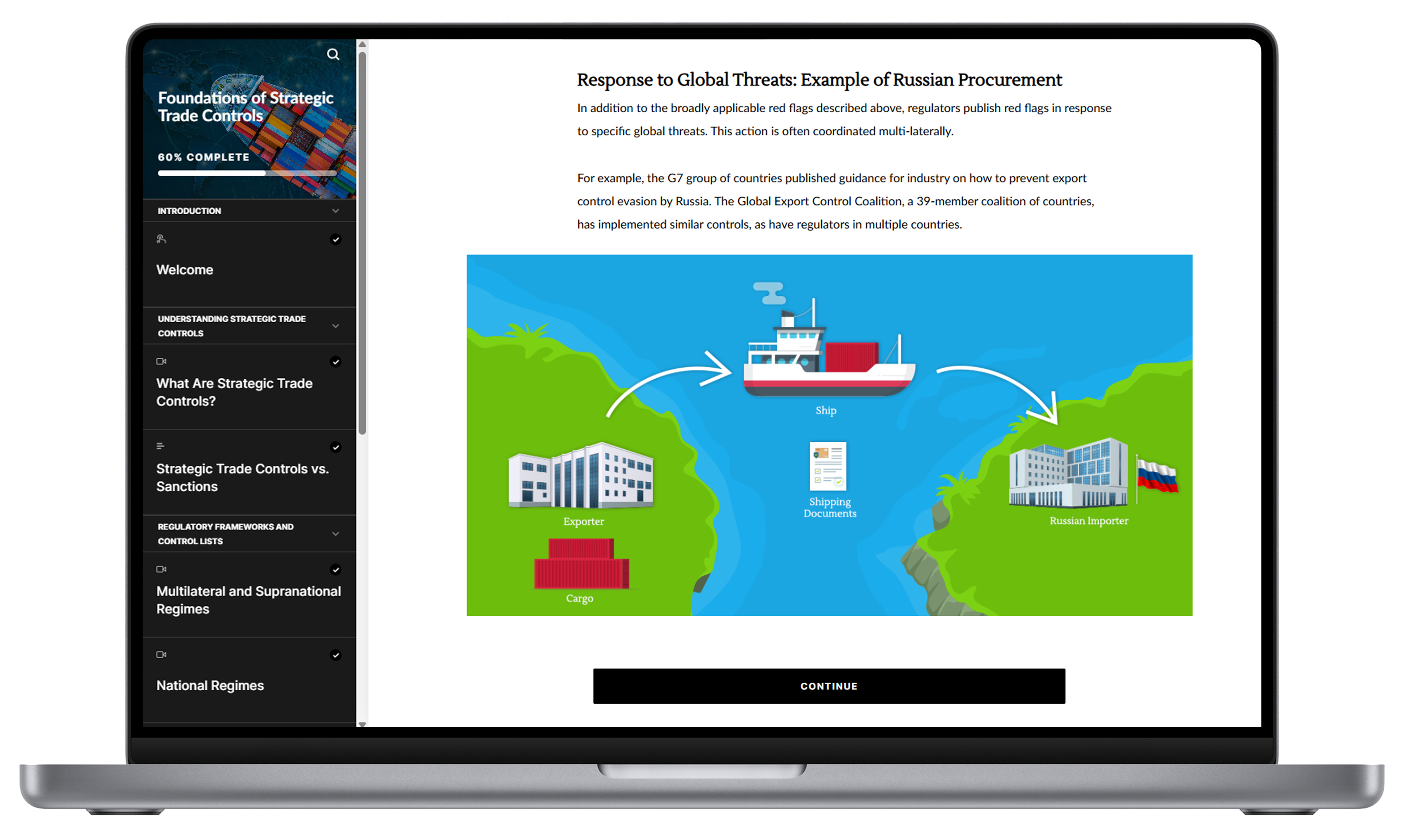
Our course Foundations of Strategic Trade Controls offers a comprehensive overview of how to understand and apply strategic trade control requirements, with a particular focus on those applicable to financial institutions.
Learn more and strengthen your compliance skills today.
 https://finintegrity.org/wp-content/uploads/2026/03/understandingfatf-bg.jpg
1000
1500
IFI
https://live-black-pebble.pantheonsite.io/wp-content/uploads/2023/12/GIFI-Placeholder2.png
IFI2026-04-08 07:00:352026-04-08 09:13:38Understanding the FATF: A Guide for Private Sector Stakeholders
https://finintegrity.org/wp-content/uploads/2026/03/understandingfatf-bg.jpg
1000
1500
IFI
https://live-black-pebble.pantheonsite.io/wp-content/uploads/2023/12/GIFI-Placeholder2.png
IFI2026-04-08 07:00:352026-04-08 09:13:38Understanding the FATF: A Guide for Private Sector Stakeholders https://finintegrity.org/wp-content/uploads/2026/04/march2026-header-bg.jpg
944
1500
IFI
https://live-black-pebble.pantheonsite.io/wp-content/uploads/2023/12/GIFI-Placeholder2.png
IFI2026-04-02 07:00:502026-04-08 19:51:19March 2026 Monthly Sanctions and Export Controls Report
https://finintegrity.org/wp-content/uploads/2026/04/march2026-header-bg.jpg
944
1500
IFI
https://live-black-pebble.pantheonsite.io/wp-content/uploads/2023/12/GIFI-Placeholder2.png
IFI2026-04-02 07:00:502026-04-08 19:51:19March 2026 Monthly Sanctions and Export Controls Report https://finintegrity.org/wp-content/uploads/2026/01/article-eftfs-bg.jpg
800
1200
IFI
https://live-black-pebble.pantheonsite.io/wp-content/uploads/2023/12/GIFI-Placeholder2.png
IFI2026-02-05 07:00:282026-03-27 12:32:49Electronic Fund Transfer Consumer Protection
https://finintegrity.org/wp-content/uploads/2026/01/article-eftfs-bg.jpg
800
1200
IFI
https://live-black-pebble.pantheonsite.io/wp-content/uploads/2023/12/GIFI-Placeholder2.png
IFI2026-02-05 07:00:282026-03-27 12:32:49Electronic Fund Transfer Consumer Protection https://finintegrity.org/wp-content/uploads/2026/02/bg-jan2026.jpg
690
1200
IFI
https://live-black-pebble.pantheonsite.io/wp-content/uploads/2023/12/GIFI-Placeholder2.png
IFI2026-02-03 07:00:332026-03-27 12:34:22January 2026 Monthly Sanctions and Export Controls Report
https://finintegrity.org/wp-content/uploads/2026/02/bg-jan2026.jpg
690
1200
IFI
https://live-black-pebble.pantheonsite.io/wp-content/uploads/2023/12/GIFI-Placeholder2.png
IFI2026-02-03 07:00:332026-03-27 12:34:22January 2026 Monthly Sanctions and Export Controls Report https://finintegrity.org/wp-content/uploads/2026/01/following-ilicit-funds-bg.jpg
808
1500
IFI
https://live-black-pebble.pantheonsite.io/wp-content/uploads/2023/12/GIFI-Placeholder2.png
IFI2026-01-28 07:00:532026-03-27 12:35:12Following the Illicit Funds
https://finintegrity.org/wp-content/uploads/2026/01/following-ilicit-funds-bg.jpg
808
1500
IFI
https://live-black-pebble.pantheonsite.io/wp-content/uploads/2023/12/GIFI-Placeholder2.png
IFI2026-01-28 07:00:532026-03-27 12:35:12Following the Illicit Funds https://finintegrity.org/wp-content/uploads/2025/12/blind-spots-in-the-system-bg.jpg
1066
1600
IFI
https://live-black-pebble.pantheonsite.io/wp-content/uploads/2023/12/GIFI-Placeholder2.png
IFI2026-01-21 07:00:252026-03-27 12:38:36Blind Spots in the System
https://finintegrity.org/wp-content/uploads/2025/12/blind-spots-in-the-system-bg.jpg
1066
1600
IFI
https://live-black-pebble.pantheonsite.io/wp-content/uploads/2023/12/GIFI-Placeholder2.png
IFI2026-01-21 07:00:252026-03-27 12:38:36Blind Spots in the System https://finintegrity.org/wp-content/uploads/2025/04/article-intensifying-focus.png
217
379
IFI
https://live-black-pebble.pantheonsite.io/wp-content/uploads/2023/12/GIFI-Placeholder2.png
IFI2026-01-06 07:00:382026-01-06 08:15:24December 2025 Monthly Sanctions and Export Controls Report
https://finintegrity.org/wp-content/uploads/2025/04/article-intensifying-focus.png
217
379
IFI
https://live-black-pebble.pantheonsite.io/wp-content/uploads/2023/12/GIFI-Placeholder2.png
IFI2026-01-06 07:00:382026-01-06 08:15:24December 2025 Monthly Sanctions and Export Controls Report https://finintegrity.org/wp-content/uploads/2025/10/bg-secondary-sanctions.jpg
1200
1800
IFI
https://live-black-pebble.pantheonsite.io/wp-content/uploads/2023/12/GIFI-Placeholder2.png
IFI2025-12-16 07:00:392025-12-16 07:20:47The Use of Secondary Sanctions
https://finintegrity.org/wp-content/uploads/2025/10/bg-secondary-sanctions.jpg
1200
1800
IFI
https://live-black-pebble.pantheonsite.io/wp-content/uploads/2023/12/GIFI-Placeholder2.png
IFI2025-12-16 07:00:392025-12-16 07:20:47The Use of Secondary Sanctions https://finintegrity.org/wp-content/uploads/2025/12/bg-enforcement.jpg
993
1500
IFI
https://live-black-pebble.pantheonsite.io/wp-content/uploads/2023/12/GIFI-Placeholder2.png
IFI2025-12-09 07:00:472025-12-15 09:33:55AML/CFT and Sanctions Enforcement Actions in 2025
https://finintegrity.org/wp-content/uploads/2025/12/bg-enforcement.jpg
993
1500
IFI
https://live-black-pebble.pantheonsite.io/wp-content/uploads/2023/12/GIFI-Placeholder2.png
IFI2025-12-09 07:00:472025-12-15 09:33:55AML/CFT and Sanctions Enforcement Actions in 2025
 Compliance Training as a Strategic Control