• Link to LinkedIn
  • Link to Youtube
  • Sign In
  • Register
  • Subscribe
  • Contact
Institute for Financial Integrity
  • Training
    • eLearning Courses

      • Suite of interactive e-learning courses to educate and engage staff on core compliance topics

      • Learn More
    • Video Library

      • An online learning journey through the various domains of financial crime, explore our library of expert-led videos

      • Learn More
    • Training Services

      • Trusted compliance training design, development, and delivery tailored to your unique requirements

      • Learn More
    • Certifications
      • Certified Risk Management Specialist – Global Sanctions
      • Certified Financial Integrity Professional Program
  • Technology
    • DOLFIN

      • A platform that equips financial integrity professionals with the continuing education, expert insights, resources and tools needed to protect the integrity of the global financial system.

      • Learn More
    • AskFIN

      • A revolutionary, AI-powered tool seamlessly integrated with DOLFIN® — the world’s largest and most trusted library of curated resources on financial integrity topics.

      • Learn More
  • Insights
    • Insights
      • Articles
      • Reports & White Papers
      • Webinars
      • Subscribe
  • About Us
    • Who We Are
      • Our Story
      • Leadership
      • Press Releases
    • Who We Serve
      • Financial Institutions
      • Jurisdictions
      • Executives
      • Industry Professionals
  • Get a Demo
  • Menu Menu

A $3 Billion Mistake

How TD Bank’s Compliance Gaps Opened the Door to Criminal Networks

📅 October 22, 2024

From Neglect to Consequences: A Landmark in AML Enforcement

On October 10, 2024, TD Bank made history—but not the kind any bank wants to be known for. The U.S. Department of Justice, along with the Office of the Comptroller of the Currency (OCC), and the Financial Crimes Enforcement Network (FinCEN), imposed a staggering more than $3 billion penalty on TD Bank for violating anti-money laundering (AML) laws. It’s the largest penalty ever imposed on a bank for failing to comply with the Bank Secrecy Act (BSA), and it’s a case that highlights just how costly non-compliance can be.

For over a decade, TD Bank turned a blind eye to its AML responsibilities, letting over $18 trillion in transactions slip through its systems without proper oversight. These lapses allowed money tied to drug trafficking, terrorist financing, and even human trafficking to flow through the bank undetected. As Deputy Secretary of the Treasury Wally Adeyemo bluntly said, “TD Bank did the opposite” of protecting the U.S. financial system. Instead, the bank’s failures provided a “fertile ground” for criminal activity to thrive.

This case serves as a wake-up call for financial institutions everywhere. TD Bank’s negligence spanned years, and it left the door wide open for illegal transactions to enter the U.S. financial system. As FinCEN Director Andrea Gacki said, “For over a decade, TD Bank allowed its AML program to languish,” making it an easy target for criminals—including its own employees. The consequences are clear: neglecting compliance can cost billions, damage reputations, and shake the very foundation of a financial institution.

What Went Wrong: How TD Bank’s Compliance Failures Unfolded

TD Bank’s massive $3 billion in fines wasn’t just the result of a few missteps—it was caused by years of deep-rooted failures in its AML program. These problems ran across the entire bank, pointing to a culture that prioritized profit over compliance. Here’s what went wrong:

  1. Failure to Comply with the Bank Secrecy Act (BSA): TD Bank was found guilty of multiple violations of the BSA, including failing to maintain an AML program that complies with the law. The bank’s AML program didn’t do enough to catch and report suspicious activity, allowing trillions of dollars to move through the system with little oversight. In fact, more than 92% of the bank’s transactions—totaling about $18.3 trillion—went unmonitored between 2018 and 2024, indicating that it became a common conduit for criminal organizations to launder funds.
  2. Failure to File Currency Transaction Reports (CTRs): TD Bank also failed to submit accurate Currency Transaction Reports (CTRs), which are required for cash transactions of over $10,000. Instead, the bank either ignored or misreported these deposits. For instance, in one case, employees allowed a high-risk jewelry business to move nearly $120 million through shell accounts without filing the required reports.
  3. Laundering Money for Criminal Networks: TD Bank admitted to being involved in money laundering. Its weak internal controls made it a go-to bank for multiple criminal organizations, including drug trafficking and money laundering rings. In one instance, a network laundered over $470 million through nominee accounts, with corrupt bank employees accepting over $57,000 in bribes to help the illicit actors launder money.
  4. Customer Due Diligence Systemic Deficiencies: TD Bank also failed to maintain an effective Customer Due Diligence (CDD) process, which is a core pillar of AML compliance. The bank neglected to collect and review key information needed to build an accurate customer risk profile. As a result, high-risk customers were allowed to move significant amounts of money without proper scrutiny, further exposing the bank to illegal activities.
  5. Outdated Transaction Monitoring: The bank failed to update its transaction monitoring systems to keep up with emerging risks. From 2014 to 2022, TD Bank didn’t make meaningful improvements, even when new products like digital payments platform Zelle and peer-to-peer payments were introduced. As a result, transactions from high-risk countries and other suspicious activities were overlooked, even in accounts the bank had flagged for closure.
  6. Culture of Negligence and Corruption and Lack of Effective Governance: TD Bank’s leadership prioritized profit over compliance. Executives enforced a “flat cost paradigm,” meaning the budget for compliance stayed the same even as the bank’s risk increased. The insufficient resources made the bank a safe haven for criminal activity.
  1. A Culture of Non-Compliance: Worse still, the bank fostered a culture where compliance was an afterthought. Employees joked about the lack of controls, and managers looked the other way. In one email, a branch manager laughed off suspicious behavior, saying, “You guys really need to shut this down LOL.” The bank didn’t, and it paid a hefty price for this mindset.

The Consequences: Massive Penalties and Long-Term Impact

The penalties for TD Bank’s actions are not just financial—they’re also operational, with long-term effects on the bank’s ability to grow. Here’s a breakdown of the consequences:

  • U.S. Department of Justice: TD Bank agreed to pay $1.4 billion in fines to the DOJ, along with $452.4 million in forfeitures. This nearly $1.9 billion penalty is the largest ever under the Bank Secrecy Act, showing just how serious TD Bank’s violations were.
  • Financial Crimes Enforcement Network: FinCEN hit TD Bank with a $1.3 billion civil penalty for failing to maintain an effective AML program. FinCEN Director Andrea Gacki made it clear that the fine matches the level of harm caused by the bank’s failures, which allowed criminal networks to thrive unchecked.
  • Office of the Comptroller of the Currency: The OCC imposed a $450 million fine for TD Bank’s violation of banking laws. The OCC also set an asset cap, which limits TD Bank’s asset growth and will likely limit the bank’s plan to open 150 branches by 2027 until it fixes its AML program. If TD Bank fails to comply with the OCC’s order in a timely manner, the OCC has the discretion to reduce the bank’s total consolidated assets by up to 7% for every year the bank is noncompliant with the order, making it an even more severe consequence. TD Bank must also receive OCC authorization before adding new products and services.
  • Federal Reserve: The Federal Reserve required TD Bank to pay $123.5 million, which will be credited toward the total forfeiture amount. This focuses on TD Bank’s systemic risk and failure to meet its responsibilities under U.S. banking laws and requires significant remediation of the AML deficiencies identified by U.S. regulators.

Total Financial Penalty

TD Bank faces a total penalty and forfeitures from the DOJ, FinCEN, the OCC, and the Federal Reserve of more than $3.7 billion—the largest AML-related fine in U.S. history. Although the scale of the misconduct is significant, the record penalty is a coordinated effort by multiple government agencies to hold the bank accountable for its serious lapses in compliance.

Ongoing Monitoring and Compliance Remediation

As part of the settlement, TD Bank will be under close watch for the next few years. The bank must retain an independent compliance monitor for at least three years to oversee its AML program and ensure it’s making the necessary changes. TD Bank also agreed to cooperate with ongoing investigations into individuals involved in the misconduct, including both employees and external criminals.

In need of an AML/CFT training program for your organization?

Designed for all employees of financial institutions, our flagship eLearning course reviews the concepts of money laundering and terrorism financing as well as global standards, primary regulatory bodies, and enforcement actions.

Reach out to our team to schedule a demo.
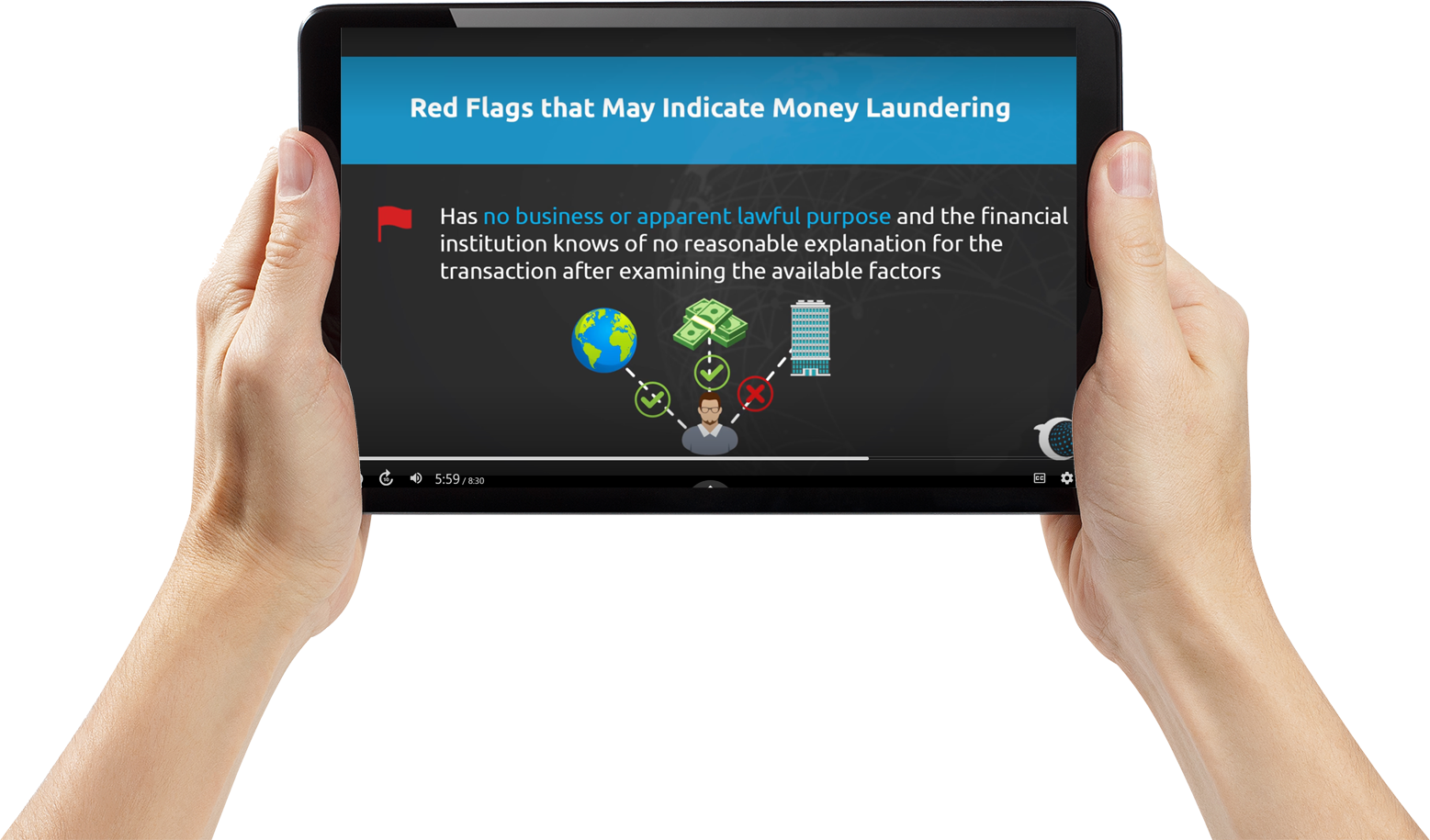
Schedule a Demo

Recommended Blogs

The Data Behind the Payment

September 30, 2026
Two changes have raised the bar on what banks can expect to see in a payment. Explore how corporate banks can put ISO 20022 and FATF's revised Recommendation 16 to work in transaction monitoring.
Read more
https://finintegrity.org/wp-content/uploads/2026/09/bg-the-data-behind-the-payment.jpg 1140 1800 IFI https://live-black-pebble.pantheonsite.io/wp-content/uploads/2023/12/GIFI-Placeholder2.png IFI2026-09-30 07:00:312026-09-29 10:35:23The Data Behind the Payment

Real Estate, Real Risks

September 17, 2026
The FATF has identified the global real estate sector as an area requiring heightened attention due to its vulnerabilities to money laundering, terrorism financing, sanctions evasion and other illicit activity. This article explores why property transactions attract financial crime.
Read more
https://finintegrity.org/wp-content/uploads/2026/09/real-estate-risk.jpg 614 1000 IFI https://live-black-pebble.pantheonsite.io/wp-content/uploads/2023/12/GIFI-Placeholder2.png IFI2026-09-17 12:40:222026-09-17 20:35:41Real Estate, Real Risks

The Judgment Gap in Market Abuse Compliance

August 25, 2026
While banks may know the set of rules outlined in the EU’s Market Abuse Regulation, exposure sits in the judgment calls related to delayed disclosure, information barriers, and market soundings. Dive into where the risk lies in each area.
Read more
https://finintegrity.org/wp-content/uploads/2026/08/judgement-gap-in-market-abuse-compliance-bg.jpg 841 1500 IFI https://live-black-pebble.pantheonsite.io/wp-content/uploads/2023/12/GIFI-Placeholder2.png IFI2026-08-25 07:00:462026-08-24 11:34:59The Judgment Gap in Market Abuse Compliance

The Illicit Oil Pipeline: How Criminal Networks Turn Crude into Clean Cash

August 19, 2026
Money laundering in the oil sector is a highly lucrative global pipeline where illicit networks exploit the massive volume, complex supply chains, and liquid nature of the market. Explore the lifecycle of oil laundering schemes as well as key red flags.
Read more
https://finintegrity.org/wp-content/uploads/2026/08/oil-pipeline-bg.jpg 1000 1500 IFI https://live-black-pebble.pantheonsite.io/wp-content/uploads/2023/12/GIFI-Placeholder2.png IFI2026-08-19 07:00:062026-08-19 00:07:14The Illicit Oil Pipeline: How Criminal Networks Turn Crude into Clean Cash

Beyond the Course Library

August 12, 2026
A comprehensive compliance course library doesn’t guarantee prepared staff. Here's how forward-looking teams are moving beyond static course libraries toward learning that keeps pace with risk.
Read more
https://finintegrity.org/wp-content/uploads/2026/08/beyond-the-course-library-bg.jpg 1060 1800 IFI https://live-black-pebble.pantheonsite.io/wp-content/uploads/2023/12/GIFI-Placeholder2.png IFI2026-08-12 07:00:232026-08-11 12:42:07Beyond the Course Library

July Monthly Sanctions and Export Controls Report

August 4, 2026
Explore this month’s Sanctions and Export Controls Update, highlighting IFI’s take on key developments from July 2026.
Read more
https://finintegrity.org/wp-content/uploads/2026/08/july2026-se-bg.jpg 1177 1800 IFI https://live-black-pebble.pantheonsite.io/wp-content/uploads/2023/12/GIFI-Placeholder2.png IFI2026-08-04 07:00:452026-08-04 09:42:02July Monthly Sanctions and Export Controls Report

A Financial Institution’s Guide to Updated EU Market Abuse Regulation

July 29, 2026
MAR sounds straightforward until a real case tests it. This guide breaks down what the regulation covers, who it applies to, and the disclosure rules, court rulings, and regulatory guidance that shifted the ground under compliance teams in 2026.
Read more
https://finintegrity.org/wp-content/uploads/2026/07/guide-to-market-abuse-bg.jpg 1067 1600 IFI https://live-black-pebble.pantheonsite.io/wp-content/uploads/2023/12/GIFI-Placeholder2.png IFI2026-07-29 07:00:472026-07-28 12:45:11A Financial Institution’s Guide to Updated EU Market Abuse Regulation

The Hidden Factor Behind Effective Compliance Training

July 22, 2026
Discover why the success of a compliance training program depends on more than just quality content—it begins with how employees perceive its value. Learn how organizations can improve engagement, drive meaningful behavioral change, and demonstrate measurable training ROI by rethinking the learner experience.
Read more
https://finintegrity.org/wp-content/uploads/2026/07/hiddenfactor-compliance-bg.jpg 1200 1800 IFI https://live-black-pebble.pantheonsite.io/wp-content/uploads/2023/12/GIFI-Placeholder2.png IFI2026-07-22 07:00:132026-07-21 11:49:18The Hidden Factor Behind Effective Compliance Training

June 2026 Sanctions and Export Controls Report

July 1, 2026
Explore this month’s Sanctions and Export Controls Update, highlighting IFI’s take on key developments from June 2026.
Read more
https://finintegrity.org/wp-content/uploads/2026/06/june2026-se-report-bg.jpg 798 1200 IFI https://live-black-pebble.pantheonsite.io/wp-content/uploads/2023/12/GIFI-Placeholder2.png IFI2026-07-01 07:00:392026-07-02 10:28:58June 2026 Sanctions and Export Controls Report
Previous Previous Previous Next Next Next
Download IFI Compliance Checklist Report

Follow Us on LinkedIn

Share this article

  • Share on LinkedIn
  • Share by Mail

Recent Articles

  • The Data Behind the Payment
  • Dirty Barrels
  • Real Estate, Real Risks
  • Iran and the Sanctions Landscape
  • August Monthly Sanctions and Export Controls Report

Explore Other Topics

  • Artificial Intelligence
  • Compliance Best Practices
  • Corruption
  • Digital Assets
  • Drug Trafficking
  • European Union
  • Fraud
  • Human Trafficking
  • Investigations
  • Money Laundering
  • Oil and Gas
  • Press Releases
  • Proliferation Finance
  • Regulation
  • Russia
  • Sanctions
  • Strategic Trade Controls / Export Controls
  • Terrorism

View Our Expert Insights

  • Compliance Training Readiness Checklist
  • Inside the Cartels and Chinese Money Laundering Networks Driving Criminal Economies
  • High Stakes – Casinos, Crime, and Cartels
  • From Cost Center to Risk Control
  • Leveraging Artificial Intelligence for Enhanced Financial Compliance
  • The Convergence of Sanctions and AML/CFT Regimes
  • Casinos and Cryptocurrency Driving Illicit Finance in East and Southeast Asia
  • Russia 2024: The Two-Year Anniversary of the Invasion
  • Human Trafficking Crisis after Russia’s Invasion of Ukraine
  • 2024 Trends Report
© DOLFIN Academy LLC 2026
  • Link to LinkedIn
  • Link to Youtube
  • Privacy Policy
Link to: Beneficial Ownership: Who Owns What? Link to: Beneficial Ownership: Who Owns What? Beneficial Ownership: Who Owns What? Link to: A PEP Talk Link to: A PEP Talk A PEP Talk
Scroll to top Scroll to top Scroll to top

This site uses cookies. By continuing to browse the site, you are agreeing to our use of cookies.

Accept settingsHide notification onlySettings

Cookie and Privacy Settings


How we use cookies

We may request cookies to be set on your device. We use cookies to let us know when you visit our websites, how you interact with us, to enrich your user experience, and to customize your relationship with our website.

Click on the different category headings to find out more. You can also change some of your preferences. Note that blocking some types of cookies may impact your experience on our websites and the services we are able to offer.

Essential Website Cookies

These cookies are strictly necessary to provide you with services available through our website and to use some of its features.

Because these cookies are strictly necessary to deliver the website, refusing them will have impact how our site functions. You always can block or delete cookies by changing your browser settings and force blocking all cookies on this website. But this will always prompt you to accept/refuse cookies when revisiting our site.

We fully respect if you want to refuse cookies but to avoid asking you again and again kindly allow us to store a cookie for that. You are free to opt out any time or opt in for other cookies to get a better experience. If you refuse cookies we will remove all set cookies in our domain.

We provide you with a list of stored cookies on your computer in our domain so you can check what we stored. Due to security reasons we are not able to show or modify cookies from other domains. You can check these in your browser security settings.

Google Analytics Cookies

These cookies collect information that is used either in aggregate form to help us understand how our website is being used or how effective our marketing campaigns are, or to help us customize our website and application for you in order to enhance your experience.

If you do not want that we track your visit to our site you can disable tracking in your browser here:

Other external services

We also use different external services like Google Webfonts, Google Maps, and external Video providers. Since these providers may collect personal data like your IP address we allow you to block them here. Please be aware that this might heavily reduce the functionality and appearance of our site. Changes will take effect once you reload the page.

Google Webfont Settings:

Google Map Settings:

Google reCaptcha Settings:

Vimeo and Youtube video embeds:

Privacy Policy

You can read about our cookies and privacy settings in detail on our Privacy Policy Page.

Privacy Policy
Accept settingsHide notification only