Sanctions and Export Controls Update
Monthly Roundup – March 2026
📅 April 2, 2026

Welcome to this month’s Sanctions and Export Controls Update, highlighting IFI’s take on key developments from March 2026.
U.S. sanctions policy in March was largely influenced by efforts to stabilize energy markets riled by the Iran war. In response to a surge in global oil prices, Washington temporarily lifted sanctions to allow for the delivery and sale of Russian and Iranian crude oil and petroleum products. OFAC continued to issue new and amended General Licenses authorizing certain transactions involving Venezuelan oil and gas, and published guidance on how to detect sham transactions used to evade sanctions. Meanwhile, the EU and Canada announced new asset freezes on Iran and Russia and continued to crack down on Russia’s shadow fleet, and the UK issued guidance on how detect and mitigate Russian sanctions evasion.
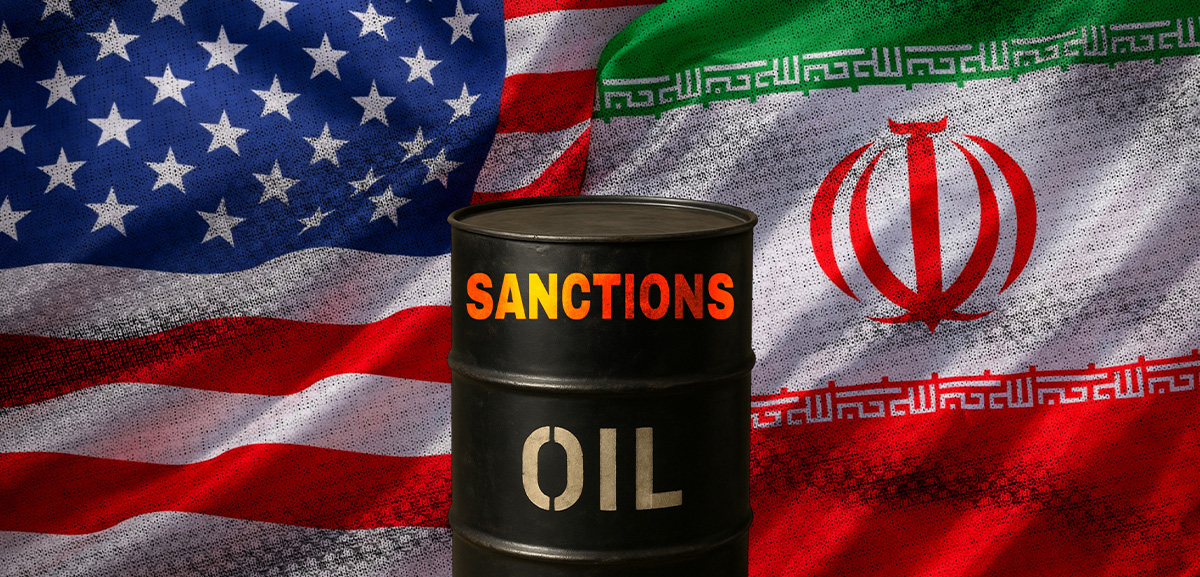
March represented the first month with no new U.S. sanctions on Iran since President Trump issued National Security Presidential Memorandum 2 on February 4,2025, ordering a campaign of maximum pressure on Iran and to reduce Iran’s oil exports to zero. Washington temorarily removed sanctions on Iranian oil at sea to alleviate an energy crunch caused by the U.S.-Israeli war with Iran. Meanwhile, the EU imposed sanctions on 19 Iranian officials and entitites over human rights abuses, Canada expanded measures against Iran targeting weapons procurement networks, and the UAE reportedly began cracking down on Iranian-owed assets.
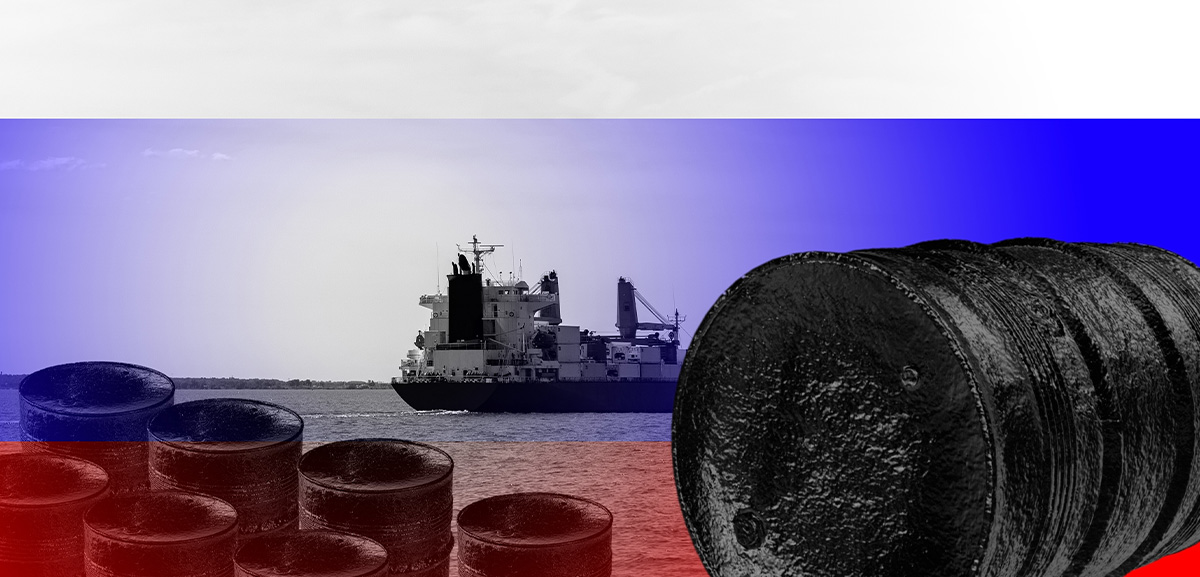
Much like in case of Iran, in an attempt to increase oil supply and decrease energy prices, the U.S. issued a temporary license allowing limited Russian oil shipments. Meanwhile, European nations and Canada continued to crack down on Russia’s shadow fleet, and the EU extended its Russia-related sanctions for six months and imposed new sanctions targeting Russian officials linked to Bucha atrocities and disinformation activities.
Belarussian President Lukashenko ordered the release of 250 political prisoners in a deal with the U.S. to lift sanctions on two state banks, the Belarusian Finance Ministry, and the top potash producers. Released individuals include journalist Katsiaryna Bakhvalava and activitists from the Viasna human rights group. The move follows a December agreement that eased potash sanctions and freed 123 prisoners.
OFAC issued an advisory to highlight sanctions risks arising from sham transactions used to evade sanctions, and the UK’s Office of Trade Sanctions Implemntation (OTSI) published guidance for businesses on how to identify and mitigate Russian sanctions evasion.
The UN and U.S. took several actions to sanction ISIL, Hizballah, and other terrorist support networks, the U.S. issued a series of new and amended general licenses authorizing certain activities involving Venezuela, and the EU imposed sanctions on several Chinese and Iranian targets over cyberattacks against EU member states and partners.
UN Adds Three ISIL Financial Leaders to Sanctions List
The UN Security Council’s sanctions committee on Al-Qaida and ISIL added three individuals to its sanctions list: (1) Iraqi national Abd El Hamid Salim Ibrahim Brukan al-Khatouni, who has served as a senior ISIL leader and financial management officer; (2) Iraqi national and Sami Jasim Muhammad Jaata al-Jaburi, who has overseen ISIL’s finances, participated in terrorist operations, and smuggled oil derivatives; and (3) Ugandan national Hamidah Nabagala, a financial intermediary for ISIL in Central Africa.
Treasury Sanctions Hizballah Finance Network Spanning Six Countries
Treasury sanctioned 16 individuals and entities tied to a global network accused of funneling more than $100 million to the Hizballah terrorist group since 2020. The network, led by Lebanese financier Alaa Hassan Hamieh, allegedly used companies and associates across Lebanon, Syria, Europe, Qatar, and Canada to launder money and evade sanctions.
U.S. Designates Sudanese Muslim Brotherhood as Global Terrorist Group
The U.S. Department of State has designated the Sudanese Muslim Brotherhood as a Specially Designated Global Terrorist and said it intends to designate the group as a Foreign Terrorist Organization. State said the group has used violence against civilians in Sudan and conducted mass executions during the country’s ongoing conflict. Officials also cited links between the group’s fighters and Iran’s Islamic Revolutionary Guard Corps.
Treasury Continues to Disrupt Hamas’s Sham Charity Network
Treasury designated four sham charities that directly fund Hamas’s Military Wing and its terrorist activities and enable the group to sustain its terrorist operations.
Argentina Labels Jalisco New Generation Cartel a Terrorist Organization
Argentina designated the Cartel de Jalisco Nueva Generacion (CJNG) as a terrorist organization, a move that aligns the South American country more closely with the policy of the United States.
Guidance on Countering Russian Sanctions Evasion
The UK’s OTSI published guidance to support UK businesses in understanding Russian evasion practices and in reducing the risk of their business being targeted by those seeking to circumvent sanctions.
Guidance on Approach to Sanctions Enforcement
The UK published a policy paper aimed at improving industry’s understanding of sanctions enforcement and encouraging compliance, making clear the wide-ranging consequences of non-compliance, especially for those who deliberately seek to evade UK sanctions.
OFSI published updated guidance on how it assesses “reasonableness” when considering license applications under UK financial sanctions regimes, and OTSI published new guidance on how to use exceptions and licenses to comply with sanctions.
Issuance of New and Amended Venezuela-related General License
OFAC issued a series of new and amended General Licenses authorizing certain activities and transactions involving the Venezuelan oil, gas, and minerals sectors.
Chinese, Iranian Firms Targeted by EU Sanctions Over Cyberattacks
The EU imposed sanctions on three entities and two individuals over cyberattacks targeting the bloc’s member states and partners. The sanctioned entities include China-based Integrity Technology Group, linked to hacking more than 65,000 devices across six EU countries from 2022 to 2023, and Anxun Information Technology, accused of targeting critical infrastructure. Iran’s Emennet Pasargad was sanctioned for breaching a French database, disrupting Swedish SMS services, and spreading disinformation during the 2024 Paris Olympics.
U.S. Charges Three in Scheme to Illegally Export AI Chips to China
U.S. authorities have charged a Chinese national and two U.S. citizens with conspiring to illegally export sensitive artificial intelligence technology to China. Prosecutors allege that the defendants attempted to acquire export-controlled computer chips from a U.S. company and route them through Thailand to evade restrictions. The scheme involved using front companies to disguise the true destination of the technology, which officials said has potential military and national security applications.
Switzerland Halts New Arms Export Licenses to U.S.
Switzerland has halted new export licenses for weapons to countries involved in the conflict in Iran, including the United States, citing its policy of neutrality. The Swiss government said it has not approved new war materiel exports to the U.S. since strikes on Iran began on Feb. 28. The measures reflect the Central European nation’s efforts to avoid involvement in the conflict while maintaining adherence to its longstanding neutrality policy.
UK Updates Typhoon Aircraft Export License, Adds Türkiye as Permitted Destination
The UK Secretary of State issued an updated Open General Export License (OGEL) for military goods related to the collaborative Typhoon project. The license authorizes the export of specified software, technology, and components—including engines and mission systems—to various partner nations and export customers. Under the new terms, Türkiye has been added as a permitted destination.
Zimbabwe Fast-Tracks Lithium Export Ban After Rush by Mining Firms
Zimbabwe has imposed an immediate ban on exports of raw lithium and lithium concentrates after authorities said mining companies engaged in an “unprecedented” rush to export ahead of a previously planned 2027 deadline. The government said the ban, announced last week, was fast-tracked after some operators accelerated mining and exports instead of preparing to process the mineral locally.
UK Shareholders Sue British American Tobacco Over Alleged Sanctions Disclosure Failures
British American Tobacco (BAT) is facing a lawsuit in London from more than 100 current and former shareholders who claimed that the company failed to properly disclose breaches of U.S. sanctions on North Korea. The suit, filed in London’s High Court, alleged that BAT did not adequately inform markets about its North Korea operations between 2007 and 2023.
OFAC Sanctions Facilitators Tied to North Korean IT Fraud Scheme Targeting U.S. Firms
OFAC sanctioned six individuals and two entities tied to North Korea’s government-run IT worker scheme that defrauds U.S. businesses and funnels money into Pyongyang’s weapons programs. According to Treasury, the illicit operations involve overseas operatives using stolen identities and fake credentials to secure tech jobs in the U.S. and allied countries.
OFAC Settles with TradeStation for $1.1M Over Sanctions Violations
OFAC reached a settlement with TradeStation Securities Inc. for $1.1 million over apparent violations of multiple sanctions programs. OFAC said the Florida-based brokerage provided investment services to customers in Iran, Syria, and Crimea between June 2021 and June 2022 was cited for 481 apparent violations.
OFAC Imposes Sanctions on Rwanda Officials
OFAC imposed sanctions on the Rwanda Defense Force (RDF) and four senior officials for allegedly supporting the March 23 Movement, an armed group designated by the U.S. and UN for human rights abuses in the Democratic Republic of Congo. The Treasury said the RDF has provided operational support, training, and equipment to M23 during its seizure of territory in eastern DRC, including Goma and Bukavu.
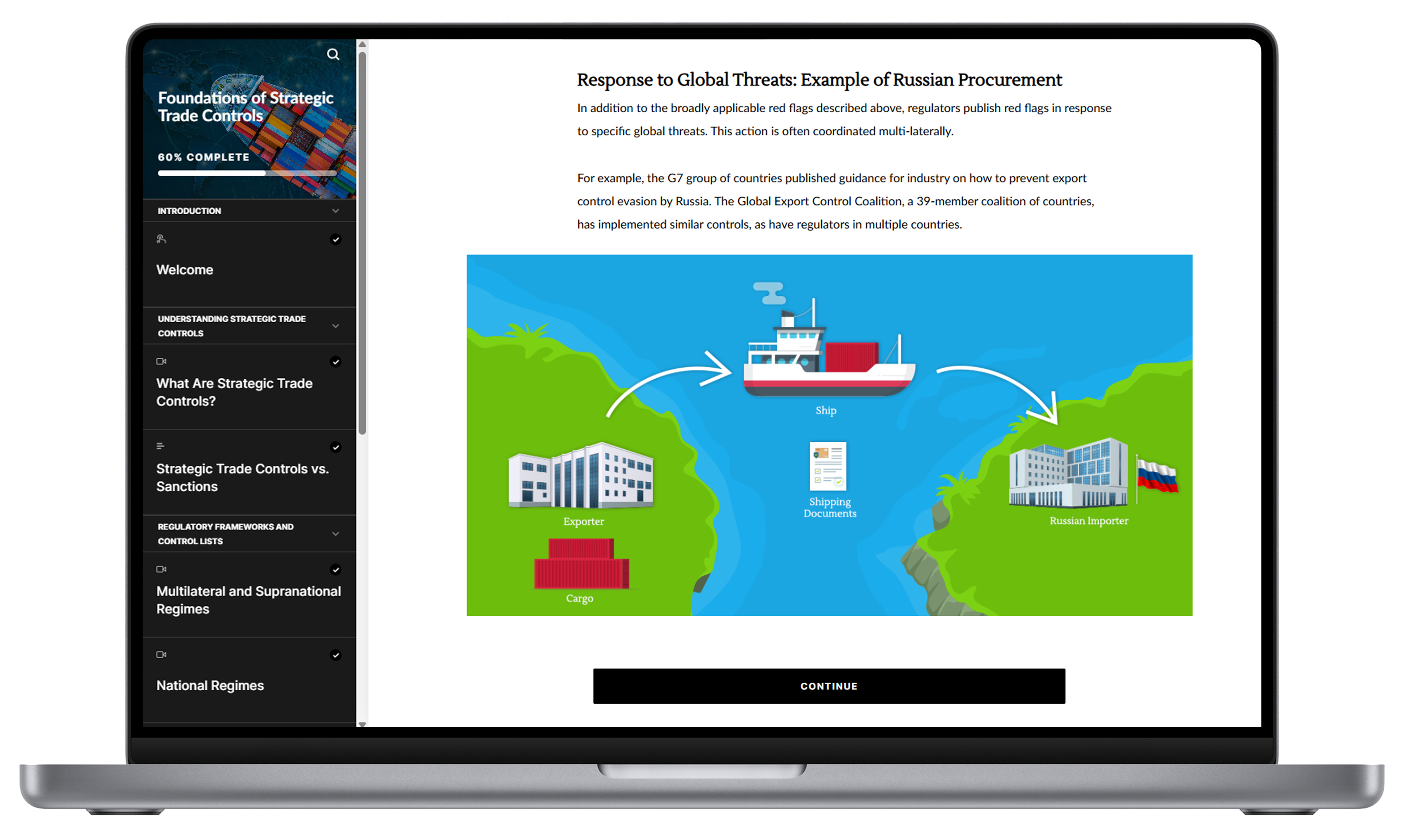
Our course Foundations of Strategic Trade Controls offers a comprehensive overview of how to understand and apply strategic trade control requirements, with a particular focus on those applicable to financial institutions.
Learn more and strengthen your compliance skills today.
 https://finintegrity.org/wp-content/uploads/2026/03/feb2026-bg.jpg
879
1500
IFI
https://live-black-pebble.pantheonsite.io/wp-content/uploads/2023/12/GIFI-Placeholder2.png
IFI2026-03-03 07:00:312026-04-01 11:30:03February 2026 Monthly Sanctions and Export Controls Report
https://finintegrity.org/wp-content/uploads/2026/03/feb2026-bg.jpg
879
1500
IFI
https://live-black-pebble.pantheonsite.io/wp-content/uploads/2023/12/GIFI-Placeholder2.png
IFI2026-03-03 07:00:312026-04-01 11:30:03February 2026 Monthly Sanctions and Export Controls Report https://finintegrity.org/wp-content/uploads/2026/01/article-eftfs-bg.jpg
800
1200
IFI
https://live-black-pebble.pantheonsite.io/wp-content/uploads/2023/12/GIFI-Placeholder2.png
IFI2026-02-05 07:00:282026-03-27 12:32:49Electronic Fund Transfer Consumer Protection
https://finintegrity.org/wp-content/uploads/2026/01/article-eftfs-bg.jpg
800
1200
IFI
https://live-black-pebble.pantheonsite.io/wp-content/uploads/2023/12/GIFI-Placeholder2.png
IFI2026-02-05 07:00:282026-03-27 12:32:49Electronic Fund Transfer Consumer Protection https://finintegrity.org/wp-content/uploads/2026/02/bg-jan2026.jpg
690
1200
IFI
https://live-black-pebble.pantheonsite.io/wp-content/uploads/2023/12/GIFI-Placeholder2.png
IFI2026-02-03 07:00:332026-03-27 12:34:22January 2026 Monthly Sanctions and Export Controls Report
https://finintegrity.org/wp-content/uploads/2026/02/bg-jan2026.jpg
690
1200
IFI
https://live-black-pebble.pantheonsite.io/wp-content/uploads/2023/12/GIFI-Placeholder2.png
IFI2026-02-03 07:00:332026-03-27 12:34:22January 2026 Monthly Sanctions and Export Controls Report https://finintegrity.org/wp-content/uploads/2026/01/following-ilicit-funds-bg.jpg
808
1500
IFI
https://live-black-pebble.pantheonsite.io/wp-content/uploads/2023/12/GIFI-Placeholder2.png
IFI2026-01-28 07:00:532026-03-27 12:35:12Following the Illicit Funds
https://finintegrity.org/wp-content/uploads/2026/01/following-ilicit-funds-bg.jpg
808
1500
IFI
https://live-black-pebble.pantheonsite.io/wp-content/uploads/2023/12/GIFI-Placeholder2.png
IFI2026-01-28 07:00:532026-03-27 12:35:12Following the Illicit Funds https://finintegrity.org/wp-content/uploads/2025/12/blind-spots-in-the-system-bg.jpg
1066
1600
IFI
https://live-black-pebble.pantheonsite.io/wp-content/uploads/2023/12/GIFI-Placeholder2.png
IFI2026-01-21 07:00:252026-03-27 12:38:36Blind Spots in the System
https://finintegrity.org/wp-content/uploads/2025/12/blind-spots-in-the-system-bg.jpg
1066
1600
IFI
https://live-black-pebble.pantheonsite.io/wp-content/uploads/2023/12/GIFI-Placeholder2.png
IFI2026-01-21 07:00:252026-03-27 12:38:36Blind Spots in the System https://finintegrity.org/wp-content/uploads/2025/04/article-intensifying-focus.png
217
379
IFI
https://live-black-pebble.pantheonsite.io/wp-content/uploads/2023/12/GIFI-Placeholder2.png
IFI2026-01-06 07:00:382026-01-06 08:15:24December 2025 Monthly Sanctions and Export Controls Report
https://finintegrity.org/wp-content/uploads/2025/04/article-intensifying-focus.png
217
379
IFI
https://live-black-pebble.pantheonsite.io/wp-content/uploads/2023/12/GIFI-Placeholder2.png
IFI2026-01-06 07:00:382026-01-06 08:15:24December 2025 Monthly Sanctions and Export Controls Report https://finintegrity.org/wp-content/uploads/2025/10/bg-secondary-sanctions.jpg
1200
1800
IFI
https://live-black-pebble.pantheonsite.io/wp-content/uploads/2023/12/GIFI-Placeholder2.png
IFI2025-12-16 07:00:392025-12-16 07:20:47The Use of Secondary Sanctions
https://finintegrity.org/wp-content/uploads/2025/10/bg-secondary-sanctions.jpg
1200
1800
IFI
https://live-black-pebble.pantheonsite.io/wp-content/uploads/2023/12/GIFI-Placeholder2.png
IFI2025-12-16 07:00:392025-12-16 07:20:47The Use of Secondary Sanctions https://finintegrity.org/wp-content/uploads/2025/12/bg-enforcement.jpg
993
1500
IFI
https://live-black-pebble.pantheonsite.io/wp-content/uploads/2023/12/GIFI-Placeholder2.png
IFI2025-12-09 07:00:472025-12-15 09:33:55AML/CFT and Sanctions Enforcement Actions in 2025
https://finintegrity.org/wp-content/uploads/2025/04/article-intensifying-focus.png
217
379
IFI
https://live-black-pebble.pantheonsite.io/wp-content/uploads/2023/12/GIFI-Placeholder2.png
IFI2025-12-02 07:00:102025-12-04 14:52:07November 2025 Sanctions and Export Controls Update
https://finintegrity.org/wp-content/uploads/2025/12/bg-enforcement.jpg
993
1500
IFI
https://live-black-pebble.pantheonsite.io/wp-content/uploads/2023/12/GIFI-Placeholder2.png
IFI2025-12-09 07:00:472025-12-15 09:33:55AML/CFT and Sanctions Enforcement Actions in 2025
https://finintegrity.org/wp-content/uploads/2025/04/article-intensifying-focus.png
217
379
IFI
https://live-black-pebble.pantheonsite.io/wp-content/uploads/2023/12/GIFI-Placeholder2.png
IFI2025-12-02 07:00:102025-12-04 14:52:07November 2025 Sanctions and Export Controls Update