Electronic Fund Transfer Consumer Protection
Potential Equalizing Measures for Crypto
📅 February 5, 2026

As economies and financial systems modernize, so do the ways consumers interact with the financial system. For example, the transition from physical checks to electronic banking provided new products and services such as debit card transactions, electronic withdrawals and transfers, deposits through ATMs, and remote banking. While these provide greater speed, efficiency, and accessibility for consumers, they also present new possibilities for errors and fraud.
The Electronic Fund Transfer Act (EFTA) was established to protect consumers using electronic fund transfers by establishing the duties, rights, and responsibilities of consumers and financial institutions. EFTA is implemented through Code of Federal Regulations Part 1005, also known as “Regulation E”.
Regulation E applies to any electronic fund transfer that authorizes a financial institution to debit or credit a consumer’s account. “Consumer accounts” are defined as those established primarily for “personal, family, or household purposes” and include checking and savings accounts.
Provided these requirements are met, products and services that are within scope of Regulation E include:
Some activities are specifically excluded from coverage under Regulation E including:
The Regulations set out three core protections:
Clear and timely disclosures: Institutions must provide clear information about the types of transfers consumers can make, the fees, any limitations on amount or frequency, how to report unauthorized transfers or errors, and consumer liability for unauthorized transfers. This must be provided at the time the consumer engages the services or before the first fund transfer is made.
Limited consumer liability for unauthorized transfers: Consumers may only be held liable where the institution has provided clear and timely disclosure (see above). There are also additional protections for consumers depending on how quickly they notify the financial institution of unauthorized activity.
Where there has been loss or theft of the consumer’s “access device” (usually this means their debit card):
Where the card was not lost or stolen, the consumer is not liable for any unauthorized charges provided they report the unauthorized activity within 60 days of the statement being sent.
Fair error resolution procedures: Financial institutions must promptly investigate errors and correct them within one day of determining that an error occurred. Usually, the institution has 10 days to complete its investigation, however this may be extended to 45 days provided the institution provisionally credits the consumer account with the amount of the alleged error while the investigation is ongoing.
Examples of errors include unauthorized transfers, incorrect transfers to or from the consumer’s account, or transfers that are missing from their periodic statements. Errors do not include routine inquiries about the consumer’s account balance or requests for information for tax or other purposes, or requests for duplicate copies of information.
These are a summary of key provisions relating to consumer liability and protection – refer to the EFTA and Regulation E for complete information.
Until recently, the EFTA and Regulation E did not apply to most digital asset transactions. Consumers using crypto wallets, stablecoins, or blockchain-based platforms for purchases or peer-to-peer transfers operated largely outside the traditional protections described above. However, this may change.
In January 2025, the Consumer Financial Protection Bureau (CFPB) issued a Proposed Interpretive Rule aimed at modernizing how Regulation E applies to emerging digital payment systems. The objective of the proposed rule is to ensure consistent application of the EFTA and Regulation E, and to avoid placing some providers at an unfair competitive disadvantage.
The proposed rule would extend the scope of EFTA and Regulation E, including:
The effect of the proposed changes would bring digital asset services and providers into scope of the consumer protections set out in EFTA and Regulation E.
These proposed changes are relevant for platforms that facilitate purchases using stablecoins or other digital tokens, allow peer-to-peer transfers within wallet environments, or offer consumer-facing payment services integrated into apps or gaming platforms.
Some crypto platforms have already begun offering EFTA-like protections voluntarily, such as:
Adopting these safeguards now may help organizations prepare for future regulatory requirements, as well as to build consumer trust and confidence.
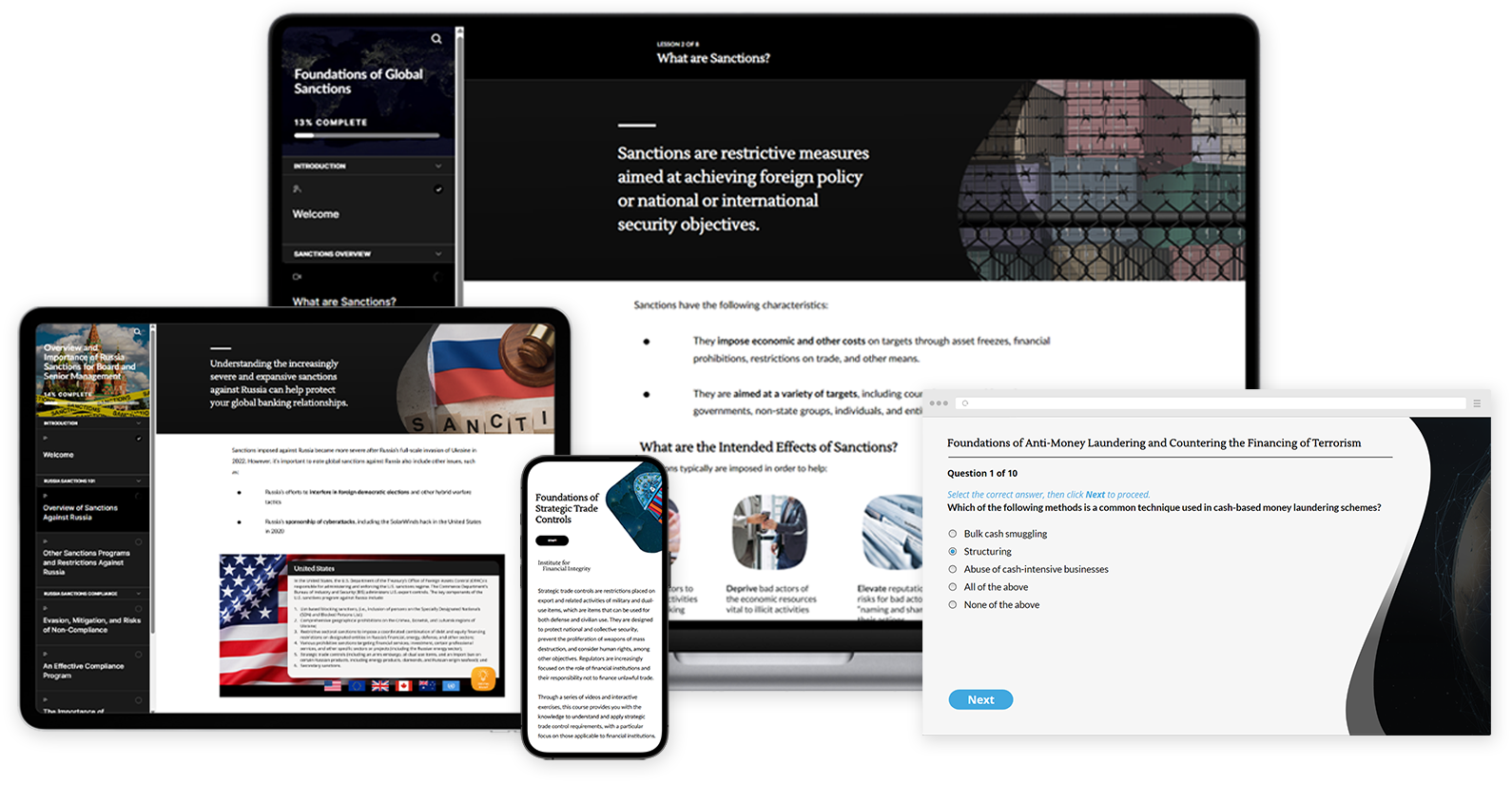
Whether looking to revamp an annual compliance course or to develop a new instructor-led program covering emerging threats, IFI can design, develop and deliver training tailored to your organization’s unique needs.
 https://finintegrity.org/wp-content/uploads/2026/09/august-2026-se-report-bg.jpg
888
1184
IFI
https://live-black-pebble.pantheonsite.io/wp-content/uploads/2023/12/GIFI-Placeholder2.png
IFI2026-09-02 07:00:562026-09-01 13:19:24August Monthly Sanctions and Export Controls Report
https://finintegrity.org/wp-content/uploads/2026/09/august-2026-se-report-bg.jpg
888
1184
IFI
https://live-black-pebble.pantheonsite.io/wp-content/uploads/2023/12/GIFI-Placeholder2.png
IFI2026-09-02 07:00:562026-09-01 13:19:24August Monthly Sanctions and Export Controls Report https://finintegrity.org/wp-content/uploads/2026/08/judgement-gap-in-market-abuse-compliance-bg.jpg
841
1500
IFI
https://live-black-pebble.pantheonsite.io/wp-content/uploads/2023/12/GIFI-Placeholder2.png
IFI2026-08-25 07:00:462026-08-24 11:34:59The Judgment Gap in Market Abuse Compliance
https://finintegrity.org/wp-content/uploads/2026/08/judgement-gap-in-market-abuse-compliance-bg.jpg
841
1500
IFI
https://live-black-pebble.pantheonsite.io/wp-content/uploads/2023/12/GIFI-Placeholder2.png
IFI2026-08-25 07:00:462026-08-24 11:34:59The Judgment Gap in Market Abuse Compliance https://finintegrity.org/wp-content/uploads/2026/08/beyond-the-course-library-bg.jpg
1060
1800
IFI
https://live-black-pebble.pantheonsite.io/wp-content/uploads/2023/12/GIFI-Placeholder2.png
IFI2026-08-12 07:00:232026-08-11 12:42:07Beyond the Course Library
https://finintegrity.org/wp-content/uploads/2026/08/beyond-the-course-library-bg.jpg
1060
1800
IFI
https://live-black-pebble.pantheonsite.io/wp-content/uploads/2023/12/GIFI-Placeholder2.png
IFI2026-08-12 07:00:232026-08-11 12:42:07Beyond the Course Library https://finintegrity.org/wp-content/uploads/2026/08/july2026-se-bg.jpg
1177
1800
IFI
https://live-black-pebble.pantheonsite.io/wp-content/uploads/2023/12/GIFI-Placeholder2.png
IFI2026-08-04 07:00:452026-08-04 09:42:02July Monthly Sanctions and Export Controls Report
https://finintegrity.org/wp-content/uploads/2026/08/july2026-se-bg.jpg
1177
1800
IFI
https://live-black-pebble.pantheonsite.io/wp-content/uploads/2023/12/GIFI-Placeholder2.png
IFI2026-08-04 07:00:452026-08-04 09:42:02July Monthly Sanctions and Export Controls Report https://finintegrity.org/wp-content/uploads/2026/07/guide-to-market-abuse-bg.jpg
1067
1600
IFI
https://live-black-pebble.pantheonsite.io/wp-content/uploads/2023/12/GIFI-Placeholder2.png
IFI2026-07-29 07:00:472026-07-28 12:45:11A Financial Institution’s Guide to Updated EU Market Abuse Regulation
https://finintegrity.org/wp-content/uploads/2026/07/guide-to-market-abuse-bg.jpg
1067
1600
IFI
https://live-black-pebble.pantheonsite.io/wp-content/uploads/2023/12/GIFI-Placeholder2.png
IFI2026-07-29 07:00:472026-07-28 12:45:11A Financial Institution’s Guide to Updated EU Market Abuse Regulation https://finintegrity.org/wp-content/uploads/2026/07/hiddenfactor-compliance-bg.jpg
1200
1800
IFI
https://live-black-pebble.pantheonsite.io/wp-content/uploads/2023/12/GIFI-Placeholder2.png
IFI2026-07-22 07:00:132026-07-21 11:49:18The Hidden Factor Behind Effective Compliance Training
https://finintegrity.org/wp-content/uploads/2026/07/hiddenfactor-compliance-bg.jpg
1200
1800
IFI
https://live-black-pebble.pantheonsite.io/wp-content/uploads/2023/12/GIFI-Placeholder2.png
IFI2026-07-22 07:00:132026-07-21 11:49:18The Hidden Factor Behind Effective Compliance Training https://finintegrity.org/wp-content/uploads/2026/06/june2026-se-report-bg.jpg
798
1200
IFI
https://live-black-pebble.pantheonsite.io/wp-content/uploads/2023/12/GIFI-Placeholder2.png
IFI2026-07-01 07:00:392026-07-02 10:28:58June 2026 Sanctions and Export Controls Report
https://finintegrity.org/wp-content/uploads/2026/06/june2026-se-report-bg.jpg
798
1200
IFI
https://live-black-pebble.pantheonsite.io/wp-content/uploads/2023/12/GIFI-Placeholder2.png
IFI2026-07-01 07:00:392026-07-02 10:28:58June 2026 Sanctions and Export Controls Report https://finintegrity.org/wp-content/uploads/2026/06/crypto-layering-bg.jpg
675
1200
IFI
https://live-black-pebble.pantheonsite.io/wp-content/uploads/2023/12/GIFI-Placeholder2.png
IFI2026-06-17 07:00:012026-06-15 11:44:11Crypto Layering
https://finintegrity.org/wp-content/uploads/2026/06/crypto-layering-bg.jpg
675
1200
IFI
https://live-black-pebble.pantheonsite.io/wp-content/uploads/2023/12/GIFI-Placeholder2.png
IFI2026-06-17 07:00:012026-06-15 11:44:11Crypto Layering https://finintegrity.org/wp-content/uploads/2026/06/who-owns-bg.png
667
1000
IFI
https://live-black-pebble.pantheonsite.io/wp-content/uploads/2023/12/GIFI-Placeholder2.png
IFI2026-06-10 07:00:162026-06-10 11:47:15Who Owns the Risk?
https://finintegrity.org/wp-content/uploads/2026/06/who-owns-bg.png
667
1000
IFI
https://live-black-pebble.pantheonsite.io/wp-content/uploads/2023/12/GIFI-Placeholder2.png
IFI2026-06-10 07:00:162026-06-10 11:47:15Who Owns the Risk?
 Wynn or Lose