Sanctions and Export Controls Update
Monthly Roundup – December 2025
📅 January 6, 2026

Welcome to this month’s Sanctions and Export Controls Update, highlighting IFI’s take on key developments from December 2025.
The United States significantly intensified pressure on the Maduro regime in December, including by implementing a blockade of all U.S. sanctioned oil tankers servicing Venezuela, in the lead-up the dramatic U.S. military operation in Caracas on 4 January that led to the capture of President Maduro and his wife. Russia sanctions also dominated the headlines at the end of 2025. The European Union rolled out new sanctions linked to Russia’s military aggression in Ukraine, human rights violations, and cyberattacks; the United Kingdom targeted Russia’s largest remaining unsanctioned oil companies; and the Unites States announced three Russia-related enforcement actions.
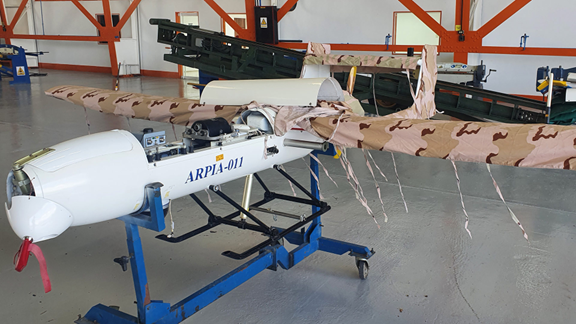
The United States significantly increased pressure on the Maduro regime in December by instituting a blockade of all U.S. sanctioned oil tankers servicing Venezuela and rolling out five tranches of designations targeting oil traders involved in sanctions evasion, a network that acquires combat drones from Iran, and officials, associates, and vessels linked to Venezuela’s state-run oil company, Petroleos de Venezuela, S.A. (PDVSA).
The U.S. government seized a tanker on 10 December in the Caribbean Sea that was carrying oil from Venezuela. The seizure was a joint operation by the Federal Bureau of Investigation (FBI), Department of Homeland Security (DHS), and the Coast Guard, and was supported by the Pentagon. According to Attorney General Pam Bondi, the tanker had been used to transport sanctioned oil from Venezuela to Iran.
The following day, Treasury imposed sanctions on six additional vessels under its Venezuela sanctions program, and a week later President Trump ordered a blockade of all sanctioned oil tankers entering or leaving Venezuela. Additional sanctions imposed against the Maduro regime in December included:
The European Union renewed its restrictive measures against Venezuela up to January 10, 2027, citing ongoing human rights violations, repression of civil soecity, and actions undermining democracy. According to the European Council, 69 Venezuelan individuals remian subject to asset freezes, travel bans, and prohibitions on economic dealings within the EU.
The European Union rolled out several tranches of designations linked to Russia’s human rights violations, cyberattacks, and military aggression against Ukraine—most notably targeting additional vessels and enablers linked to Russia’s shadow fleet that help generate energy revenue for Moscow.
Meanwhile, that United Kingdom targeted Russia’s largest remaining unsanctioned oil companies, and the Unites States announced three major enforcement actions for Russia sanctions violations.
Other highlights from December included expanded sanctions against Iran by the U.S., Canada, and Australia; U.S. designations of criminal groups and their support networks in Mexico, Venezuela, and Colombia; and U.S. enforcement actions and proposed legislation associated with controlling AI chip exports to China and elsewhere.
U.S. Treasury Tightens Sanctions on Iran’s Shadow Oil Shipping Fleet
OFAC added 29 vessels and their management firms to its list of sanctioned entities involved in shipping hundreds of millions of dollars’ worth of Iranian petroleum products. The new measures against Iran’s sanctions-evading shadow oil shipping fleet also targeted an Egyptian businessman and his companies associated with seven of the 29 newly designated vessels.
OFAC Settles With Exodus Movement Over Iran Sanctions Violations
Bitcoin and cryptocurrency wallet provider Exodus Movement agreed to a $3.1 million settlement with OFAC to resolve its potential civil liability for 254 apparent violations of Iran-related sanctions from October 2017 to January 2019. OFAC found that Exodus’ customer support to users in Iran, including advising on the use of virtual private network controls, facilitated access to digital asset exchanges and evading sanctions.
Canada Expands Sanctions on Iran, Adds Four Officials for Alleged Abuses
Canada expanded its sanctions against Iran, adding four senior Iranian officials under the Special Economic Measures (Iran) Regulations. The officials are accused of gross and systematic human rights violations and directing repressive policies.
Australia Updates Iran Sanctions Framework
Australia updated its Iran sanctions framework to align with United Nations sanctions reimposed in late 2025. The expanded regime imposes restrictions on the export, import, and supply of certain goods; and the provision of services, sensitive commercial activities, and bunkering services. The update also incorporates new UN listings, adding 43 individuals and 78 entities to the Australian Department of Foreign Affairs and Trade’s (DFAT) Consolidated List.
U.S. Treasury Sanctions Money Laundering Network Supporting Venezuelan Terror Group
OFAC sanctioned Venezuelan entertainer Jimena Romina Araya Navarro (a.k.a. “Rosita”) and her associates for providing material support to Tren de Aragua (TdA), a U.S.-designated foreign terrorist organization. Navarro and her former manager helped fund TdA through nightclub events, drug-fueled parties, and money laundering schemes across Colombia and Venezuela.
OFAC Sanctions Violent Mexican Cartel
OFAC designated Cartel de Santa Rosa de Lima and its leader for running a major fuel and oil theft operation in Mexico’s Guanajuato state. The cartel’s “huachicol” schemes – stealing fuel from Pemex pipelines, refineries, and tankers – have generated billions of dollars in illicit revenue, fueled extreme violence, and supported a cross-border energy black market.
State Department Designates Clan del Golfo as FTO
The U.S. Department of State designated Colombia-based Clan del Golfo as a Foreign Terrorist Organization (FTO) and a Specially Designated Global Terrorist (SDGT). According to State, Clan del Golfo is a violent and power criminal organization responsible for terrorist attacks against public officials, law enforcement and military personnel, and civilians in Colombia.
U.S. Sanctions Colombian-Led Network Recruiting Mercenaries for Sudan’s Civil War
OFAC sanctioned four entities and four individuals for operating a transnational network recruiting Colombian mercenaries, including children, to fight for Sudan’s Rapid Support Forces (RSF) paramilitary group. According to OFAC, the network fuels a conflict marked by genocide, mass killings, and sexual violence.
United States Approves Sale of Advanced Nvidia Chips to China
President Trump announced on 8 December that he will allow Nvidia to sell its H200 artificial intelligence chips to “approved customers” in China, while excluding the company’s most advanced Blackwell and Rubin chips. Trump said in a social media post that he had informed Chinese President Xi Jinping, who “responded positively” to the news.
U.S. Authorities Shut Down Major China-Linked AI Tech Smuggling Network
U.S. authorities arrested two Chinese businessmen in connection with a sophisticated AI technology smuggling network targeting China and Hong Kong. One individual pleaded guilty to exporting over $160 million in controlled Nvidia graphics processing units (GPUs), receiving $50 million in wire transfers from China.
Bipartisan U.S. Senate Bill Seeks AI Chip Exports Restrictions
Six U.S. Senators have introduced the Secure and Feasible Exports (SAFE) Chips Act of 2025. The bill would codify existing export controls, blocking sales of advanced AI chips to adversary nations, including China, Russia, Iran, and North Korea, for at least 30 months, and after that period to update the “technical parameters” as it considers necessary.
U.S. House Foreign Affairs Committee Head Files Bill to Protect American AI Dominance
U.S. Representative Brian Mast (R-FL), House Foreign Affairs Committee chairman, introduced the Artificial Intelligence Oversight of Verified Exports and Restrictions on Weaponizable Advanced Technology to Covered High-Risk Actors (AI OVERWATCH) Act. The proposed legislation aims to safeguard U.S. AI dominance by imposing congressional oversight on exports of advanced AI chips to adversaries, such as China, Russia, North Korea, Iran, Cuba, and Venezuela.
Bipartisan U.S. House Bill Seeks to Curb AI Technology Smuggling to China
U.S. Representatives Tom Kean Jr. (R-NJ) and Julie Johnson (D-TX) have introduced the Stop Stealing Our Chips Act to prevent the illicit flow of U.S.-made artificial intelligence chips and sensitive technologies into China. The bill creates a whistleblower incentive program within the Bureau of Industry and Security (BIS) to strengthen export control enforcement.
Lithuania Extends Ban on Dual-Use Goods Transit Supporting Russia’s War Against Ukraine
Lithuania has extended until January 2, 2027, the temporary restrictions imposed on road transit of certain dual-use goods that could be used in Russia or Belarus to support Moscow’s war against Ukraine. Authorities said the measures have already reduced the flow of such goods, but the risk of sanctions circumvention still persists.
China Sanctions 20 U.S. Defense Firms, 10 Executives Over Planned Taiwan Arms Sales
China sanctioned 20 U.S. defense companies and 10 executives, including Northrop Grumman and Boeing, following Washington’s approval of a proposed $10 billion arms package to Taiwan. The sanctions freeze the companies’ assets in China, bar business dealings, and restrict entry for the individuals involved. The proposed arms sale would be the largest weapons sale to Taiwan if approved by the U.S. Congress.
Belarus Faces Broader EU Sanctions After Lithuanian Airspace Violations
The EU broadened its Belarus-related sanctions framework after repeated airspace violations in Lithuania, including incursions of drones and meteorological balloons from Belarus, which disrupted flights and threatened civilian safety. The new criteria allow the EU to sanction Belarusian actors engaging in foreign information manipulation, interference with democratic institutions, economic disruption, unauthorized border incursions, and attacks on critical infrastructure.
U.S. Eases Sanctions on Three Belarus Companies After Prisoner Release
In response to Belarus’ release of 123 political prisoners, OFAC issued General License 13 under its Belarus sanctions program authorizing all transactions with the following entities: (1) Joint Stock Company Belarusian Potash Company; (2) Agrorozkvit LLC; (3) Belaruskali OAO; or (4) Any entity in which one or more of the above persons own, directly or indirectly, individually or in the aggregate, a 50 percent or greater interest.
EU Sanctions Former Haiti President Over Gang Violence
The EU added former Haiti President Michel Martelly, two of his associates, and one gang entity to the EU’s sanction list for their role in the escalating gang violence and grave human rights abuses in Haiti. Martelly was sanctioned for arming and financing gangs to advance his political agenda and protect personal and economic interests. The gang 5 Segond was sanctioned for widespread crimes, including murder, rape, kidnapping, and trafficking.
UK Sanctions Sudanese Paramilitary Commanders
The UK sanctioned four senior commanders of the Sudanese paramilitary group Rapid Support Forces (RSF) for mass killings, sexual violence, and deliberate attacks on civilians in El Fasher, Sudan.
U.S. Sanctions ICC Judges Over Alleged Unlawful Actions Against Israel
U.S. Secretary of State Rubio announced sanctions against two International Criminal Court (ICC) judges for directly participating in illegitimate ICC actions targeting Israeli nationals without Israel’s consent. Rubio said the ICC’s actions are politicized, constitute an abuse of power, and threaten the sovereignty of both the United States and Israel.
U.S. Treasury Lifts Sanctions on Brazilian Judge Who Convicted Bolsonaro
Treasury lifted Global Magnitsky sanctions on Brazilian Supreme Federal Court Justice Alexandre de Moraes, who oversaw the conviction of former Brazilian President Jair Bolsonaro and his wife. The sanctions, imposed in early 2025 over alleged human rights abuses, were removed following the recent diplomatic talks between current Brazilian President Luiz Inácio Lula da Silva and U.S. President Donald Trump to ease tariffs on Brazilian imports.
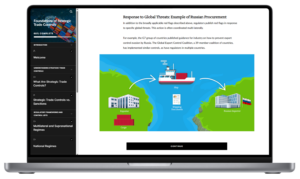
Our course Foundations of Strategic Trade Controls offers a comprehensive overview of how to understand and apply strategic trade control requirements, with a particular focus on those applicable to financial institutions.
Learn more about our e-learning courses.
 https://finintegrity.org/wp-content/uploads/2026/03/feb2026-bg.jpg
879
1500
IFI
https://live-black-pebble.pantheonsite.io/wp-content/uploads/2023/12/GIFI-Placeholder2.png
IFI2026-03-03 07:00:312026-03-07 23:21:57February 2026 Monthly Sanctions and Export Controls Report
https://finintegrity.org/wp-content/uploads/2026/03/feb2026-bg.jpg
879
1500
IFI
https://live-black-pebble.pantheonsite.io/wp-content/uploads/2023/12/GIFI-Placeholder2.png
IFI2026-03-03 07:00:312026-03-07 23:21:57February 2026 Monthly Sanctions and Export Controls Report https://finintegrity.org/wp-content/uploads/2026/01/article-eftfs-bg.jpg
800
1200
IFI
https://live-black-pebble.pantheonsite.io/wp-content/uploads/2023/12/GIFI-Placeholder2.png
IFI2026-02-05 07:00:282026-03-27 12:32:49Electronic Fund Transfer Consumer Protection
https://finintegrity.org/wp-content/uploads/2026/01/article-eftfs-bg.jpg
800
1200
IFI
https://live-black-pebble.pantheonsite.io/wp-content/uploads/2023/12/GIFI-Placeholder2.png
IFI2026-02-05 07:00:282026-03-27 12:32:49Electronic Fund Transfer Consumer Protection https://finintegrity.org/wp-content/uploads/2026/02/bg-jan2026.jpg
690
1200
IFI
https://live-black-pebble.pantheonsite.io/wp-content/uploads/2023/12/GIFI-Placeholder2.png
IFI2026-02-03 07:00:332026-03-27 12:34:22January 2026 Monthly Sanctions and Export Controls Report
https://finintegrity.org/wp-content/uploads/2026/02/bg-jan2026.jpg
690
1200
IFI
https://live-black-pebble.pantheonsite.io/wp-content/uploads/2023/12/GIFI-Placeholder2.png
IFI2026-02-03 07:00:332026-03-27 12:34:22January 2026 Monthly Sanctions and Export Controls Report https://finintegrity.org/wp-content/uploads/2026/01/following-ilicit-funds-bg.jpg
808
1500
IFI
https://live-black-pebble.pantheonsite.io/wp-content/uploads/2023/12/GIFI-Placeholder2.png
IFI2026-01-28 07:00:532026-03-27 12:35:12Following the Illicit Funds
https://finintegrity.org/wp-content/uploads/2026/01/following-ilicit-funds-bg.jpg
808
1500
IFI
https://live-black-pebble.pantheonsite.io/wp-content/uploads/2023/12/GIFI-Placeholder2.png
IFI2026-01-28 07:00:532026-03-27 12:35:12Following the Illicit Funds https://finintegrity.org/wp-content/uploads/2025/12/blind-spots-in-the-system-bg.jpg
1066
1600
IFI
https://live-black-pebble.pantheonsite.io/wp-content/uploads/2023/12/GIFI-Placeholder2.png
IFI2026-01-21 07:00:252026-03-27 12:38:36Blind Spots in the System
https://finintegrity.org/wp-content/uploads/2025/12/blind-spots-in-the-system-bg.jpg
1066
1600
IFI
https://live-black-pebble.pantheonsite.io/wp-content/uploads/2023/12/GIFI-Placeholder2.png
IFI2026-01-21 07:00:252026-03-27 12:38:36Blind Spots in the System https://finintegrity.org/wp-content/uploads/2025/10/bg-secondary-sanctions.jpg
1200
1800
IFI
https://live-black-pebble.pantheonsite.io/wp-content/uploads/2023/12/GIFI-Placeholder2.png
IFI2025-12-16 07:00:392025-12-16 07:20:47The Use of Secondary Sanctions
https://finintegrity.org/wp-content/uploads/2025/10/bg-secondary-sanctions.jpg
1200
1800
IFI
https://live-black-pebble.pantheonsite.io/wp-content/uploads/2023/12/GIFI-Placeholder2.png
IFI2025-12-16 07:00:392025-12-16 07:20:47The Use of Secondary Sanctions https://finintegrity.org/wp-content/uploads/2025/12/bg-enforcement.jpg
993
1500
IFI
https://live-black-pebble.pantheonsite.io/wp-content/uploads/2023/12/GIFI-Placeholder2.png
IFI2025-12-09 07:00:472025-12-15 09:33:55AML/CFT and Sanctions Enforcement Actions in 2025
https://finintegrity.org/wp-content/uploads/2025/12/bg-enforcement.jpg
993
1500
IFI
https://live-black-pebble.pantheonsite.io/wp-content/uploads/2023/12/GIFI-Placeholder2.png
IFI2025-12-09 07:00:472025-12-15 09:33:55AML/CFT and Sanctions Enforcement Actions in 2025 https://finintegrity.org/wp-content/uploads/2025/04/article-intensifying-focus.png
217
379
IFI
https://live-black-pebble.pantheonsite.io/wp-content/uploads/2023/12/GIFI-Placeholder2.png
IFI2025-12-02 07:00:102025-12-04 14:52:07November 2025 Sanctions and Export Controls Update
https://finintegrity.org/wp-content/uploads/2025/04/article-intensifying-focus.png
217
379
IFI
https://live-black-pebble.pantheonsite.io/wp-content/uploads/2023/12/GIFI-Placeholder2.png
IFI2025-12-02 07:00:102025-12-04 14:52:07November 2025 Sanctions and Export Controls Update https://finintegrity.org/wp-content/uploads/2025/10/ofc-bg.jpg
1000
2000
IFI
https://live-black-pebble.pantheonsite.io/wp-content/uploads/2023/12/GIFI-Placeholder2.png
IFI2025-11-12 07:00:472026-03-27 12:49:32OFAC’s 50 Percent Rule
https://finintegrity.org/wp-content/uploads/2025/10/ofc-bg.jpg
1000
2000
IFI
https://live-black-pebble.pantheonsite.io/wp-content/uploads/2023/12/GIFI-Placeholder2.png
IFI2025-11-12 07:00:472026-03-27 12:49:32OFAC’s 50 Percent Rule Synthetic Identities