Sanctions and Export Controls Update
Monthly Roundup – January 2026
📅 February 3, 2026

Welcome to this month’s Sanctions and Export Controls Update, highlighting IFI’s take on key developments from January 2026.
Welcome to this month’s Sanctions and Export Controls Update, highlighting IFI’s take on key developments from January 2026. There were several major sanctions-related developments in January, most notably the U.S. easing of sanctions to facilitate Venezuelan oil sales, the ratcheting up of western sanctions in response to Tehran’s violent crackdown on protestors, and the seizures of an oil tanker by France and a cargo ship by Italy to enforce EU sanctions on Russia.

In the wake of the U.S. apprehension of Nicolás Maduro in early January, the U.S. sanctions posture toward Caracas dramatically shifted from a full oil blockade to oil sales facilitation, punctuated by OFAC General License No. 46 issued at the end of the month. The license authorized established U.S. companies to engage in transactions involving Venezuelan-origin oil, including the lifting, sale, re-sale, exportation, re-exportation, refining, transport, supply, storage, marketing, purchase, delivery, and transportation of such oil.

In response to the Iranian regime’s violent crackdown on peaceful protestors and its complete shutdown of internet access, the U.S., EU, and UK ratcheted up sanctions against Iranian officials, institutions, shadow fleet vessels, and sanctions evasion networks, including the first designation of an IRGC-linked digital asset exchange.

Several major actions were taken in January to enforce EU sanctions against Russia, including the seizure of an oil tanker by France and a cargo ship by Italy, and a multi-state criminal investigation to disrupt an evasion scheme to move transport vehicles to Russia. In addition, the EU adopted a regulation on phasing out imports of Russian pipeline gas and liquified natural gas (LNG) into the EU, lowered the oil price cap on seaborne Russian crude oil, and added Russia to its “AML blacklist” of high-risk countries.
Other highlights from January included new U.S. sanctions targeting Hamas front organizations, Muslim Brotherhood branches, Houthi support networks, and a narcotics trafficking hub in Costa Rica. In addition, the Multilateral Sanctions Monitoring Team briefed their second report on North Korea’s violation and evasion of sanctions, and the UK moved to a single list for sanctions designations. Finally, the U.S. eased certain export control rules related to semiconductors and drones and brought several enforcement actions related to export control violations involving Russia and China.
Muslim Brotherhood Branches Designated as Terrorist Organizations
The U.S. and Argentina sanctioned the Egyptian, Jordanian, and Lebanon branches of the Muslim Brotherhood under counter-terrorism authorities, citing their support for Hamas. OFAC also designated multiple organizations and an individual for covertly supporting Hamas through fraudulent charities and front groups. Meanwhile, the EU extended its restrictive measures against Hamas and the Palestinian Islamic Jihad (PIJ) for another year.
Treasury Increases Pressure on Houthi Smuggling and Illicit Revenue Generation Networks
OFAC sanctioned an additional 21 individuals and entities and one vessel for supporting the Houthis through illicit oil sales, weapons procurement, logistics, aviation, and financial facilitation. The sanctions targets, based in the UAE, Yemen, and Oman, consist of oil companies, exchange houses, aviation companies, shipping and logistics firms, and vessel captains that moved fuel, arms, dual-use equipment, or funds for the Houthis.
Multilateral Team Highlights North Korea’s Campaign to Evade Sanctions
The Multilateral Sanctions Monitoring Team (MSMT)—a mechanism established in 2024 after Russia vetoed the renewal of the UN 1718 Committee Panel of Experts—shared the key findings of their second report with an audience at the UN Headquarters in New York. Drawing on 140 pages of previously non-public information from 11 UN member states and nine private companies, the report details how North Korea violates sanctions through cyber operations and overseas IT workers, including support networks in China, Russia, Southeast Asia, and the Middle East.
Prince Holding Founder Arrested in Cambodia, Extradited to China
Cambodian authorities arrested and extradited to China Chen Zhi, the Chinese-born founder of Prince Holding Group. The U.S. sanctioned Chen and Prince Holding in 2025, alleging that they helped run a multibillion-dollar cyber-scam and money-laundering network that included forced-labor scam compounds where trafficked workers carried out cryptocurrency “pig butchering” schemes that defrauded victims worldwide of billions of dollars.
U.S. Treasury Sanctions Major Costa Rica Cocaine Pipeline
OFAC sanctioned five Costa Rican nationals and five Costa Rica-based entities tied to a major cocaine trafficking and money-laundering network that moved multi-ton shipments from Colombia to the U.S. and Europe. The action followed a U.S. Homeland Security Task Force-led investigation involving DEA and Costa Rican authorities.
U.S. Eases Licensing Rules for Select Semiconductor Exports to China
BIS revised its licensing policy for exporting advanced semiconductors to China. Under the new rule, export license applications for Nvidia’s H200, AMD’s MI325X, and similar chips will be reviewed on a case-by-case basis. The change follows President Donald Trump’s December announcement allowing shipments to approved Chinese customers.
U.S. Eases Licensing Rules for Commercial Drone Exports
BIS issued an interim final rule easing export controls on certain civilian drones and related technologies. The rule allows U.S. exports of less sensitive commercial UAVs with under one hour of endurance and widely available abroad to be exported license-free to most Wassenaar Arrangement Participating States. It also permits exports of more capable non-military drones to select U.S. allies under a license exception.
TSMC Secures U.S. License for Chip Equipment Shipments to China
The U.S. issued Taiwan Semiconductor Manufacturing (TSMC) an annual export license allowing American chipmaking equipment to be supplied to its Nanjing, China, facility. The approval ensures uninterrupted operations and product deliveries. TSMC joins South Korea’s Samsung Electronics and SK Hynix in receiving similar exemptions.
China Sharpens Checks on Rare Earth Exports to Japan
China tightened screening of rare earth and rare metal exports to Japan since early January, requiring extra paperwork and detailed supply chain disclosures, industry sources said. The move follows China’s January 6 expansion of controls on dual-use exports to Japan and comes amid diplomatic tensions over Taiwan.
U.S. House Committee Advances Bill to Tighten AI Chip Export Controls
The U.S. House Foreign Affairs Committee has passed the Artificial Intelligence Oversight of Verified Exports and Restrictions on Weaponizable Advanced Technology to Covered High-Risk Actors (AI OVERWATCH) Act out of committee. The bill, co-sponsored by the House Select Committee on the Chinese Communist Party (CCP), would require licenses for exporting, reexporting, or transferring high-performance AI chips to countries of concern, increasing transparency and accountability in the licensing process.
Commerce Fines German Firm Over Export Control Violations
German firm Exyte Management agreed to pay a $1.5 million penalty to settle enforcement action brought by BIS for violations of U.S. Export Administration Regulations. The case stemmed from findings that Exyte’s Chinese subsidiary facilitated 13 unauthorized in-country transfers of used semiconductor manufacturing items to SMIC Beijing, which is on the BIS Entity List.
U.S.-Russian Citizen Sentenced for Scheme to Smuggle Aircraft to Russia
A federal court sentenced Sergey Nechaev, a dual U.S.-Russian citizen, to 41 months in prison for attempting to illegally export aircraft to Russia in violation of U.S. export controls. Between September 2022 and March 2023, he sought to export two Cessna aircraft worth about $170,000 to Russia by routing them through Türkiye and Armenia after stricter Russia sanctions took effect.
Kyrgyz National Jailed for Illicit U.S. Gun Exports to Russia
A federal judge sentenced Kyrgyz national Sergei Zharnovnikov to 39 months in prison for conspiring to illegally export American-made firearms and ammunition to Russia. Court records showed that he repeatedly lied to U.S. companies and authorities, reexporting semi-automatic rifles and ammunition despite licenses explicitly barring transfers to Russia. Some of the weapons were later linked to Russian forces fighting in Ukraine.
Indian National Gets Jail Term for Illegal Aviation Exports to Russia
A federal court sentenced Indian national Sanjay Kaushik to federal prison for conspiring to illegally export controlled U.S. aviation components from Oregon to Russian end users. Kaushik and his co-conspirators were found to have falsely claimed aerospace parts were destined for his Indian company, when they were intended for Russia.
U.S. DOJ Seeks Forfeiture of Anti-Sub Trainers Bound for China’s Military
The DOJ filed forfeiture proceedings against two mission crew trainers seized while en route from the Test Flying Academy of South Africa (TFASA) to the China’s People’s Liberation Army. The mobile classrooms were designed to train Chinese forces in airborne warning, control, and anti-submarine warfare, using U.S.-origin software and defense technical data.
EU Renews Targeted Sanctions Over Democratic Concerns in Guatemala
The European Council renewed until January 13, 2027, the restrictive EU measures against eight individuals and one entity that it identified as undermining democracy, the rule of law, and the peaceful transfer of power in Guatemala.
EU Sanctions Seven Individuals Over Escalating Violence in Sudan
The EU Council imposed sanctions on seven individuals over the escalating violence in Sudan, citing widespread human rights and humanitarian law violations, particularly in Darfur. The listings include five individuals affiliated with the Rapid Support Forces and two linked to the Sudanese Armed Forces, including senior commanders and militia leaders accused of threatening the country’s peace and stability.
Switzerland Expands Haiti Sanctions to Align with EU Restrictions
Switzerland’s Federal Council has expanded its sanctions targeting the perpetrators of gang violence in Haiti, aligning them with EU restrictions. Berne’s new measures target 10 individuals and entities in response to escalating gang violence and Haiti’s worsening humanitarian crisis.
UK Moves to a Single List for Sanctions Designations
The UK officially closed the OFSI Consolidated List of Asset Freeze Targets and moved to a single list—the UK Sanctions List—publishing updated guidance about the list to assist businesses implement the change.
OFSI Concludes Consultation on Sanctions Enforcement Processes
The UK’s OFSI published a response to a public consultation on proposed measures to enhance the effectiveness of its civil enforcement processes for financial sanctions and the Russian Oil Orice Cap. The document summarizes feedback received and explains how the revised enforcement framework will operate, including changes to enable more efficient investigation and resolution of potential violations. All but one of the proposed changes will take effect when OFSI publishes its updated Enforcement and Monetary Penalties guidance next month.
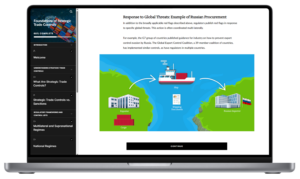
Our course Foundations of Strategic Trade Controls offers a comprehensive overview of how to understand and apply strategic trade control requirements, with a particular focus on those applicable to financial institutions.
 https://finintegrity.org/wp-content/uploads/2026/09/real-estate-risk.jpg
614
1000
IFI
https://live-black-pebble.pantheonsite.io/wp-content/uploads/2023/12/GIFI-Placeholder2.png
IFI2026-09-17 12:40:222026-09-17 20:35:41Real Estate, Real Risks
https://finintegrity.org/wp-content/uploads/2026/09/real-estate-risk.jpg
614
1000
IFI
https://live-black-pebble.pantheonsite.io/wp-content/uploads/2023/12/GIFI-Placeholder2.png
IFI2026-09-17 12:40:222026-09-17 20:35:41Real Estate, Real Risks https://finintegrity.org/wp-content/uploads/2026/09/iran-and-sanctions-landscape-bg.jpg
1013
1800
IFI
https://live-black-pebble.pantheonsite.io/wp-content/uploads/2023/12/GIFI-Placeholder2.png
IFI2026-09-10 07:00:352026-09-17 20:21:30Iran and the Sanctions Landscape
https://finintegrity.org/wp-content/uploads/2026/09/iran-and-sanctions-landscape-bg.jpg
1013
1800
IFI
https://live-black-pebble.pantheonsite.io/wp-content/uploads/2023/12/GIFI-Placeholder2.png
IFI2026-09-10 07:00:352026-09-17 20:21:30Iran and the Sanctions Landscape https://finintegrity.org/wp-content/uploads/2026/09/august-2026-se-report-bg.jpg
888
1184
IFI
https://live-black-pebble.pantheonsite.io/wp-content/uploads/2023/12/GIFI-Placeholder2.png
IFI2026-09-02 07:00:562026-09-01 13:19:24August Monthly Sanctions and Export Controls Report
https://finintegrity.org/wp-content/uploads/2026/09/august-2026-se-report-bg.jpg
888
1184
IFI
https://live-black-pebble.pantheonsite.io/wp-content/uploads/2023/12/GIFI-Placeholder2.png
IFI2026-09-02 07:00:562026-09-01 13:19:24August Monthly Sanctions and Export Controls Report https://finintegrity.org/wp-content/uploads/2026/08/judgement-gap-in-market-abuse-compliance-bg.jpg
841
1500
IFI
https://live-black-pebble.pantheonsite.io/wp-content/uploads/2023/12/GIFI-Placeholder2.png
IFI2026-08-25 07:00:462026-08-24 11:34:59The Judgment Gap in Market Abuse Compliance
https://finintegrity.org/wp-content/uploads/2026/08/judgement-gap-in-market-abuse-compliance-bg.jpg
841
1500
IFI
https://live-black-pebble.pantheonsite.io/wp-content/uploads/2023/12/GIFI-Placeholder2.png
IFI2026-08-25 07:00:462026-08-24 11:34:59The Judgment Gap in Market Abuse Compliance https://finintegrity.org/wp-content/uploads/2026/08/oil-pipeline-bg.jpg
1000
1500
IFI
https://live-black-pebble.pantheonsite.io/wp-content/uploads/2023/12/GIFI-Placeholder2.png
IFI2026-08-19 07:00:062026-08-19 00:07:14The Illicit Oil Pipeline: How Criminal Networks Turn Crude into Clean Cash
https://finintegrity.org/wp-content/uploads/2026/08/oil-pipeline-bg.jpg
1000
1500
IFI
https://live-black-pebble.pantheonsite.io/wp-content/uploads/2023/12/GIFI-Placeholder2.png
IFI2026-08-19 07:00:062026-08-19 00:07:14The Illicit Oil Pipeline: How Criminal Networks Turn Crude into Clean Cash https://finintegrity.org/wp-content/uploads/2026/08/july2026-se-bg.jpg
1177
1800
IFI
https://live-black-pebble.pantheonsite.io/wp-content/uploads/2023/12/GIFI-Placeholder2.png
IFI2026-08-04 07:00:452026-08-04 09:42:02July Monthly Sanctions and Export Controls Report
https://finintegrity.org/wp-content/uploads/2026/08/july2026-se-bg.jpg
1177
1800
IFI
https://live-black-pebble.pantheonsite.io/wp-content/uploads/2023/12/GIFI-Placeholder2.png
IFI2026-08-04 07:00:452026-08-04 09:42:02July Monthly Sanctions and Export Controls Report https://finintegrity.org/wp-content/uploads/2026/07/guide-to-market-abuse-bg.jpg
1067
1600
IFI
https://live-black-pebble.pantheonsite.io/wp-content/uploads/2023/12/GIFI-Placeholder2.png
IFI2026-07-29 07:00:472026-07-28 12:45:11A Financial Institution’s Guide to Updated EU Market Abuse Regulation
https://finintegrity.org/wp-content/uploads/2026/07/guide-to-market-abuse-bg.jpg
1067
1600
IFI
https://live-black-pebble.pantheonsite.io/wp-content/uploads/2023/12/GIFI-Placeholder2.png
IFI2026-07-29 07:00:472026-07-28 12:45:11A Financial Institution’s Guide to Updated EU Market Abuse Regulation https://finintegrity.org/wp-content/uploads/2026/06/june2026-se-report-bg.jpg
798
1200
IFI
https://live-black-pebble.pantheonsite.io/wp-content/uploads/2023/12/GIFI-Placeholder2.png
IFI2026-07-01 07:00:392026-07-02 10:28:58June 2026 Sanctions and Export Controls Report
https://finintegrity.org/wp-content/uploads/2026/06/june2026-se-report-bg.jpg
798
1200
IFI
https://live-black-pebble.pantheonsite.io/wp-content/uploads/2023/12/GIFI-Placeholder2.png
IFI2026-07-01 07:00:392026-07-02 10:28:58June 2026 Sanctions and Export Controls Report https://finintegrity.org/wp-content/uploads/2026/06/may-bg-2026-se.jpg
1200
1800
IFI
https://live-black-pebble.pantheonsite.io/wp-content/uploads/2023/12/GIFI-Placeholder2.png
IFI2026-06-03 07:00:142026-06-02 14:36:12May 2026 Sanctions and Export Controls Update
https://finintegrity.org/wp-content/uploads/2026/06/may-bg-2026-se.jpg
1200
1800
IFI
https://live-black-pebble.pantheonsite.io/wp-content/uploads/2023/12/GIFI-Placeholder2.png
IFI2026-06-03 07:00:142026-06-02 14:36:12May 2026 Sanctions and Export Controls Update
 Electronic Fund Transfer Consumer Protection