Report


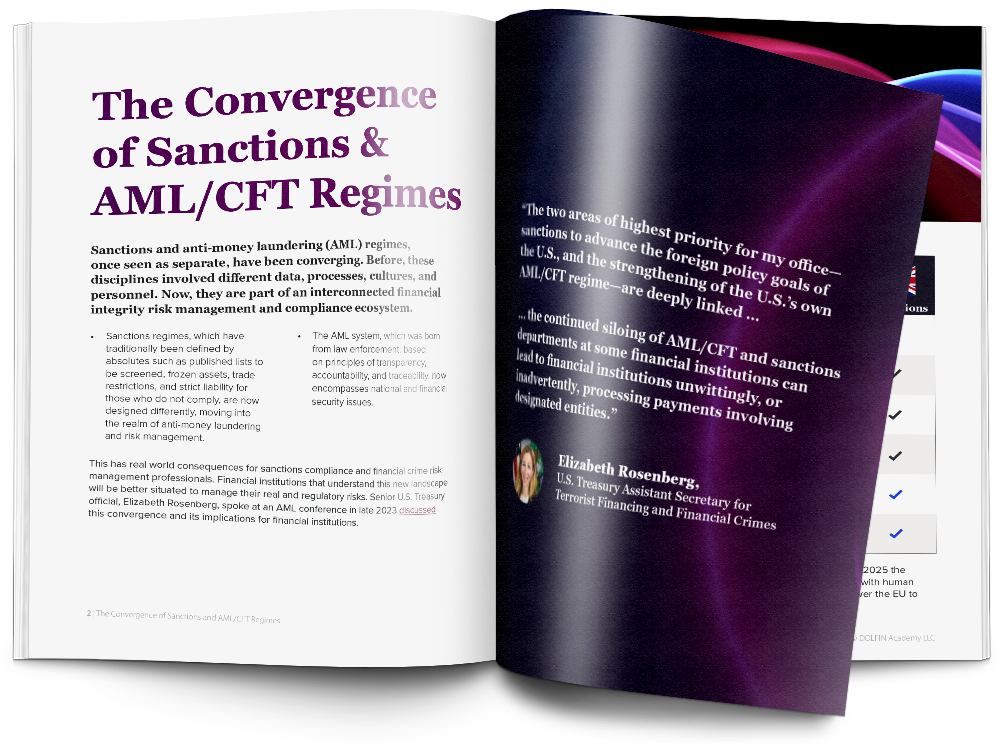
Sanctions and anti-money laundering (AML)/countering the financing of terrorism (CFT) regimes, once seen as separate, have been converging. Before, these disciplines involved different data, processes, cultures, and personnel. Now, they are part of an interconnected financial integrity risk management and compliance ecosystem.
Continue reading in our Expert Insight Report: The Convergence of Sanctions & AML/CFT Regimes in which we discuss the following four main areas of convergence.
- Targeting of common conduct
- Reliance on common preconditions
- Evolution of common compliance program pillars
- Emergence of common red flags
Please complete the following form to view the report.
Recommended Articles
Why and How Standardized Training Falls Short
Today’s financial institutions operate across different products, jurisdictions, and threat environments. This article examines why standardized training falls short and where generic programs consistently break down in practice.

Wynn or Lose
Casinos have long been associated with money laundering and organized crime. Explore the recent Wynn Las Vegas $130 million forfeiture as a case study, including threats such as Chinese Money Laundering Networks, mirror transfers, proxy gambling, and the use of shell companies.

Electronic Fund Transfer Consumer Protection
The Electronic Fund Transfer Act (EFTA) was established to protect consumers using electronic fund transfers. Explore what is considered in scope and the changes proposed to include crypto.

January 2026 Monthly Sanctions and Export Controls Report
There were several major sanctions-related developments in January, most notably the U.S.’s easing of sanctions to facilitate Venezuelan oil sales and the ratcheting up of western sanctions in response to Tehran’s violent crackdown on protestors, among others.

Following the Illicit Funds
As crypto grows, so does regulatory oversight. From SARs and CTRs to MSB registration and potential FBAR requirements, crypto businesses are now firmly within the scope of financial regulations.

Blind Spots in the System
When transaction monitoring fails, the cost goes far beyond fines. This article explores why many programs still miss critical red flags and how effective training helps teams to strengthen detection, calibration, and oversight where it matters most.

Top 10: Cartel Finance & Chinese Money Laundering Networks
The Institute for Financial Integrity has identified the “Top 10” list of actionable resources for financial institutions to use to detect and respond to cartel finance and CMLNs. These can inform policies, processes, systems, controls, and training programs.

Synthetic Identities
Fraud generates billions in proceeds every year, and the use of AI significantly increases the speed, scale, and likelihood of success. Synthetic identities are already leveraged to open accounts used to commit fraud and launder money. Explore red flags and actions financial institutions must take to detect and respond to AI-enabled synthetic identities.

Leveraging Artificial Intelligence for Enhanced Financial Compliance