
Report

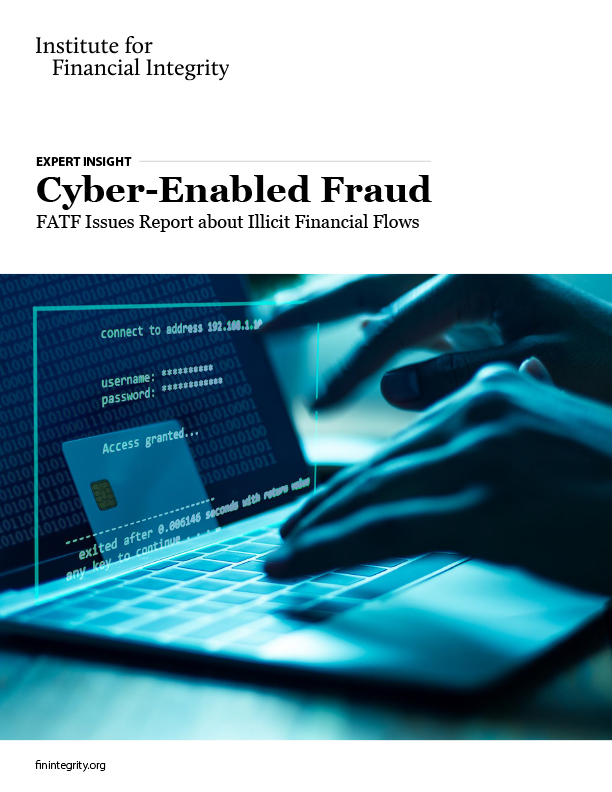
Cyber-Enabled Fraud

Read about technologies used in fraud and other crimes in our Expert Insight: Cyber-Enabled Fraud in which we distill key points from the report, including:

  • FATF’s Findings.
  • Non-Traditional Sectors.
  • Techniques and Typologies.
  • Detection and Deterrence.
  • Mitigation Strategies.

Recommended Articles

Social Engineering Is Rewriting the Fraud Playbook


Fraudsters have shifted from breaching systems to manipulating people. This article examines how social engineering, from deepfake video calls to business email compromise, is outpacing traditional defenses, and what it takes to train employees to recognize and resist it.

Synthetic Identities

Fraud generates billions in proceeds every year, and the use of AI significantly increases the speed, scale, and likelihood of success. Synthetic identities are already leveraged to open accounts used to commit fraud and launder money. Explore red flags and actions financial institutions must take to detect and respond to AI-enabled synthetic identities.

When Holiday Cheer Meets Fraud Pressure

This article breaks down the key scam patterns emerging this season, why December has become a true test of institutional readiness, and the steps teams can take to reduce losses and respond with confidence.

Operation Mouse

Synthetic identities are increasingly used to perpetrate fraud. Delve into real-life examples of synthetic identity fraud in Canada, along with the actions financial institutions can take in response, in this article.

Deepfake Deep Dive

Artificial intelligence (AI) can increase the volume, value, and effectiveness of fraud attacks such as CEO fraud. Financial institutions should take action to protect themselves – and their customers.

From Fraud to Flow

Fraud is often the entry point into a complex web of financial crime from money laundering to terrorism financing. Understanding this gateway role is essential for those defending the integrity of the global financial system.

The Heat is On

Explore the key insights and implications from Transparency International’s 2024 Corruption Perceptions Index.

Toward a Financial Integrity Risk Management Program

This article explores the commonalities between AML, sanctions compliance, ABC, fraud risk management, and export control compliance programs and recommends that organizations consider using a holistic financial integrity risk management and compliance framework.

Cold Turkey

Consumer spending over the holiday season is expected to top $1.66 trillion this year in the U.S. alone. This article describes five holiday season frauds to be aware of along with associated red flags to avoid being scammed.

Risky Convergences

New digital solutions in money laundering and underground banking have facilitated the expansion of the criminal business environment in Southeast Asia, integrate billions of criminal proceeds into the formal financial system and enabling the growth of new criminal organizations.

Elevating Defenses

Dive into the cutting-edge strategies that financial institutions are implementing to combat the evolving threat of AI-driven fraud. From deploying advanced detection technologies to fostering robust networks of allies, learn how the financial sector is bolstering its defenses against sophisticated scams like deepfakes and biometric fraud.

Deepfakes and Dollars

While AI has the potential for transformative impact in the financial sector, it also introduces new challenges. From biometric mimicry to the alarming rise of deepfakes, this blog highlights emerging threats and challenges in countering AI-driven fraud.

Understanding and Addressing Fraud and Corruption Risks

In our recent webinar, industry experts delved into the crucial topic of fraud and corruption risks. From seasoned professionals to anti-corruption activists, the webinar featured a panel of distinguished speakers: Steve Burgess, Nikki Kenyon, Chris Williams, and James Wasserstrom. This blog post aims to summarize the key points discussed during the session, equipping readers with the knowledge necessary to navigate these risks effectively.

Corruption in Construction

Corruption in the construction sector can include everything from fraud, to extortion, embezzlement, and other abuses. Corruption doesn’t just undermine good governance; it endangers lives and threatens the reputation of any financial institution involved in construction projects that are rife with fraud and abuse. How can government organizations and financial institutions mitigate corruption risks when funding or supporting infrastructure projects? How can they detect suspicious transactions?

Corruption Kills

Construction projects are especially vulnerable to corruption because of their complexity, high price tags, and the number of intermediaries and other parties involved. Corruption in the construction sector does not merely result in financial losses, environmental destruction, and inequality, but it can also result in loss of life.

Golden Visas & Global Graft – How Criminal Actors Exploit Citizenship by Investment Programs

While special naturalization programs offered in certain jurisdictions to foreign investors intend to attract foreign direct investment and economic and infrastructure development, these programs can be abused by criminals who seek to launder and conceal proceeds of crime or commit new offences, including financial crimes.

Pig Butchering on the Rise: When Romance Goes Wrong

What is pig butchering and how does it work? Read on to explore the global regulatory response to this rising scam, identify scam tactics and key mitigation strategies.

Real Estate in 2024 – Anticipating a Crackdown on Corruption & Fraud

Real estate in the United States has long been a popular channel for corrupt actors seeking to launder illicitly obtained funds. As part of the Biden administration’s 2021 Strategy on Countering Corruption, a long-awaited proposed rule from the Treasury Department that is slated to take effect in early 2024 will seek to address that glaring loophole in US anti-money laundering (AML) regulations.

What Financial Institutions Can Learn from the Binance Settlement

Explore lessons learned from the recent Binance settlement including risk mitigation strategies for banks and other financial institutions.

Binance Settles with Regulators

Binance, the world’s largest cryptocurrency exchange, on November 21st pleaded guilty and agreed to pay more than $4.3 billion to resolve the US Justice Department’s investigation into its violations of the Bank..

Cyber-Enabled Fraud

Cyber-enabled fraud (CEF) is growing, especially with increasing digitalization across the globe. Technological advances have enabled cyber criminals to develop and increase the scale, scope, and speed of their illicit activities.
123456