
Recorded Webinar
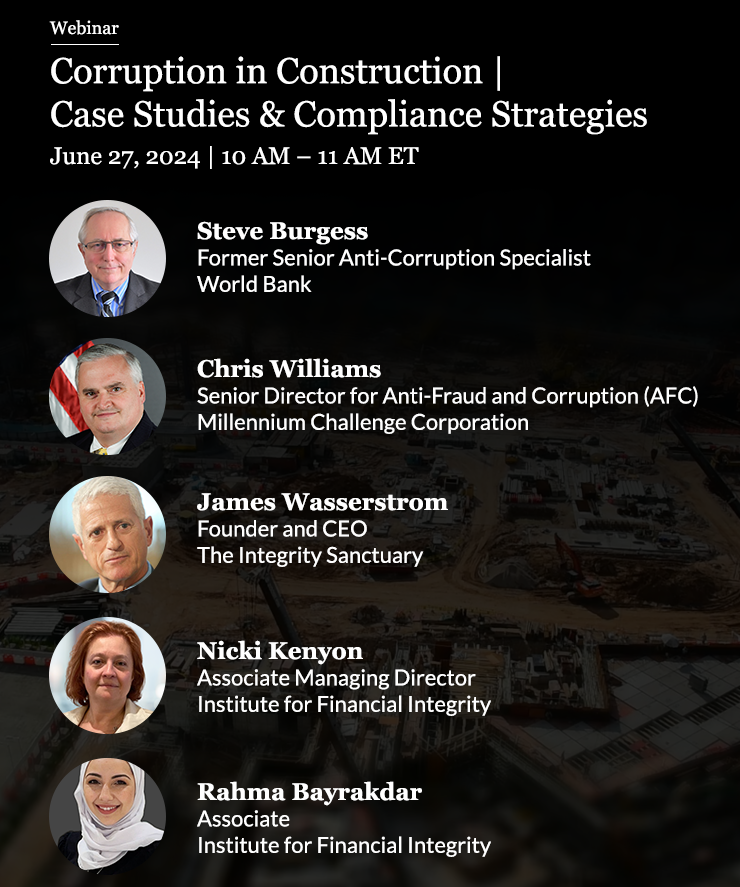
The construction and infrastructure sector faces significant corruption challenges, including bribery, fraud, and extortion. Studies suggest that corruption incurs losses ranging from 10 – 30% within the construction domain. With the sector projected to yield nearly $17.8 trillion annually by 2030, the perpetuation of current corruption trends threatens a potential annual loss of close to $6 trillion. These issues are compounded by complex project structures and inadequate anti-corruption measures.
Bribery and corruption pose significant risks to financial institutions, including reputational damage, legal and regulatory consequences, and financial losses. Effective compliance measures are essential to mitigate these risks and uphold ethical standards within the financial industry.
Led by industry experts, this webinar will provide targeted insights into the unique challenges faced by financial institutions and practical solutions for ensuring compliance and reducing risk through an exploration on case studies, the key drivers of fraud and corruption, and U.S. regulatory requirements and compliance measures.
The agenda for this webinar included:
- Understanding Fraud Patterns: Identify the top three issues driving fraud in construction and why the sector is particularly vulnerable to corruption.
- Real-World Case Studies: Analyze real-life examples of corruption in construction, with a focus on the role of financial institutions and actionable insights for prevention.
- Navigating U.S. Regulations: Explore U.S. regulatory requirements and compliance measures relevant to anti-bribery and fraud compliance in construction.
- Preventative Measures: Analyze effective strategies for financial institutions to detect and prevent bribery, fraud, and extortion in construction, including key indicators to watch for and best practices for risk mitigation.
- Q & A session
View the Recorded Webinar
Please complete the form below in order to view the webinar.

 Mastering Compliance in Digital Assets through Multi-Tiered Defense Strateg...